

Conversion rate optimisation
At Wzór, a UX agency, you get conversion rate optimisation that ends in a design of changes tested on your own customers, which our team or your developers can then implement. Raising conversion was one of the main goals of the Wolumen and CWZN projects. When tests show a store needs more than fixes, we take on full ecommerce store design.







Challenges
What challenges does conversion rate optimisation help you solve?
Our approach
Before you put more money into ads, we show you how many orders you lose after the click and at which step. You pay for fixing that step once, while the traffic that would have to make up for it has to be bought every month.
Scope of services
Our approach
We write down the metric, the sample size and the end date before the first customer sees a variant. We only call a winner once the full planned sample is in, not on the day the chart happens to look good.
Scope of services
Our approach
That is where we start, because on faulty tracking every test leads to a bad decision. We check that orders and enquiries are counted once, not twice, and how much of your traffic drops out of the reports when people decline cookie consent.
Scope of services
Who it is for
Which companies do we run conversion rate optimisation for?
Online stores
We know stores with plenty of traffic and few orders from the CWZN project, where one reason for the low conversion was the lack of a mobile version. We set up measurement on delivery costs and the cart first, because extra costs are the reason most often given for abandoning a purchase by people who were not just browsing.
B2B websites that collect enquiries
On websites where companies ask for a quote, every form field counts: in the Wolumen offer generator we simplified a form of more than a hundred fields, one of the reasons for low conversion. After launch the client reported higher conversion and a lighter load on customer service, and on sites like this we also check how many enquiries turn into a sales conversation.
SaaS products with a free trial
We optimise the path from sign-up to first payment, where customers make up their minds over the whole trial rather than on a single screen. We measure how many people reach the moment the product first does something useful for them, because that moment decides whether they pay.
Online applications in finance and insurance
With online applications we look for the reason people stop before anyone starts shortening the form. Sometimes the cause is not the number of fields but a piece of information the customer did not find earlier, such as the interest rate.
Bookings and ticket sales
In bookings and ticket sales we focus on the stretch from choosing a date to paying. We check how many steps stand between the customer and the confirmation, and whether going back one step loses the seats they picked.
- E-commerce
- Software
- Banking & Finance
- Healthcare
- Energy
- Media
- Aerospace & Defense
- Automotive & Mobility
- Crypto & Blockchain
- Education
- Entertainment
- Fashion & Accessories
- Grocery Retail
- Gaming
- Public Sector
- Insurance
- Logistics & Fulfilment
- Industrial Manufacturing
- Pharma
- Real Estate
- Retail & FMCG
- Cybersecurity
- Services
- Sport
- Telecommunications
- Transport & Travel

Why us?
Why choose our UX agency?
-
Paid traffic checked after the click
We work on what happens after the ad click. Where traffic allows, we compare changes on parallel variants, so before you raise your bids you can see which fix made a difference.
-
Decisions based on results, not rank
The argument over which version of a screen is better ends with a test result everyone at the table can see. In front of the board you defend a number, not someone's taste.
-
Knowledge that stays in the company
Every hypothesis goes into a register with its result, date and source, including the ones that lost. A year from now, with a different team, you can see what has already been tested, and nobody pays twice for the same test.
-
A senior team
A team of seniors that has been designing interfaces for nine years, today for large organisations, SaaS companies and software houses, brings analytics, user interviews and variant design into the same hands. The hypothesis and the variant come from the same people.
-
Proven client trust
We have designed for 115 brands, and most of them come back to us with another project.
-
Higher quality with AI
A designer with AI tools explores more versions of a test variant than they could draw by hand, and picks the best-grounded one for the test. What reaches your customers is the version that was chosen, not the first one that came out.
Process
How will we run your conversion rate optimisation, step by step?
-
A conversation with your team
We agree which conversion earns the company money and where you measure it today
First, one question: which customer action earns the company money, a purchase, an enquiry or a signed application, and what happens in the company right after it. Then we agree which data we get access to, who on your side makes changes to the site and which journeys we deliberately leave alone.
Key steps
- Choosing the primary metric and supporting metrics
- Reviewing access: analytics, session recordings, testing tool
- Agreeing who sets up variants: your team or ours
- A list of journeys in scope and out of scope
Deliverables
- Agreed primary metric
- List of access
- Scope of journeys
-
Measurement and funnel discovery
We look for the step where customers drop out and the reason they do
Quantitative data tells us where customers drop out, and session recordings and conversations with them tell us why. We read both together, because a number without a cause ends in guessing the variant, and a cause without a number ends in fixing a place only a handful of people pass through.
Key steps
- Checking the analytics setup and conversion events
- The funnel split by device and traffic source
- Session recordings and click maps from the steps with the biggest drop-off
- Usability tests or short on-site surveys
Deliverables
- Measurement report
- Funnel map with drop-off points
- List of research observations
-
Hypotheses and variant design
We turn observations into a list of hypotheses, and the strongest into variant designs
For every hypothesis we write down its source and a prediction of what should change, so it is clear what the test will confirm or refute. We design variants for phone and desktop from the start, because drop-off on each of them can happen in a different place.
Key steps
- A hypothesis register with the source of each
- Order set by ICE scoring
- Variant designs for phone and desktop
- Metric, sample size and end date written down before the test starts
Deliverables
- Prioritised hypothesis register
- Variant designs
- Test plan
-
Testing and handing over the winner
We launch the test and prepare the winner for permanent implementation
Depending on how you work, either our team or your developers set up the variants in the testing tool, and before launch we check them on phone, tablet and desktop. Once the test is decided, the winner gets a specification for permanent implementation.
Key steps
- Setting up the test in a tool such as VWO or Optimizely
- Checking variants on devices
- Running the test to the planned sample size
- A specification of the winner and switching off the testing overlay
Deliverables
- A decided test
- Implementation specification for the winner
- Testing overlay switched off
-
Further test cycles
Every result sets the order of the next tests
After every test we go back to the register: a win raises the question of what else to change in the same place, and a loss says the cause lies elsewhere. Once a month we set the results against the primary metric from the first conversation, so you can see what the programme has done for the company, not for a single screen.
Key steps
- Going through the result with your team
- Updating the hypothesis register
- A new test order
- A monthly results summary
Deliverables
- Monthly report
- Updated hypothesis register
- Plan for the next tests
Methods and technologies
Tools and methods we use in conversion rate optimisation
-

Google Analytics 4
We only read Google Analytics 4 once we know how many users are invisible because they refused analytics consent. On smaller sites Google's modelling does not fill that gap, so we base conclusions on what is visible and say plainly what is not.
-

Hotjar
In Hotjar we watch recordings from the step where the funnel loses the most people, not random sessions. The tool hides typed input by default, so we read form errors from which field someone corrects and where they stop.
-
VWO and Optimizely
VWO and Optimizely swap the page in the browser, and hiding it during the swap can slow down loading. That is why the tool stays only for the length of the test, and the winning variant moves into the permanent version of the site.
-
Funnel analysis
We split funnel analysis by device and traffic source, because the average conversion rate can rise just because you cut off a weak source, even while revenue fell. It then shows at which step, and with whom, you really lose orders.
-
Usability testing
We run usability tests before the A/B test, so the variant answers the real cause rather than a guess. The A/B test tells you which version won, and a conversation with a customer tells you why.
-
ICE scoring
We use ICE scoring to order tests by impact, confidence and effort, and we base confidence on where the hypothesis came from, not on gut feeling. Changes that promise a lot and can be checked quickly go first.
Selected work
Our work
-
Energy
Wolumen
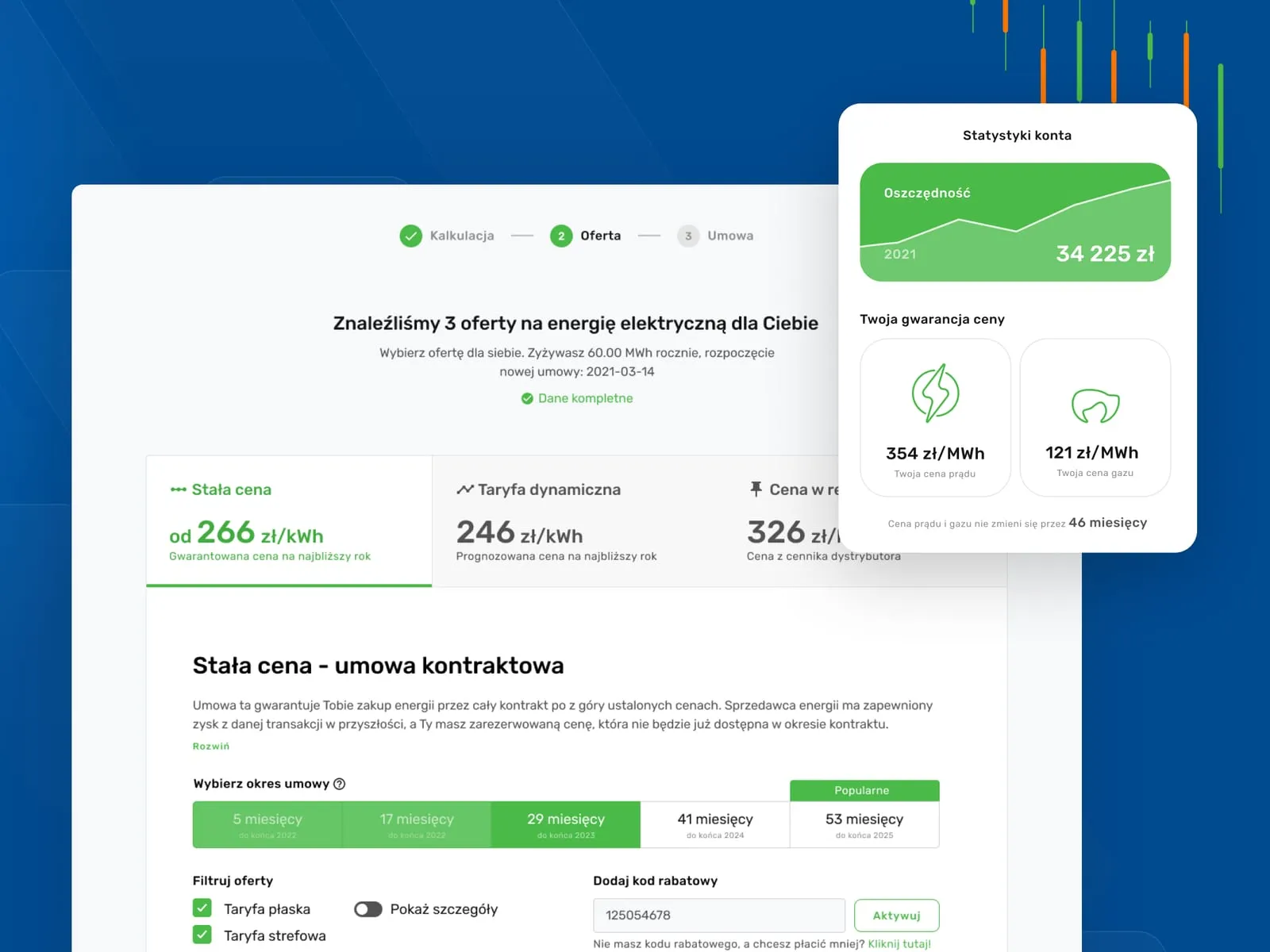
View projectA service comparing energy and gas offers for businesses - a savings calculator, a fixed-price guarantee for the years ahead and a client panel that summarises the bills. One coherent system across desktop and mobile, with a clear path from calculation to locking in a price.
-
E-commerce
Lestore
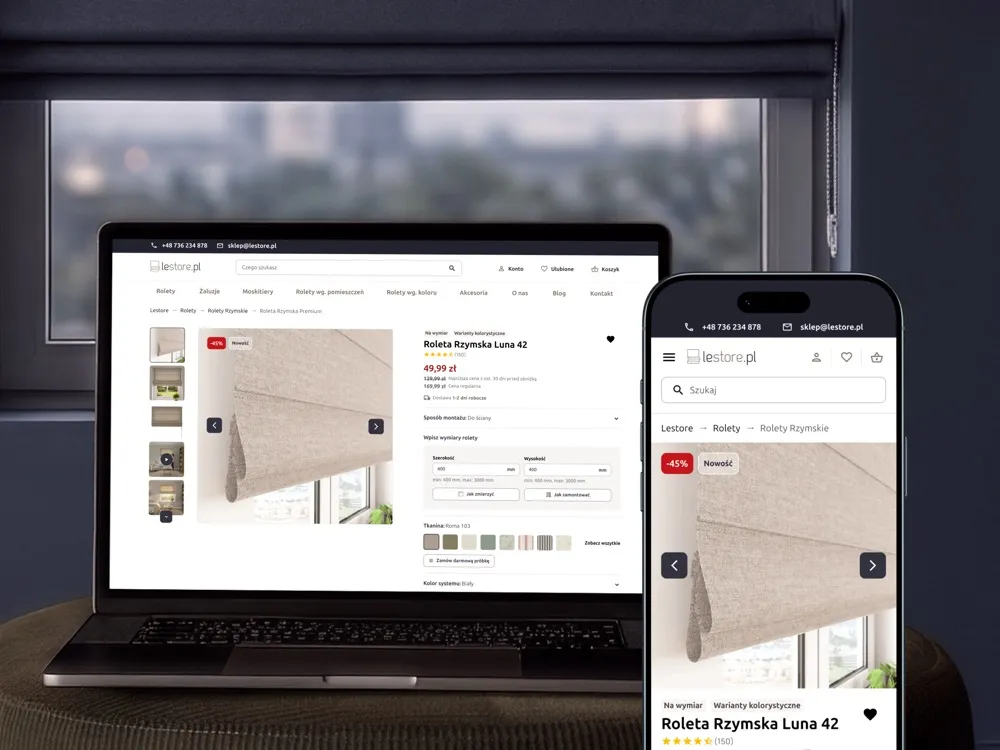
View projectLestore online store - specialising in made-to-measure Roman blinds and shades. A product page with a size-and-fabric configurator, a category listing with filters and promotions, "How to measure your window" and "How to install it" sections, a free fabric-sample order and customer reviews, across desktop and mobile.
-
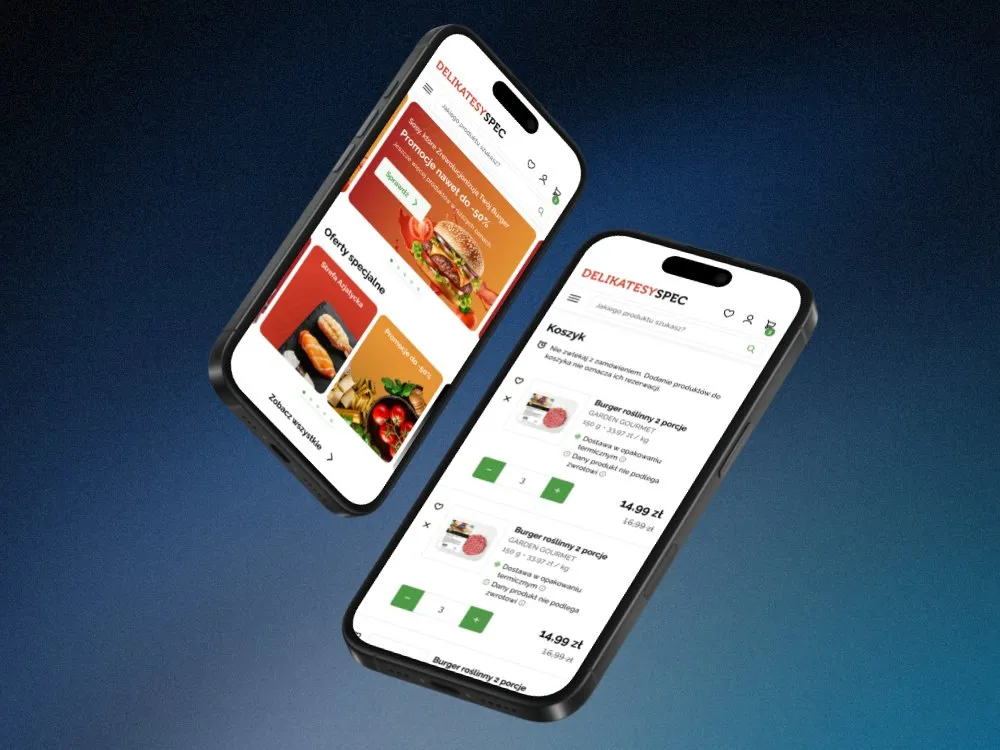
SPEC Food
Online store for a food delicatessen
-
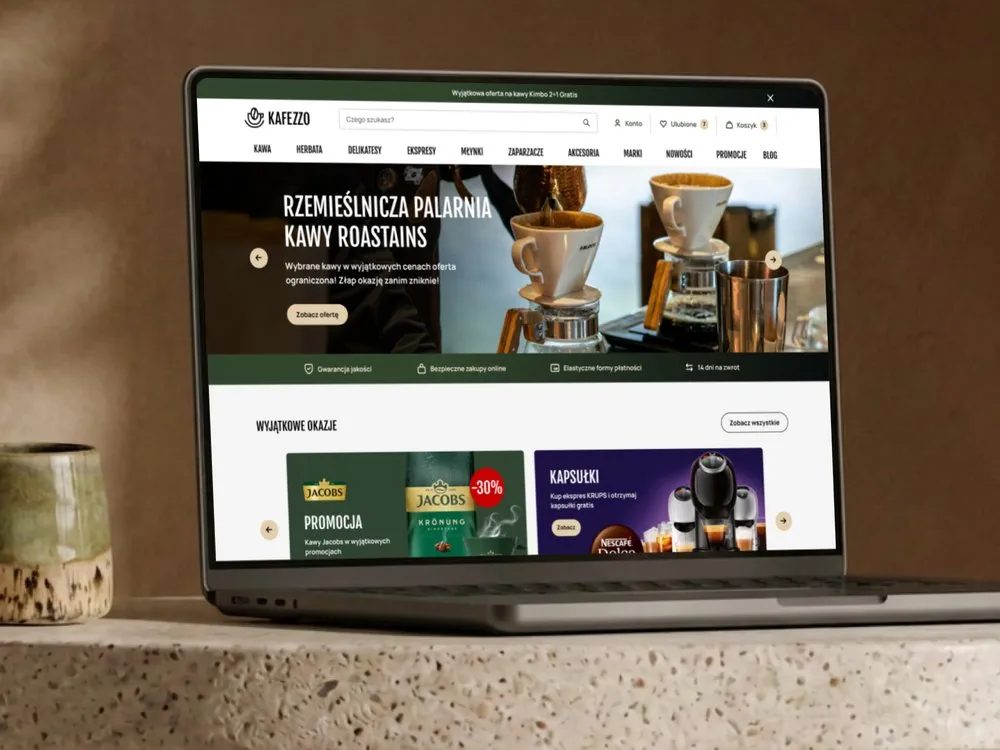
Kafezzo
Online store for coffee and tea
-
Habitalux
Online store and branding for pet food
-
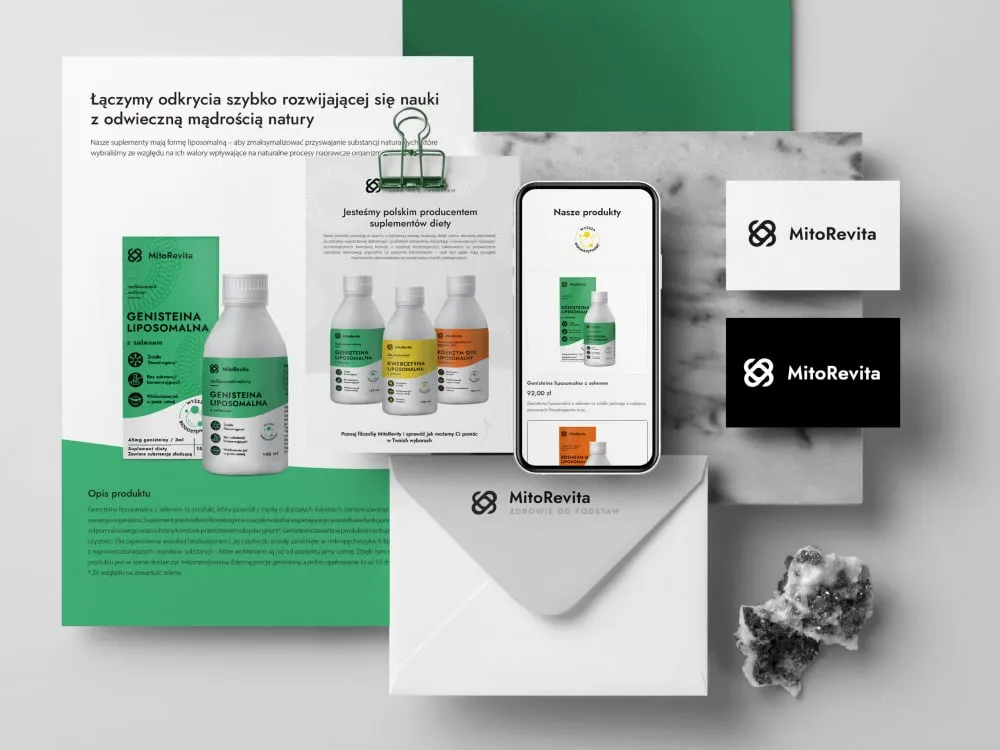
MitoRevita
Branding & store for liposomal supplements
-
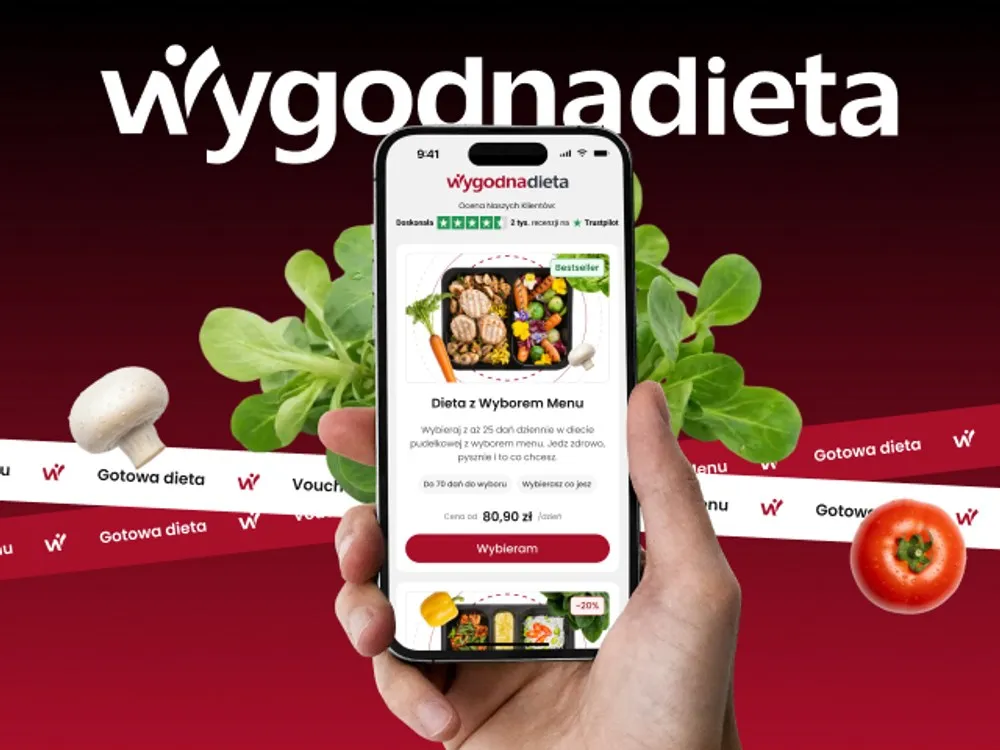
WygodnaDieta
App and online store for a meal-box diet service
-
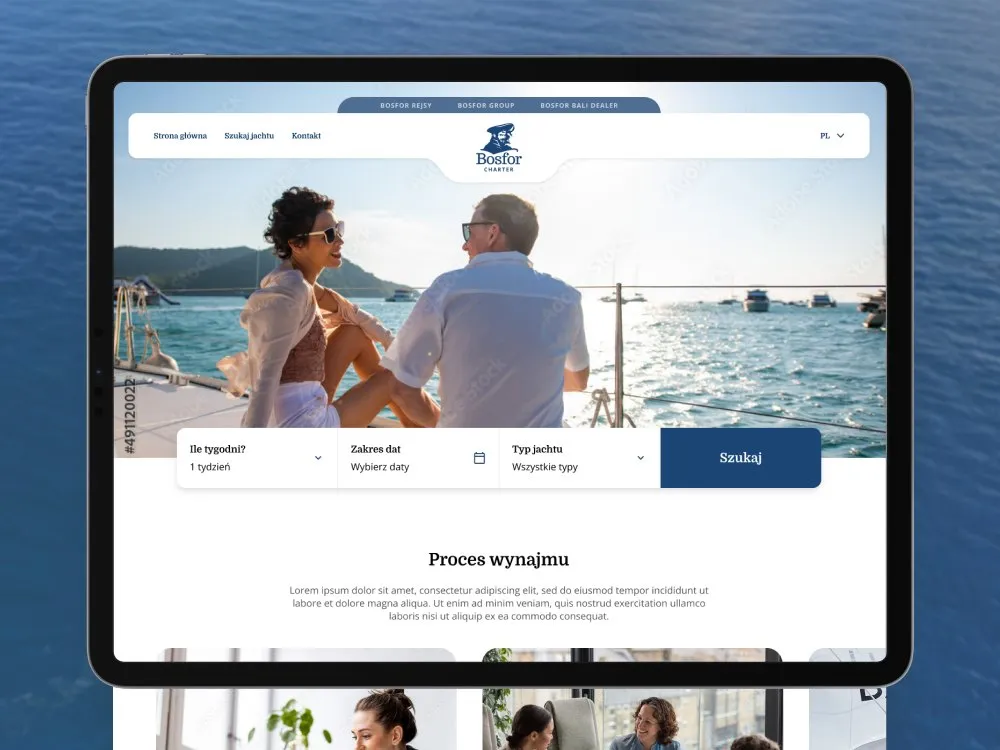
Bosfor Charter
Yacht charter platform with booking
-
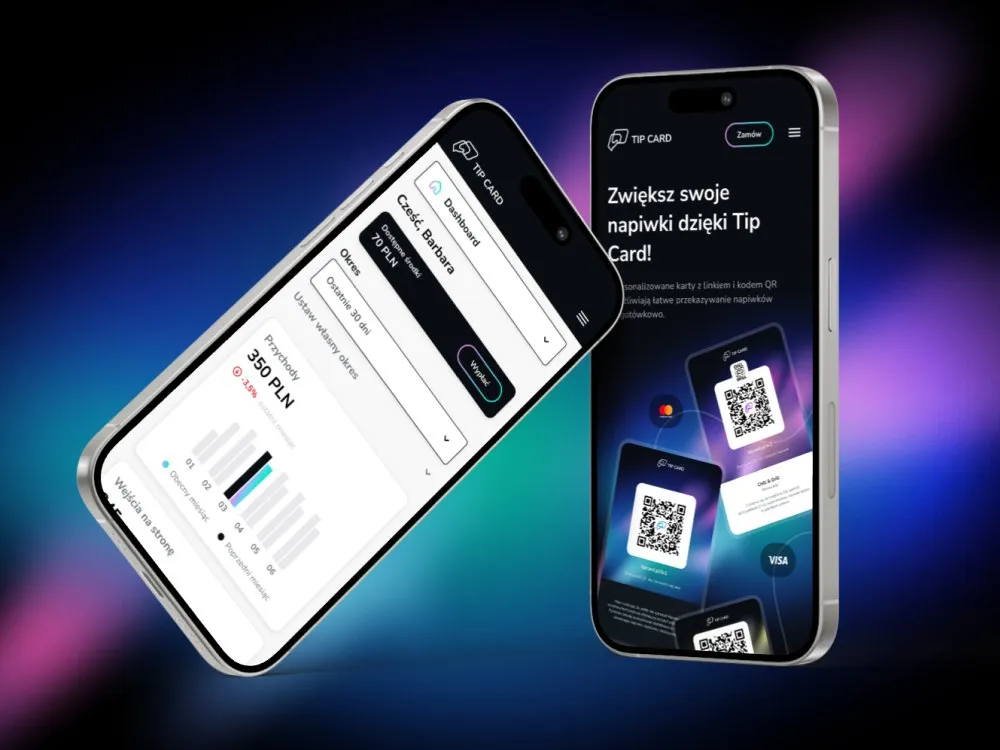
Tip Card
Cashless tipping platform
- See what else we build Projects
Start conversion rate optimisation
Measurement, hypotheses, A/B tests and implementing what won.
Client voices
What our clients say
 Jonasz Więcławski Chief Executive Officer, Wolumen

“The new quote generator on our site is more convenient for users and looks far better. Despite the tight deadline, Wzór UX Agency rose to the occasion. Soon after launch we noticed higher conversion and a lower load on our Customer Service Office, and that was crucial for us. We wholeheartedly recommend Wzór.”
 Dawid Śmiglarski Area Manager, iLeopard

“After migrating our store to PrestaShop and changing the template, we decided to have UX Agency Wzór run a UX audit. It surprised us to learn there were over 40 UX defects in our system, 5 of them critical. The Wzór team not only identified the problems but also set out practical recommendations and concrete examples of how to fix them. At the meeting where we went through the audit we also received valuable input and together chose a new module for the checkout process. We believe the changes will benefit both our customers and the growth of our brand. We thank UX Agency Wzór for their commitment and professionalism, and we will certainly use their services again.”

“Our collaboration with UX Agency Wzór on the new version of the WygodnaDieta.pl mobile and web app went perfectly. The designers truly understood our users and turned that into concrete decisions, simplifying the most complex processes so the user journey is now shorter and clearer. The team responded flexibly to our feedback and proposed thoughtful UX/UI solutions. We wholeheartedly recommend Wzór to anyone looking for experts with passion!”
“We were pleasantly surprised by how quickly the Wzór team responded to our comments and questions. They have very good ideas and on top of that they work fast and solidly. They always keep to the agreed dates, and the end result met our expectations.”





























The team
Who will take care of your conversion rate optimisation?
-

Aleksandra Bondar
Senior UX/UI Designer
View profileHow can I help you?
“I will design test variants for phone and desktop and check them with your customers before they go on the site.”
-

Katarzyna Adamczuk
Prezes, Analityk Biznesowy
View profileHow can I help you?
“I will read the funnel in your analytics, point to the step where you lose money and set the order of tests by their impact.”
-
Patryk Korycki
CEO, Analityk Biznesowy
View profileHow can I help you?
“I will agree with you the metric that has to grow and make sure the winning variants reach the product exactly as designed.”
FAQ
Frequently asked questions about conversion rate optimisation
What is conversion rate optimisation?
Conversion rate optimisation is the work of getting a larger share of the people who already reach your site to buy, send an enquiry or create an account. We combine analytics measurement, user interviews and A/B tests, and finish with changes that stay in the product for good.
How long does conversion rate optimisation take?
Conversion rate optimisation takes at least four weeks, and its length depends above all on the traffic on the journey being tested. We run every A/B test for at least one full week to cover every day of the buying cycle, and longer on lower traffic, so we confirm the exact timeline once we know the scope.
How much traffic do you need for A/B testing?
The traffic an A/B test needs depends on your current conversion rate and on how small a difference you want to detect, so we calculate it separately for each test before it starts. When a journey gets too few visits, we test bigger changes on the most important pages or check variants with users in usability tests.
How is conversion rate optimisation different from a UX audit?
Conversion rate optimisation checks changes on real traffic and runs in repeated cycles, while a UX audit is a one-off assessment of the product that ends in a report. The audit tells you what to fix first, and conversion rate optimisation measures how much a given fix really delivered.
Is conversion rate optimisation the same as SEO?
Conversion rate optimisation is not SEO: search optimisation brings more people to the site, and conversion rate optimisation gets more of them to buy or send an enquiry. The two complement each other, because search traffic lands on the same pages we test.
Do you guarantee a higher conversion rate?
We do not guarantee a specific rise in conversion, because some tests end with no difference or with the variant losing. That result also goes into the hypothesis register and narrows the search for the cause, so the next test starts from a better place.
What if our analytics is not set up?
Without analytics in place, conversion rate optimisation starts with setting up measurement and collecting baseline data, because without it there is nothing to compare a test result against. The first test then starts later, and until then we work from usability tests and conversations with your customers.
Do you need to buy a separate tool for A/B testing?
A/B testing needs a separate tool, because Google Optimize was shut down in September 2023. If you already have VWO or Optimizely, we work with it, and if not, we discuss the choice of tool with your team at the start of the work.
Does conversion rate optimisation make sense in B2B?
Conversion rate optimisation makes sense in B2B, except that the conversion there is a request for a quote or a booked call, not a purchase. We then also measure how many enquiries turn into sales conversations, because a form that collects more but weaker submissions does not help sales.
Related services
Services related to conversion rate optimisation
You do not know yet where the problem lies.
Let us start with an assessment of the product or with conversations with your customers.
You already know the journey needs rebuilding from the ground up.
We will redesign it instead of testing small changes.
You want to check one idea first.
We will talk it through or test it on a clickable prototype.