

Web app development
At Wzór, a UX agency, you get web app development true to the interactive design, carried out by our team or by your own development team under our design supervision. We accompanied the development team during the build of the Wolumen quote generator. If there is no design yet, we start with web app design.







Challenges
What challenges does web app development help you solve?
Our approach
We compare every built module with the interactive design before it reaches you for sign-off, and the designer answers the developers' questions as they come. A mismatch shows up in a single view, while the fix is still small.
Scope of services
Our approach
We build module by module on the same API, so the old and new versions run side by side for a while. People move to a new view when it is ready, and the old screens are switched off one at a time.
Scope of services
Our approach
We work in your repository from day one, under your code review rules and with conventions written down in the project. Your team sees every change before it goes into the app, so the end of the work does not mean handing over a package of code.
Scope of services
Who it is for
Which companies do we build web apps for?
Companies with a finished design
When the design is ready and your development team is to build it, we join that team on the design side. On the Wolumen quote generator we accompanied the developers during the build and made sure the app matched the design.
Companies with an API in place
We take on the browser layer when the backend and API already work but nobody is there to build an interface on top that is better than a raw table. Instead of hiring full-time, you get a designer and a development team straight away.
Companies with an old desktop system
We move into the browser systems that ran for years as applications installed on a workstation, now that customers ask for laptop access and several people working at once. We build the new layer on the existing logic, so the rules the company has worked out do not get lost in the move.
Software houses
We join as the front-end team of a software house that has sold a project and staffed the backend but lacks hands or a designer for the layer users see. We work under your brand and to your release rhythm, and the client relationship stays with you.
SaaS companies
We take over the front end of a SaaS product whose backend grows faster than the interface can show it. We organise it into a library of views, so every new feature lands in an existing pattern instead of in yet another tacked-on tab.
- E-commerce
- Software
- Banking & Finance
- Healthcare
- Energy
- Media
- Aerospace & Defense
- Automotive & Mobility
- Crypto & Blockchain
- Education
- Entertainment
- Fashion & Accessories
- Grocery Retail
- Gaming
- Public Sector
- Insurance
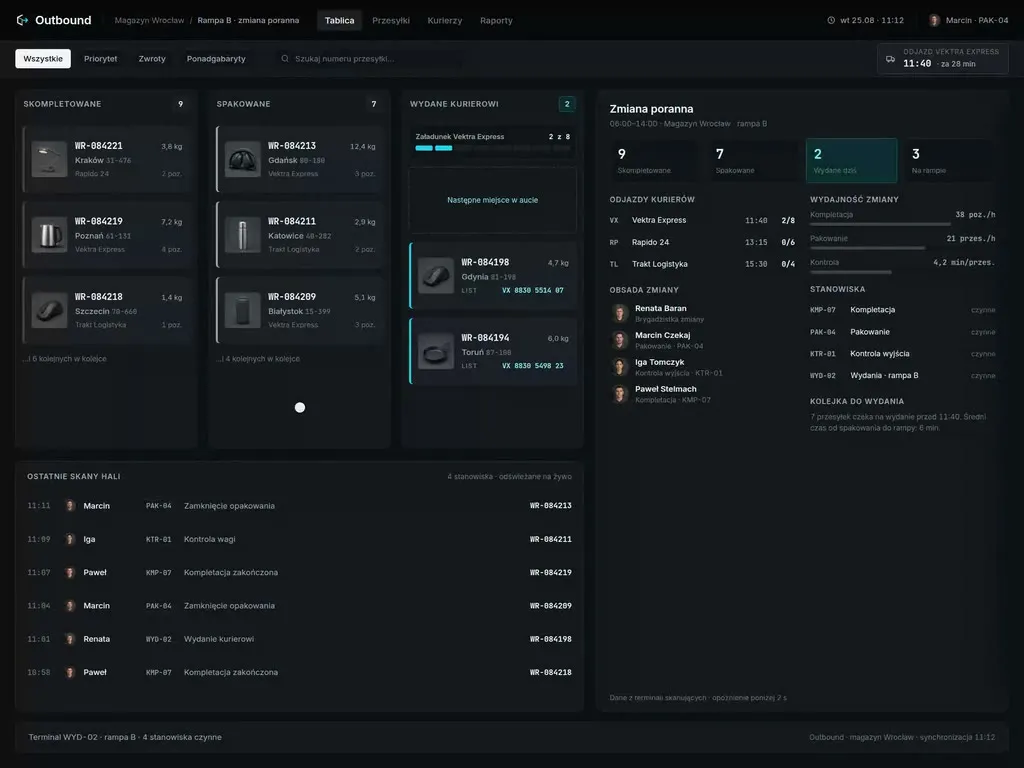
- Logistics & Fulfilment
- Industrial Manufacturing
- Pharma
- Real Estate
- Retail & FMCG
- Cybersecurity
- Services
- Sport
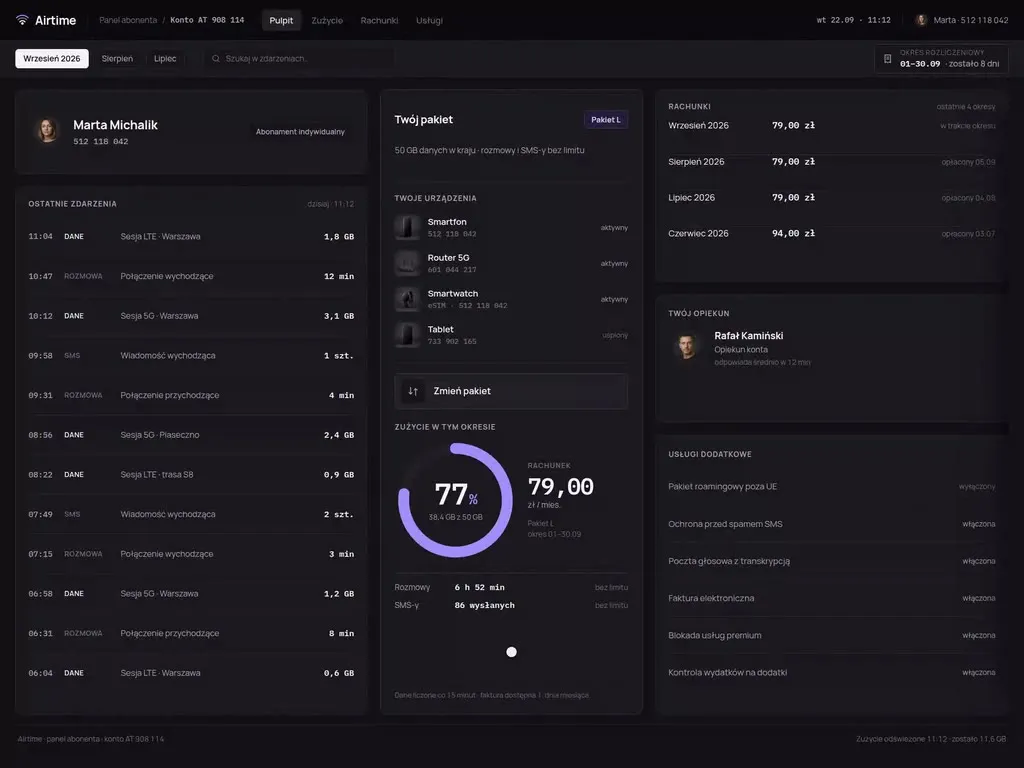
- Telecommunications
- Transport & Travel

Why us?
Why choose our UX agency?
-
Fewer fixes after launch
Empty states, errors and missing permissions are built together with the view rather than in a rush before release. So they don't wait for the first user to report them from production.
-
Value from the first module before the project ends
Each module goes to the test environment on its own, working on real data from the start. You check the first one before the rest exists and adjust the direction while the app is still small.
-
Less rework of finished screens
Before the first view exists, we write down a data contract with your backend: which fields arrive, what can be empty and what an error looks like. Screens then don't get rebuilt because the data looks different from what the design assumed.
-
A senior team
A team of senior UX designers that has been designing interfaces for nine years, today for large organisations, SaaS companies and software houses, stays with the build until launch. Decisions the design did not foresee are made with someone who knows its assumptions.
-
Proven client trust
We have designed for 115 brands, and most of them come back to us with their next project.
-
Higher quality with AI
A designer with AI tools tries out more variants of states and messages than they could draw by hand, and picks the one that works. What goes into the build is a version someone chose on purpose.
Process
How will we run your web app development, step by step?
-
A conversation with your team

We establish what already exists and what goes into the first release
We talk to the people responsible for the product and to your technical team about what already works: the API, the data model, user roles and infrastructure constraints. We agree what the first release includes and what waits for later ones.
Key steps
- Review of the API, data model and roles
- Infrastructure constraints and code review rules
- A data contract between front end and backend
- Splitting the scope into modules and a release order
Deliverables
- Data contract
- Module and release plan
- List of roles and permissions
-
Checking the design against the data
We check that the design and the API fit together before any code is written
We go through the design view by view and set it against what the API actually returns. We list the gaps on both sides straight away, because before the first commit each of them costs the least.
Key steps
- Reviewing the design for states and exceptions
- Matching views against API responses
- A list of gaps in the design and the data
- A decision: extend the current front end or build a new one alongside
Deliverables
- Design gap list
- API gap list
- Recommended implementation route
-
App skeleton and component library
We lay the foundation every next module will stand on
The app skeleton takes shape in your repository: navigation, login, session and permission handling. Alongside it, the component library carries the design into code, so the next modules are assembled from ready parts.
Key steps
- Routing, navigation and app layout
- Login, session and permissions on the view side
- Components: table, form, dialog, notification, empty state
- A test environment your team can use
Deliverables
- App skeleton in your repository
- Component library in code
- Test environment
-
Building the modules or handing over
From the first module to a released app
The modules are built by our development team or by your developers, with a designer staying beside them until launch and signing off every view. The most important paths get end-to-end tests, and before release we set up the production environment and error monitoring.
Key steps
- Modules released one at a time to the test environment
- A pass through the roles: admin, operator, external user
- Edge cases: no data, a dropped connection, a write conflict
- End-to-end tests of the most important paths
Deliverables
- Released app or modules signed off with the designer
- End-to-end tests in the release pipeline
- Configured production environment
-
Support after release
From release to the team that takes the app over
After release we track the errors reported by monitoring and by users, and during the support period we fix them together with you. At the handover session we show your team the architecture, the conventions and where to add a new module.
Key steps
- Error monitoring
- Fixing production issues during the support period
- A handover session with your team
- Architecture, conventions and where a new module goes
Deliverables
- Configured error monitoring
- Component documentation
- Handover session
Methods and technologies
Frameworks and technologies we use in web app development
-

React
We build web apps in React by default, because it is easy to find people who can take the code over from us. React does not dictate a project structure, so we write the conventions into the repository from day one and every module looks the same in the code.
-

TypeScript
We write every module of the app in TypeScript. We derive the data types from the contract with the backend, because a type guessed by eye drifts away from what the API actually sends.
-

Next.js
We choose Next.js when part of the app has to be visible in search or needs server rendering. For a panel that sits entirely behind a login the framework adds a layer nobody will use, so we say so before the choice is made.
-

Vite
We use Vite for panels that run entirely behind a login and need no server to render pages. Vite brings no routing or data fetching of its own, so we choose the libraries for them with you at the start of the project.
-

Tailwind CSS
We write styles in Tailwind CSS with the design tokens set in the theme, so a colour or a spacing value has the same name in code as in the Figma library. Without that, classes in the markup drift apart after a few releases and every module ends up with a slightly different shade of the same button.
-
End-to-end tests
End-to-end tests run through the most important paths in the app the way a user would, on every release. Login, saving a form or changing permissions then does not break quietly on the back of another fix.
Selected work
Our work
-
Energy
Wolumen
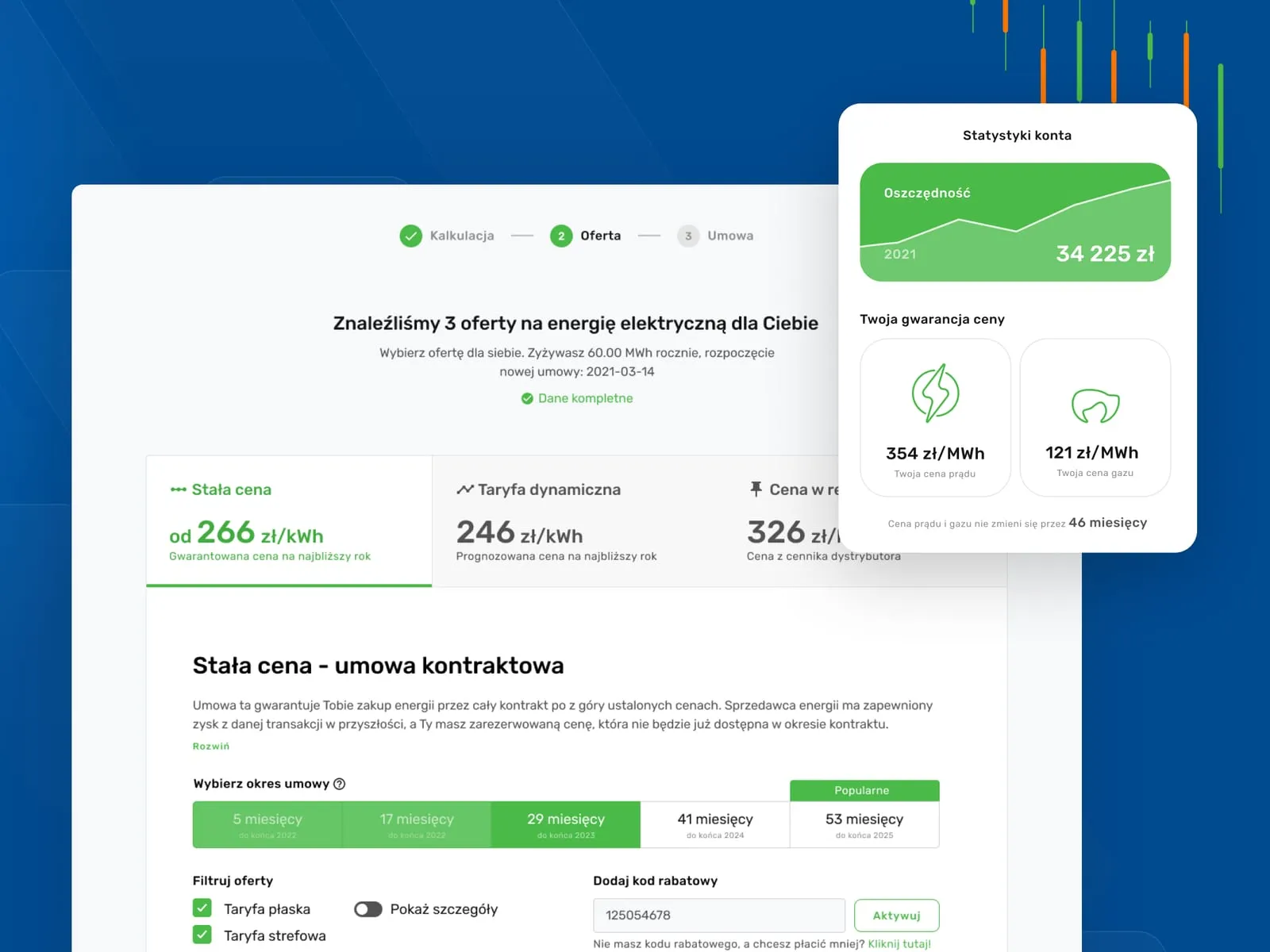
View projectA service comparing energy and gas offers for businesses - a savings calculator, a fixed-price guarantee for the years ahead and a client panel that summarises the bills. One coherent system across desktop and mobile, with a clear path from calculation to locking in a price.
-
Banking & Finance
Tip Card
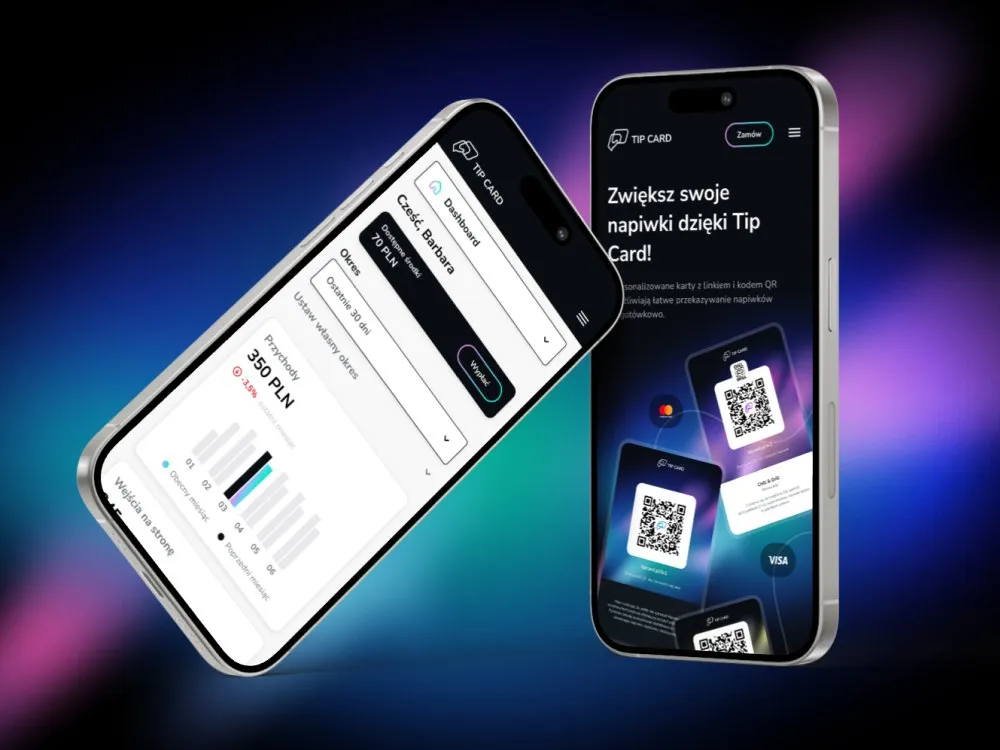
View projectTip Card - a cashless tipping platform based on personalised QR-code cards. A "Boost your tips with Tip Card!" landing page, a card store, sign-up and a client panel with earnings, transactions and payouts. A dark, colourful layout, desktop and mobile.
-

WygodnaDieta
App and online store for a meal-box diet service
-
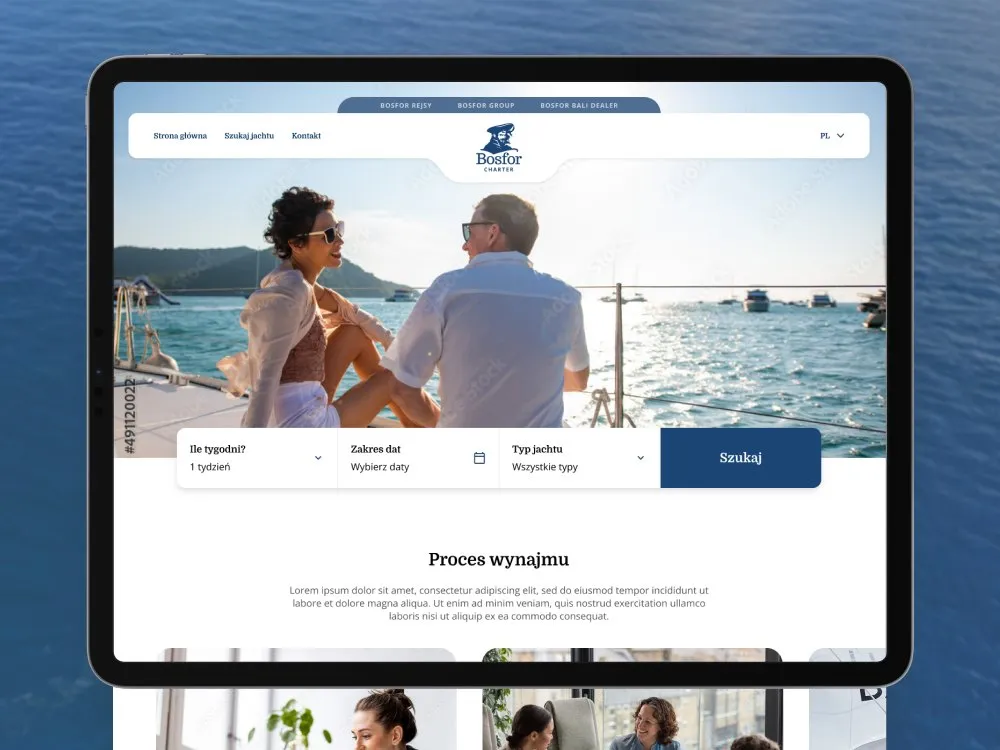
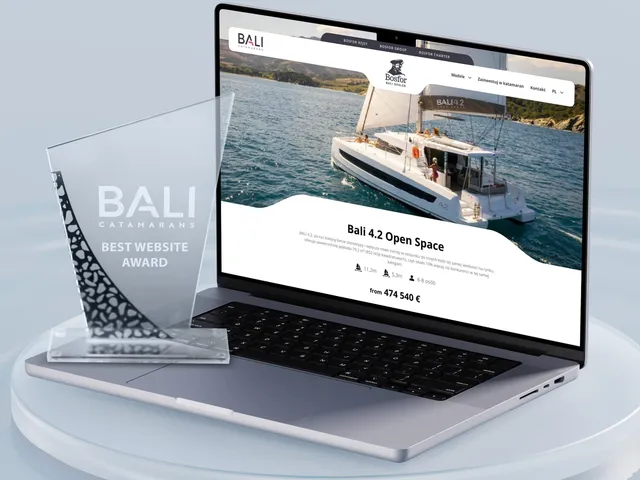
Bosfor Charter
Yacht charter platform with booking
-
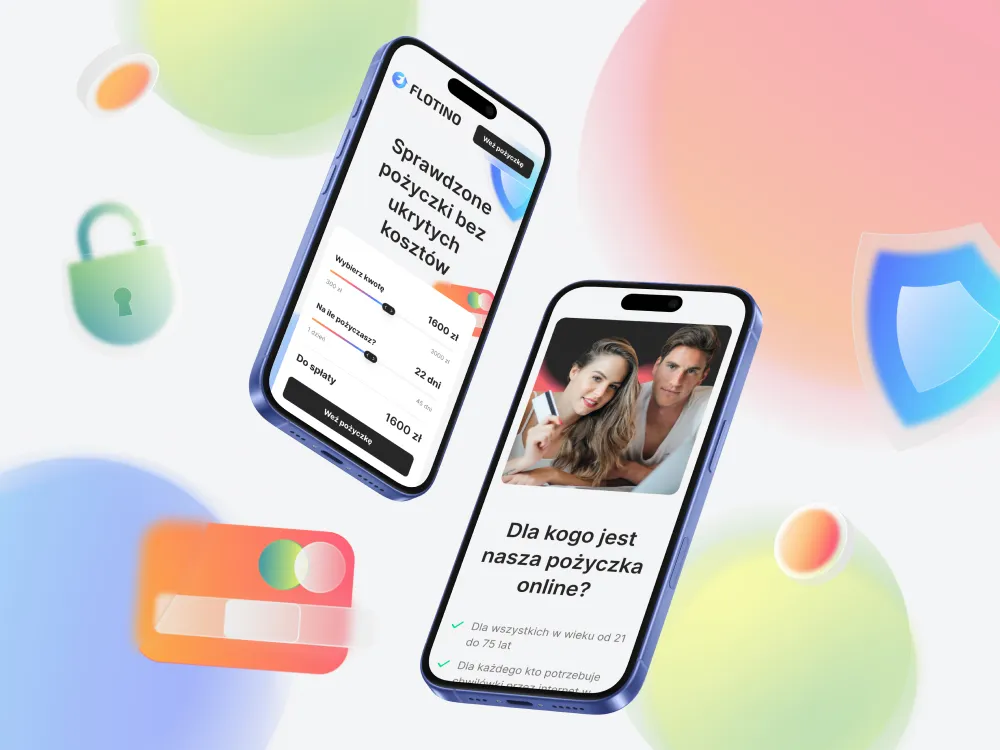
Flotino
Online cash loan service
-

Jawny Lublin
A watchdog portal on city transparency
- See what else we build Projects
Start your web app development
A browser front end, wired to your API and true to the interactive design.
Client voices
What our clients say
 Paweł Kowalski Managing Director, IBIF

“Working with UX Agency Wzór is a pure pleasure. From the very beginning we could count on their professionalism, creativity and flexible approach to every project. Both the documentation and the finished designs are prepared in a way that makes implementation easy and delivers an excellent user experience. Wzór’s working flow keeps the process smooth, and the end results always exceed our expectations. We warmly recommend UX Agency Wzór.”
 Mateusz Swół Chief Operating Officer, Sellace

“Our cooperation with UX Agency Wzór started with our own website. We really liked the way they work, so we decided to subcontract projects for our clients to them on a White Label basis. We loved their workflow, the way they hand projects over to our team, their documentation and their work on the design system. Now we can take on bigger risks.”

“Working with the UX agency Wzór on the NXC Liquid Cooling website went remarkably smoothly and professionally. The team stands out for its excellent, partner-like approach and its flexibility at every stage of the work. A major advantage was designing directly in code, which significantly shortened the time to launch while ensuring excellent technical and visual quality of the site. The end result meets our expectations 100%. I wholeheartedly recommend Wzór as a reliable partner.”
 Krzysztof Jakubowski President of the Board, Fundacja Wolności

“Working on the web portal is not the first project UX Agency Wzór has delivered for us. We’ve worked with them for years and we don’t intend to change that. Projects always arrive on time, communication is flawless, and we greatly value their advice and the quality of delivery.”




























The team
Who will run your web app development?
-

Aleksandra Bondar
Senior UX/UI Designer
View profileHow can I help you?
“I will prepare the design and documentation so developers don't have to guess anything, and answer their questions about view states.”
-
Patryk Korycki
CEO, Analityk Biznesowy
View profileHow can I help you?
“I will agree the scope of the first release with you and advise on the order in which to build the modules.”
-

Tadek Wadas
Senior UX/UI Designer
View profileHow can I help you?
“I will run usability tests on the built app before release and assess it against WCAG.”
FAQ
Frequently asked questions about web app development
How long does web app development take?
Web app development takes roughly 10-12 weeks. The timeline depends on the number of modules and roles, on whether the API is ready and documented, and on integrations with other systems, and we confirm the exact time once we know the scope.
Does web app development include the backend?
Our web app development covers the browser layer and integration with your API: login, session, permissions on the view side and error handling. We don't write a full backend, and when there isn't one yet, we write the data contract with you and work with your team or a vendor you choose.
What technology do you build web apps in?
Our default technology for web app development is React with TypeScript, on Next.js or Vite, with styles in Tailwind CSS. If you already maintain apps in Vue or Angular and have a team that will take over the code, we build in your technology, because the worse choice is one nobody on your side can maintain.
What if the API isn't ready yet?
When the API isn't ready yet, we start from the data contract and build the views against mocked server responses. Front end and backend then move in parallel, and connecting the real API comes down to swapping an address, provided we agree the contract together.
Will you take over an app written by another vendor?
We take over an app written by another vendor after a few days of assessing its state: architecture, dependencies, tests and permission handling. We then say plainly whether it is worth building on what is there or cheaper to build a new layer alongside and move modules into it one by one.
Where is the app's code once the build is finished?
Once the build is finished, the app's code is in your repository, because we work in it from the first commit. Ending the work needs no access changes or package handover, and documented code, tests and environment configuration stay where they are.
How is web app development different from building a website?
Web app development is about a product people log into, with roles and data saved into a system, while website development is about a site whose content the editors manage themselves. We don't assemble an app with data and permissions on a no-code platform, because its growth quickly goes beyond what such a platform can carry.
Do you work as a subcontractor for software houses?
As a subcontractor to a software house we act as your front-end team, in your repository, release rhythm and under your brand. The relationship with the end client stays entirely with you, and the terms of this work are described under White label UX/UI.
Who is responsible for the app after launch?
After launch the app is the responsibility of the team that maintains it, which is why we set up error monitoring before release so that team sees problems from day one. During the support period after release we fix production issues, run a handover session and leave component documentation behind.
Related services
Services related to web app development
You don't have a finished design yet.
We will design the app as an interactive design before anyone starts coding.
You have an app and don't know whether it's worth building on.
We will check the state of the code or plan how to rebuild the existing modules.
You need people for your own team.
We will add designers to your team or run projects under your brand.