

User research
At Wzór, a UX agency, you get a user research report with recommendations for your product, which our team or yours can then put into practice. We built the Jawny Lublin, EzzyGuide and Fonia projects on research with users. Research findings are often the starting point for product roadmap planning.







Challenges
What challenges does user research help you solve?
Our approach
Your team knows the product from the inside, and that is exactly why it cannot see what someone notices on their first visit. So we sit down with your customers and watch how they complete a task, instead of asking them what they like.
Scope of services
Our approach
Qualitative interviews will not tell you how many people will stumble, only what they stumble on, and five people are enough for that. You fix what came up, we test the next version with the next five, and the list of problems shrinks from round to round.
Scope of services
Our approach
We check it with people before you spend a quarter of your team's work on that feature. We show a clickable prototype, give a task and watch whether people find their way on their own, and you get the findings together with recordings that show every mistake.
Scope of services
Who it is for
Which companies do we run user research for?
Startups before their first version
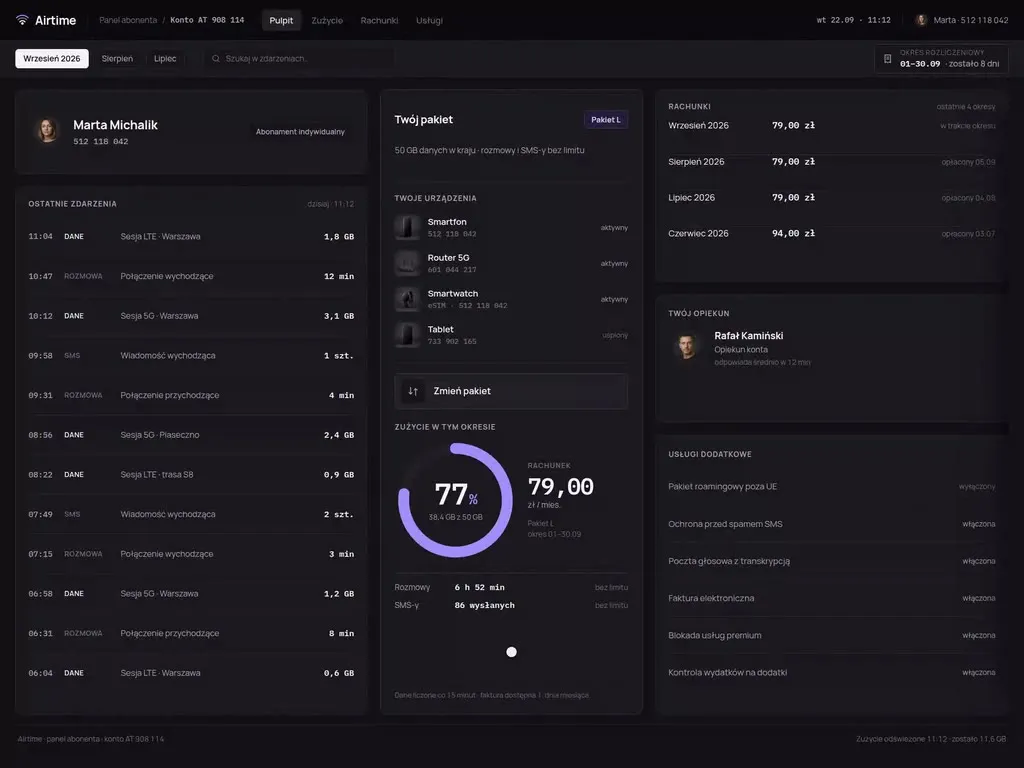
We research products that do not exist yet: that is how Fonia began, a cashback app delivered in four weeks. At that stage we talk to people from the group that is meant to use it, not to the founder's friends, because it is the only moment when a mistake costs nothing but time.
Products in the middle of design
We sit down with users mid-project, when there is already something to show and nothing yet to rewrite: that is how EzzyGuide was made. We give them a prototype and a task, and the fixes go back into the mockup the same week, before anyone writes code for it.
Portals and content sites
We run research where nobody buys anything and people come to find something instead: that was the case with the Jawny Lublin portal. We check whether readers reach the article they came for and what stops them on the way, because on a content site that is the whole journey.
Online stores
In a store we first ask how many buying paths there really are, because a first-time buyer and a regular customer with a shopping list move through it differently. We then plan the research separately for each segment, instead of averaging out people who came for different things.
B2B products and internal systems
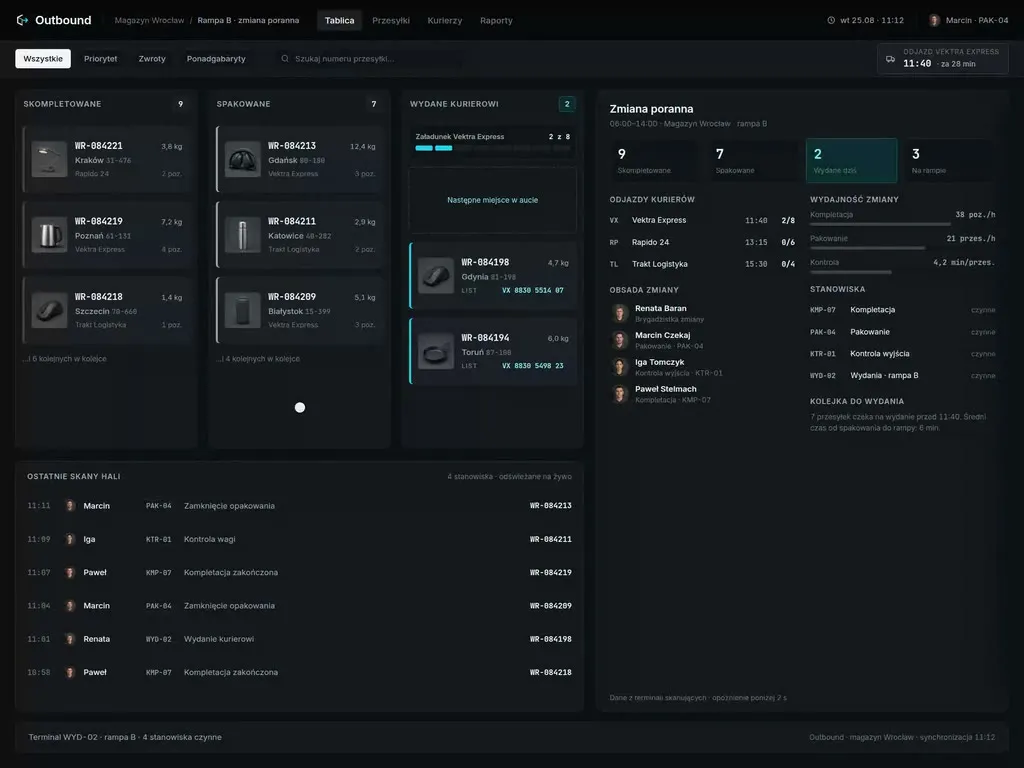
We also research tools whose user is an employee, so nobody gets recruited off the street. We meet at their workstation and look at a real task with real data, because in a lab scenario that work looks half as hard as it is.
- E-commerce
- Software
- Banking & Finance
- Healthcare
- Energy
- Media
- Aerospace & Defense
- Automotive & Mobility
- Crypto & Blockchain
- Education
- Entertainment
- Fashion & Accessories
- Grocery Retail
- Gaming
- Public Sector
- Insurance
- Logistics & Fulfilment
- Industrial Manufacturing
- Pharma
- Real Estate
- Retail & FMCG
- Cybersecurity
- Services
- Sport
- Telecommunications
- Transport & Travel

Why us?
Why choose our UX agency?
-
One question answered, not a report on everything
The research starts from the decision you have to make and tests exactly that. We do not study the product "in general", because a report like that is read with interest and then shelved.
-
Recordings instead of the researcher's opinion
We add clips from the recordings to the findings, showing the moment someone stops. A team that sees it with its own eyes does not have to take our word for it or argue over interpretation.
-
Findings in the language of fixes
We turn every barrier into a specific change with an implementation priority. You get something you can put into your task list on Monday, not a list of observations to think over.
-
Conversations with your customers, not with a panel
We recruit people who actually buy from you or are about to. Panel participants will complete the task, but they will not bring the context in which your product is used.
-
Research led by a senior
The interview is run by the designer who will later design the fixes, so nothing gets lost between the research and the product. That is how our team works, and it has been designing for nine years.
-
Proven client trust
We have designed for 115 brands, and Fonia, EzzyGuide and Jawny Lublin were built on research with users.
Process
How will we run your user research, step by step?
-
A conversation with your team

We agree what question the research has to answer
We write down what you do not know and where that uncertainty comes from: analytics, support tickets or conflicting views within the team. That gives us the research question, and only then the method and the participant profile. The order runs one way only, because a method picked first starts looking for a question to fit it.
Key steps
- The decision that is waiting for the research result
- The research question and the scope boundary
- Choosing the method to fit the question, not the other way round
- Participant profile and recruitment criteria
Deliverables
- The research question in writing
- Chosen method with the reasoning
- Recruitment criteria
- Research scope
-
Scenario and recruitment
We write the tasks and look for people who really work that way
The scenario is written before the first session, so every participant gets the same tasks and the results can be compared afterwards. We verify each participant's role with a screening survey and a short intro call, and participant fees are included in the quote, so you do not have to find anyone yourselves.
Key steps
- A scenario with tasks and questions
- Screener survey and an introductory call
- Turning away professional research participants
- Session dates and incentives
Deliverables
- Research scenario
- Screener survey
- Recruited group of participants
- Session plan
-
Sessions and analysis
We talk, record with consent and code the material
We run the sessions remotely or at the participant's workstation, depending on where the task really happens, and you can watch them live. Then the material goes into coding: recurring threads come together into findings, and each finding shows how many participants it came up with.
Key steps
- Sessions with participants, remote or at their workstation
- Recording and transcription with consent
- Coding what people said and grouping the themes
- Checking the findings against analytics
Deliverables
- Report with findings and recommendations
- Quotes and clips next to the findings
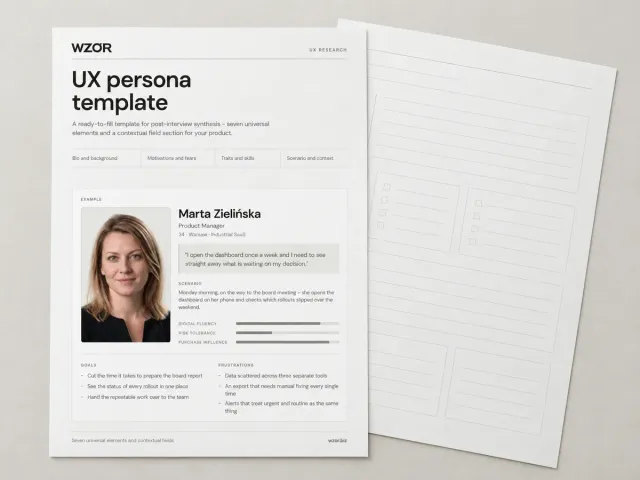
- Personas, where the scope calls for them
- Transcripts
-
Review and hand-over of the material
The findings go to the people who will make the decisions
We go through the report with the product team, the designers and the developers, because each of them will do something different with the same finding. You keep the full set of material: the scenario, the survey, transcripts, recordings within the scope of consents and the coding scheme, so your team can run the next round on its own.
Key steps
- A review workshop with your team
- Going through the recordings where findings are disputed
- Deciding what goes into the next tasks
- Handing over the source material
Deliverables
- Findings discussed and turned into decisions
- The complete source material
- The coding scheme for the answers
-
Another round after the changes
We check whether the fix worked for the same people
Once the changes are live, we come back with the same scenario, so the result can be compared with the previous round rather than judged afresh. Several smaller rounds give you more than one big study, because the design has time to improve between them.
Key steps
- Repeating the scenario after the changes are live
- Comparing the results with the previous round
- Checking that the fix did not create a new problem
- Deciding on the next segment or method
Deliverables
- Comparison of the rounds
- List of findings confirmed and disproved
- Plan for the next round
Methods and technologies
Methods and tools we use in user research
-
In-depth interviews
We run five to eight in-depth interviews per segment, because with that many conversations a recurring thread can be told apart from a one-off opinion. An interview shows the reason that no chart reveals.
-
Usability testing
Usability tests with five people catch about 85 percent of problems, and three such rounds give more than one study with fifteen. That is why we propose several smaller rounds instead of one big one.
-
Card sorting and tree testing
Card sorting and tree testing check the content structure with participants before anyone starts designing it. What comes out is a structure in which people find things where they look for them.
-
Tobii eye-tracking
Eye-tracking on Tobii hardware shows what a participant really looks at, but it needs lab conditions and costs more than a remote session. We use it when the argument is about whether something gets noticed at all.
-
Quantitative surveys
We start quantitative surveys at a hundred responses and aim for statistical significance at three hundred. They measure the scale of something we first saw in the interviews.
-
Maze, Lookback and Otter.ai
Maze, Lookback and Otter.ai handle our remote sessions and transcripts, except that the automation mangles industry terms. We correct the quotes that go into the report by hand and cite each one with the minute of the recording.
Selected work
Our work
-
Grocery Retail
WygodnaDieta
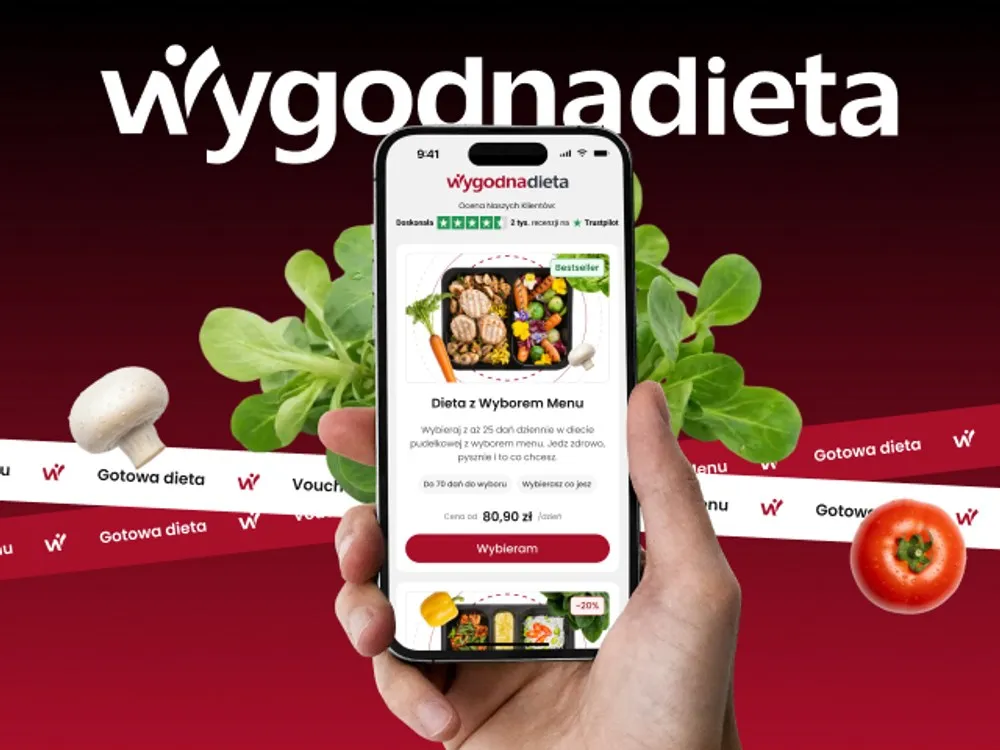
View projectThe WygodnaDieta.pl app and online store - a meal-box diet service with menu-choice diets, ready-made plans and gift vouchers. Diet selection and setup with a dietitian consultation, account management (delivery calendar, balance, notifications), picking add-ons for kids, and finalising an order with a choice of payment method (Blik, card, bank transfer, GooglePay), across mobile and web.
-
E-commerce
Lestore
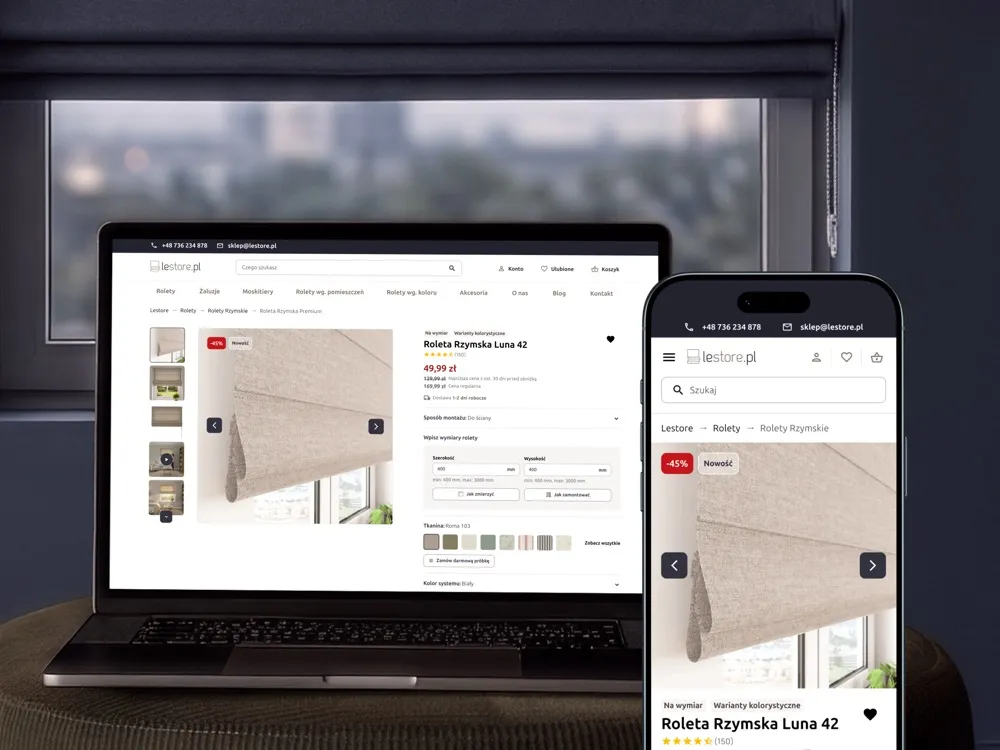
View projectLestore online store - specialising in made-to-measure Roman blinds and shades. A product page with a size-and-fabric configurator, a category listing with filters and promotions, "How to measure your window" and "How to install it" sections, a free fabric-sample order and customer reviews, across desktop and mobile.
-
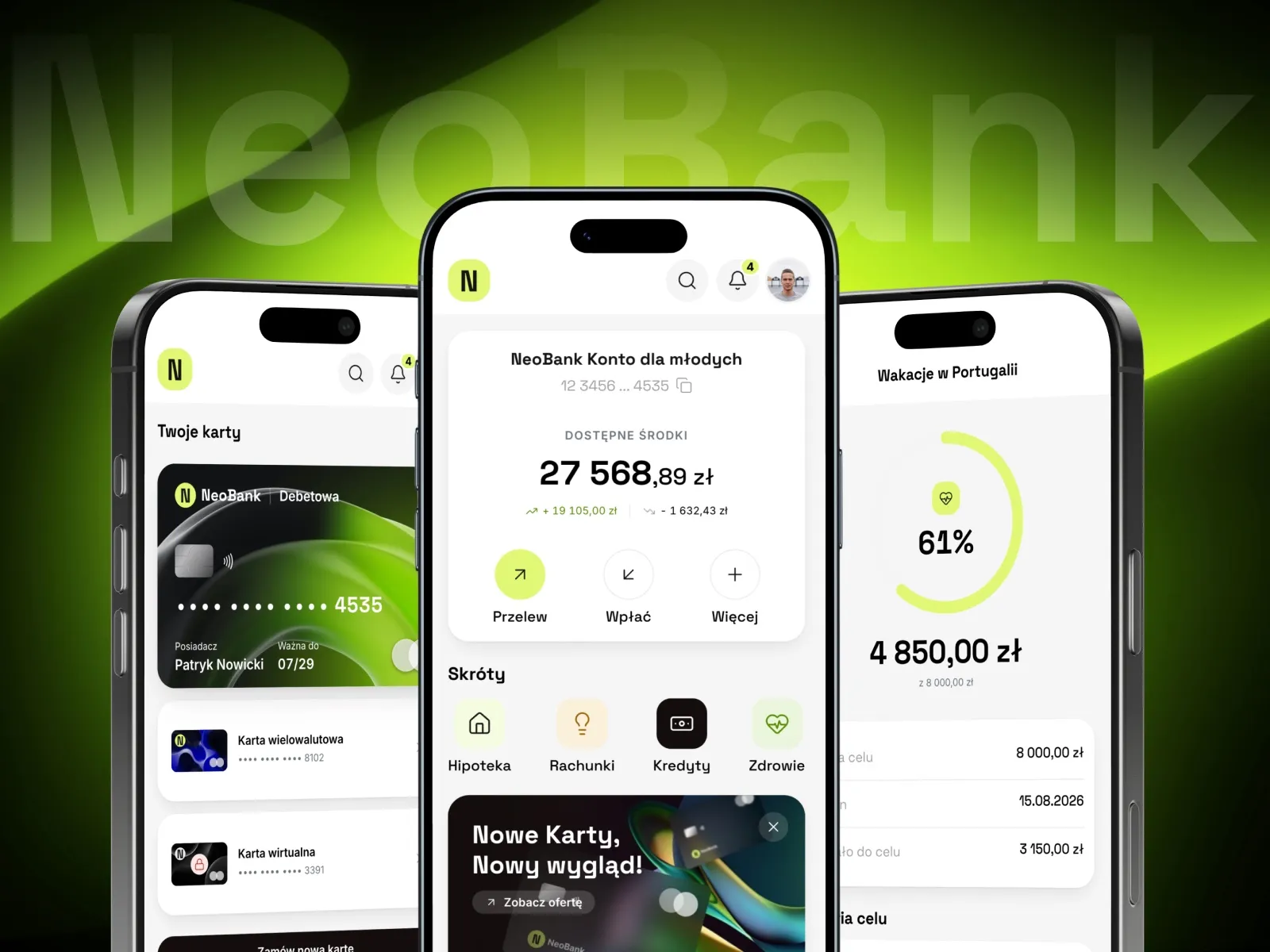
NeoBank
Banking app with currency exchange and savings goals
-
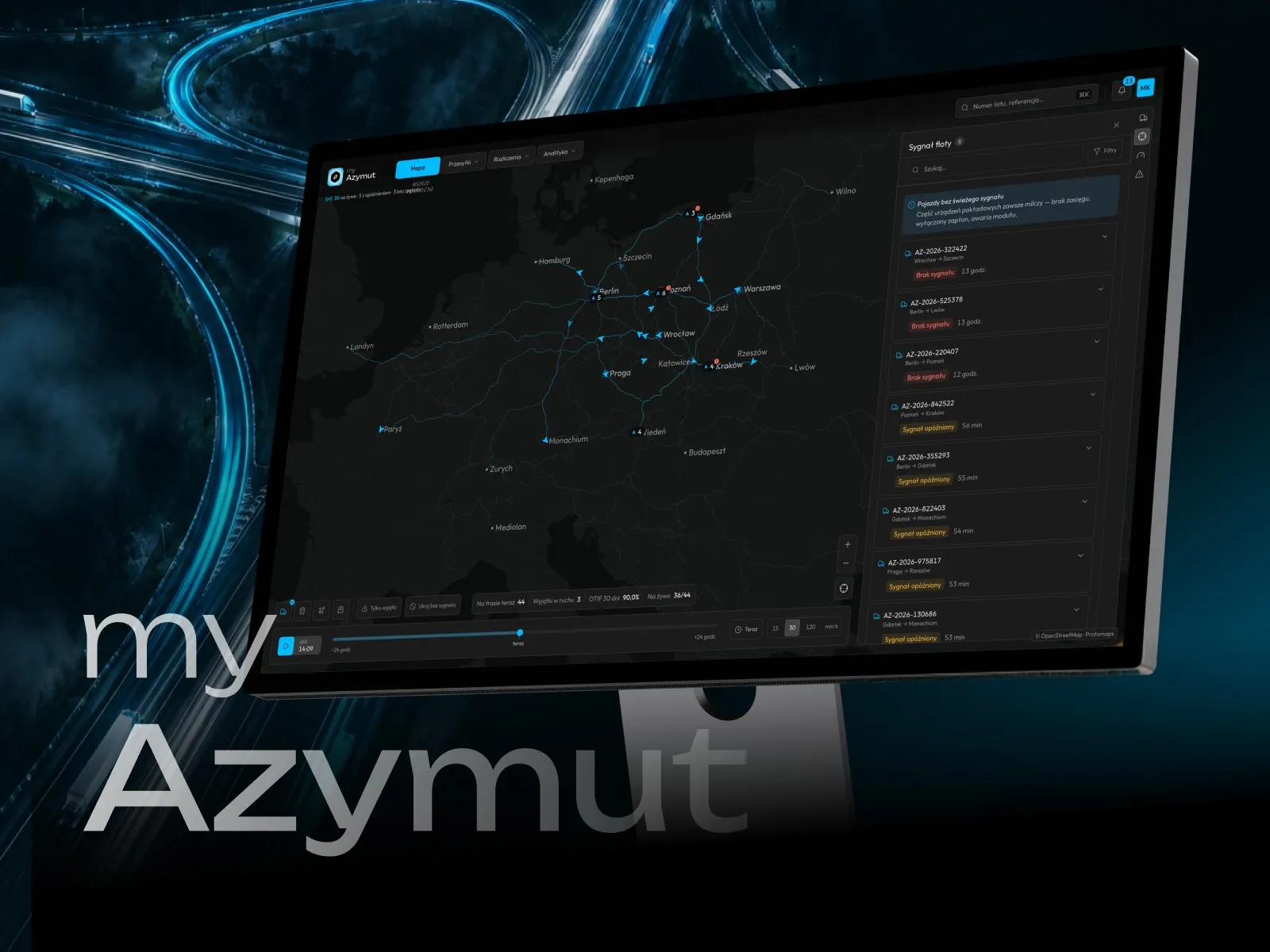
myAzymut
Client portal with a network map and shipment tracking
-
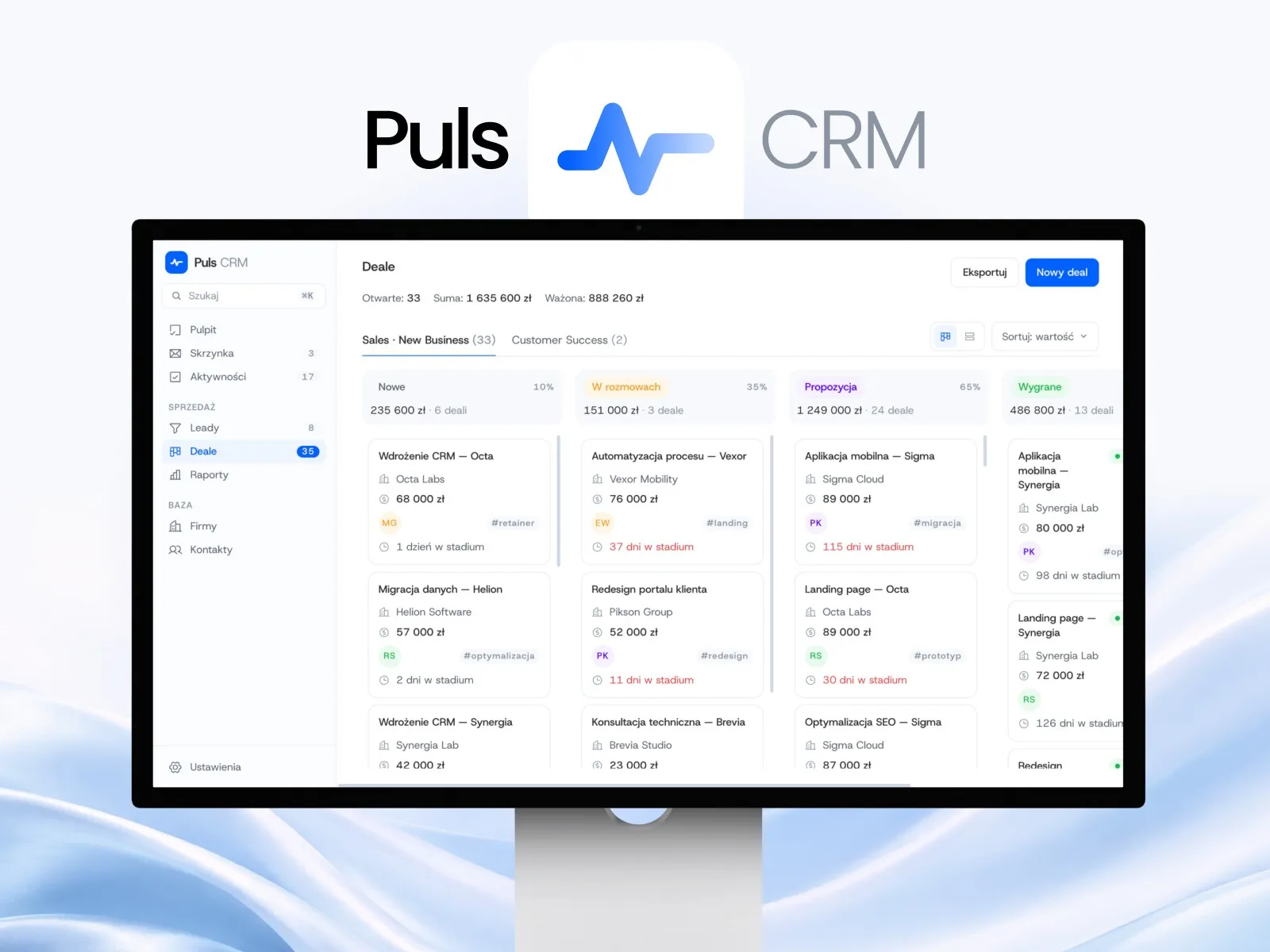
Puls CRM
CRM app with a kanban sales pipeline
-
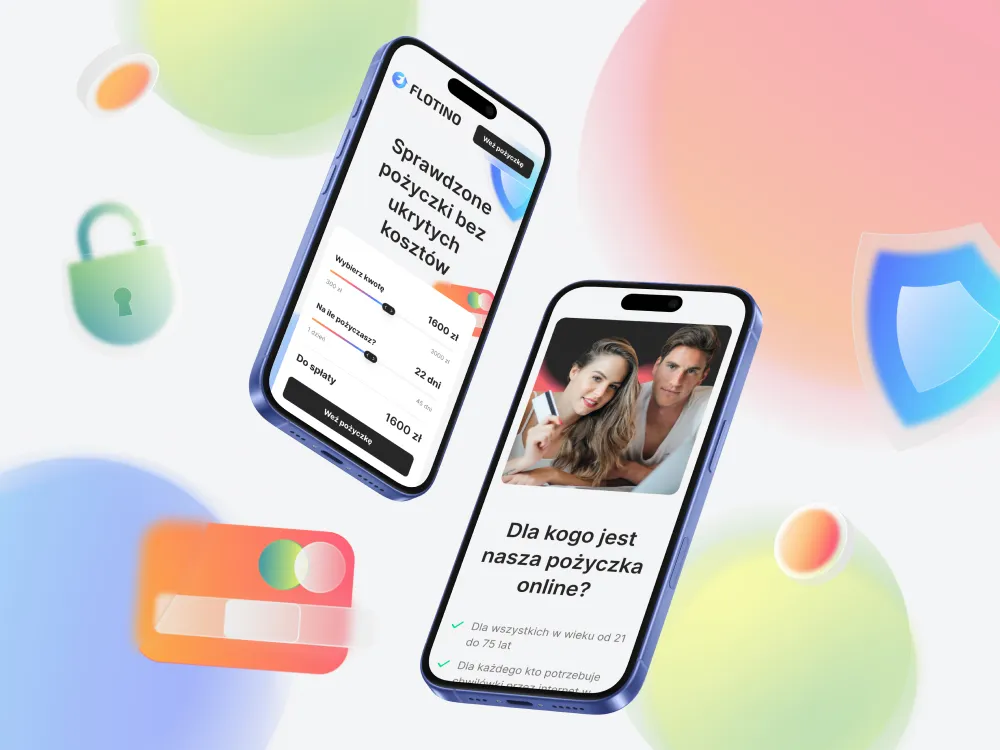
Flotino
Online cash loan service
-
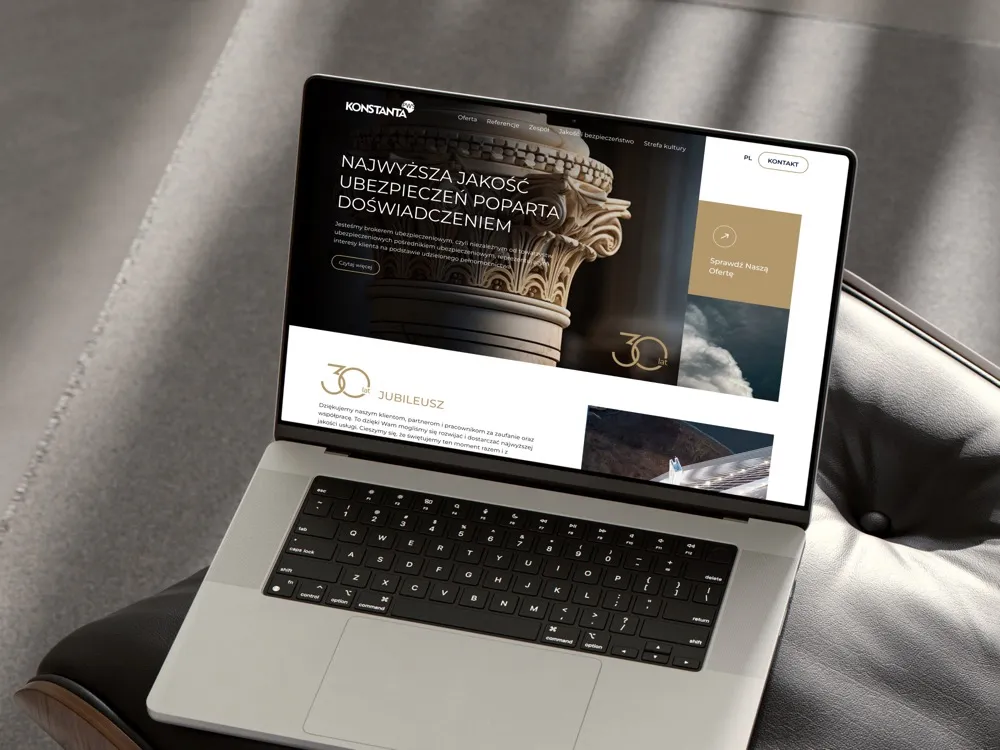
PWS Konstanta
Website for an insurance broker
-
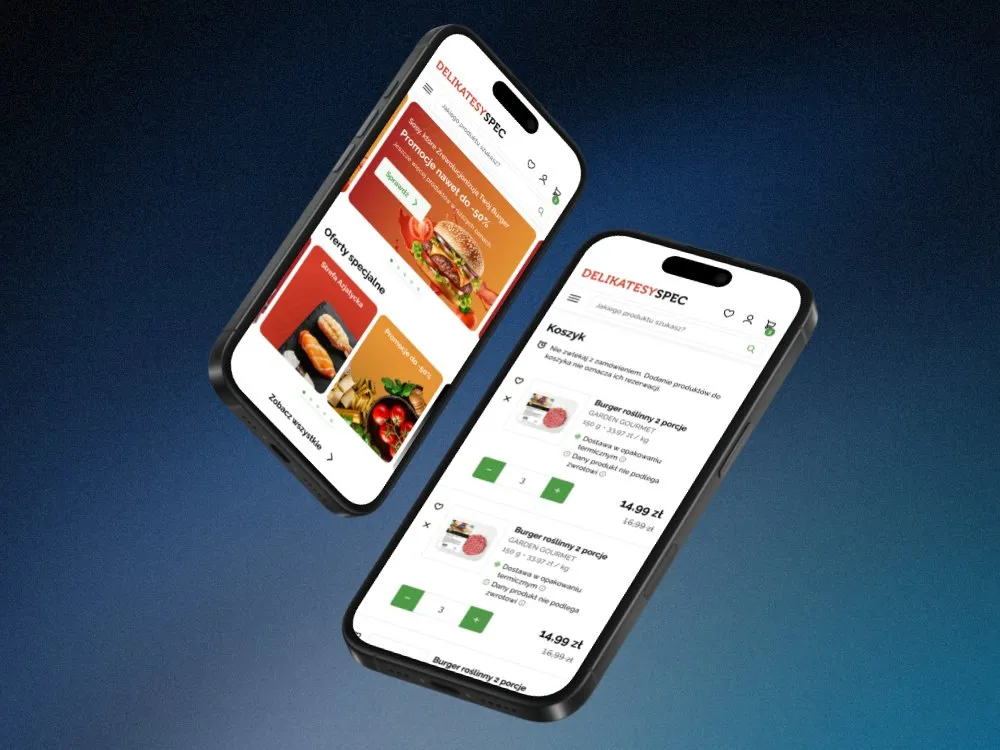
SPEC Food
Online store for a food delicatessen
-
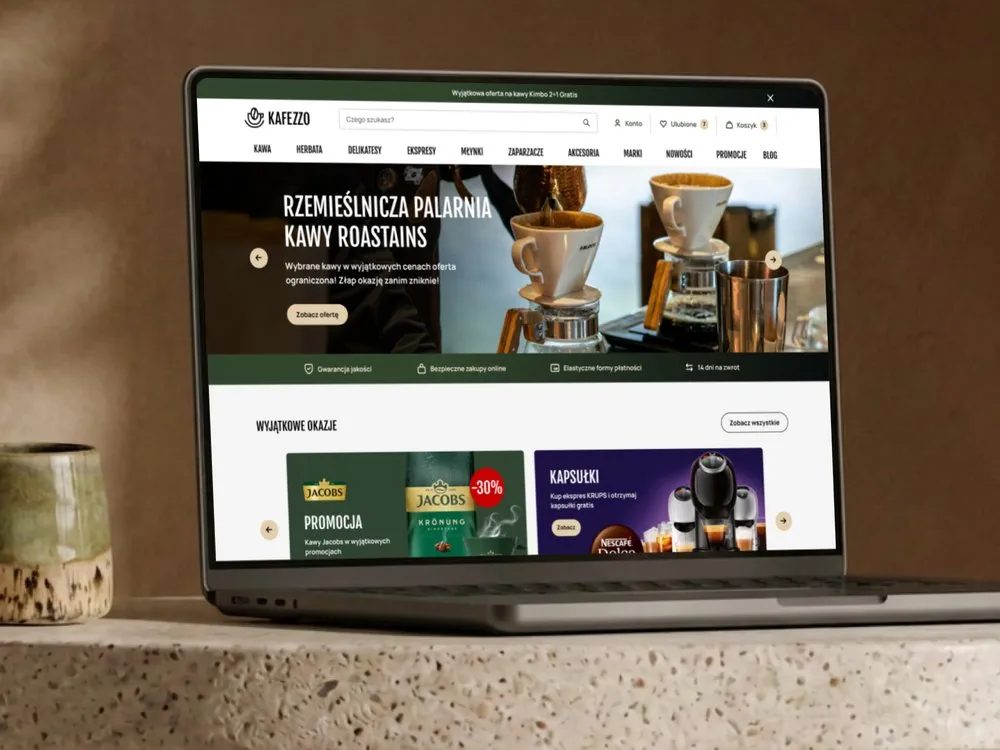
Kafezzo
Online store for coffee and tea
- See what else we build Projects
Commission user research
Recruitment, sessions and a report that leads to product decisions.
Client voices
What our clients say
 Maja Wieloch-Silecka Operations Director, Bosfor Group

“Working with the Wzór team was a genuinely great experience! They always answered our questions quickly and were flexible about our comments. They have no shortage of creative ideas and are at the same time thoroughly reliable and on time. The end result fully met our expectations; we recommend them to anyone looking for professionals who care.”
 Piotr Alberski Chief Operating Officer, Agencja XO Media

“Our clients expect us to act fast and effectively across a very wide scope - from building a brand, through a website with a store, to running an effective sales campaign. Not an easy task, but doable when you have a tight-knit team and partners who take on challenges on the fly. For us, quality, accountability and commitment are key, and working with UX Agency Wzór gives us that 100%.”
 Mateusz Swół Chief Operating Officer, Sellace

“Our cooperation with UX Agency Wzór started with our own website. We really liked the way they work, so we decided to subcontract projects for our clients to them on a White Label basis. We loved their workflow, the way they hand projects over to our team, their documentation and their work on the design system. Now we can take on bigger risks.”
 Dawid Śmiglarski Area Manager, iLeopard

“After migrating our store to PrestaShop and changing the template, we decided to have UX Agency Wzór run a UX audit. It surprised us to learn there were over 40 UX defects in our system, 5 of them critical. The Wzór team not only identified the problems but also set out practical recommendations and concrete examples of how to fix them. At the meeting where we went through the audit we also received valuable input and together chose a new module for the checkout process. We believe the changes will benefit both our customers and the growth of our brand. We thank UX Agency Wzór for their commitment and professionalism, and we will certainly use their services again.”


























The team
Who will run your user research?
-

Aleksandra Bondar
Senior UX/UI Designer
View profileHow can I help you?
“I will prepare a prototype with tasks for the participants and run the sessions, making sure I do not show anyone the way.”
-

Katarzyna Adamczuk
Prezes, Analityk Biznesowy
View profileHow can I help you?
“I will set what we hear in the interviews against your analytics, so every finding shows how many customers it affects.”
-
Patryk Korycki
CEO, Analityk Biznesowy
View profileHow can I help you?
“I will agree the scope, budget and schedule of the research with you, and at the end run the workshop where we turn the findings into decisions.”
FAQ
Frequently asked questions about user research
What is user research?
User research means interviews and tests with people who use your product or are going to, carried out so that design decisions rest on how they behave rather than on assumptions. It covers, among other things, in-depth interviews, usability testing, card sorting and surveys.
How many participants does user research need?
User research usually needs five to eight people from one customer segment, because that many interviews reveal most of the recurring problems. With several segments, each one gets its own group, and with a quantitative survey we count responses in the hundreds.
How does usability testing work?
In a usability test a participant carries out a specific task in the product or a prototype, while the researcher watches where they hesitate, make mistakes or give up. The participant thinks aloud, so you see not only the error but also the reason behind it.
Do you recruit research participants?
We recruit research participants ourselves, most often from among your customers or from people who do the work we are asking about every day. People who move professionally from study to study are screened out, because they answer with practice rather than with experience of the product.
Is user research GDPR-compliant?
We run user research in line with the GDPR: participants sign consent to recording and data processing, and personal data in the report is pseudonymised. For banking, healthcare and the public sector we add methodology documentation and an NDA.
Can we watch the research sessions live?
You can watch the research sessions live in observer mode or view them later from the recording. Someone from your team can also pass questions to the moderator during the interview, without cutting in on the participant.
Which research method should we choose?
The research method is chosen to fit the question you need answered: interviews test an idea, usability testing explains a drop in conversion, and card sorting and tree testing check the content structure. If you do not know where to start, we point to the cheapest method that will give an answer during the first conversation.
What do we get after user research?
After user research you get a report with findings and recommendations, quotes and clips from the recordings next to the findings and, where the scope calls for it, personas as well. On top of that come the transcripts and the answer coding scheme on which every finding is based.
How long does user research take?
User research usually takes three to four weeks, and the timeline depends mainly on how fast participants can be recruited. Three weeks is enough for one segment and one method, while a narrow professional profile or several segments at once make the work longer.
Related services
Services related to user research
You have an idea and do not yet know whom to ask about it.
We will put the assumptions and the audience in order before anyone sits down to interviews.
You want a quick assessment without recruiting participants.
We will go through the product as experts or talk about one specific problem.
You already know what to fix, and it needs designing.
We will turn research findings into a clickable prototype or an app design.