

Sport
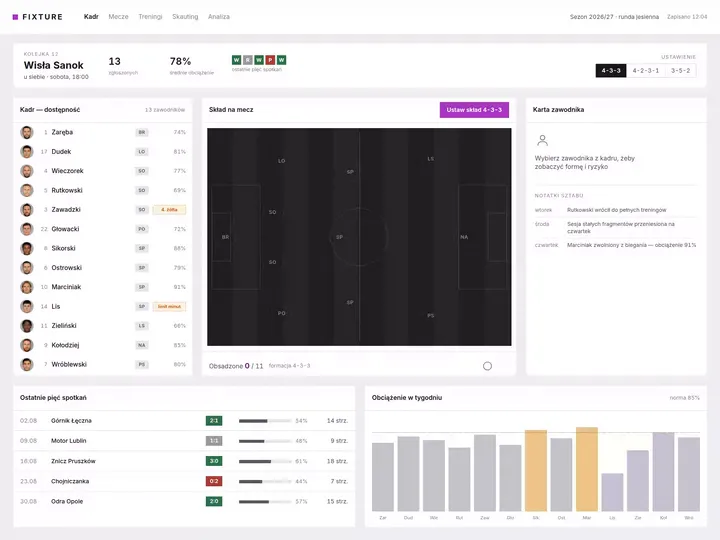
At Wzór UX agency you receive an interactive design of your sports software, be it a club management system, a training app or a fan app, and either our team or your own developers can then build it. That is how Fixture came about, a sports club management system for a football team's coaching staff.







Challenges
What challenges do we help solve in sports?
Our approach
When designing a club system, we set the fee to be calculated in advance for the whole group, with a sibling discount, and the parent pays from a link in a message without typing in an account number. The payment lands on the player's account at once, so the treasurer has a single list of balances in front of them instead of a bank statement.
Scope of services
Our approach
In the member apps we design, a reminder before each class lets members cancel a booking with a single tap. The freed spot goes straight to the first person on the waiting list, who gets a notification about it, so reception does not have to ring anyone before the class.
Scope of services
Our approach
We design set logging to fit into the rest between sets: the weight and reps from the previous session are already in the fields, and the client only corrects what has changed. Next to the plan the trainer sees which sets were done and sets next week's weight by what the client actually lifted.
Scope of services
Who it is for
Which sports companies do we design software for?
Club and academy management systems
Clubs and academies where the office manages groups, fees and player documents, coaches work from their phones at training, and the first team's coaching staff plan the week before a match. We designed Fixture, a sports club management system, where a squad column showing each player's workload sits next to a weekly workload chart with its norm and the staff's notes from the previous days. A coach who reads in the morning that a player is back in full training does not have to ring the physio to ask.
Gym and fitness club management systems
Fitness clubs and gym chains where members buy a pass and book classes in the app, and reception handles entries at peak hours. We designed printed material for a strength equipment brand: the Iron Fitness catalogue, where the Hotel Cable series spread shows a training multi-station with a dimension table. When designing a fitness club system, we put the pass, the bookings and the entries on one member account, so reception does not look for the member in three places.
Training apps and coaching apps
Personal trainers who coach clients online, running coaches and companies with a training app, where someone logs a session in the gym or on the road and the coach plans the next week. We put the coach's note on an exercise next to that exercise in the plan rather than in a separate chat, so the client reads it as they step up to the bar.
Fan apps
Professional clubs and their marketing teams, for whom the app is a channel to the fans: the line-up ten minutes before kick-off and live coverage during the match. In the club apps we design, fans choose what they get notifications about, such as goals, the line-up or injuries, because fans quickly mute an app that pings them about everything.
Sports federation systems
Sports federations and their regional associations, where federation staff review clubs' applications to register players, and someone at the club submits them together with the documents. We lay out the application form so that it shows which document is still missing before it is sent, instead of returning the application for completion.

Why us?
Why choose our UX agency?
-
Fuller training groups
A parent who learns about a moved session from a notification sent to their group, not from a forwarded message, brings the child at the right time. Attendance stops depending on who happened to read the chat.
-
Coach payroll without lists from memory
When coaches record attendance in the system, the list of sessions each of them ran, cover included, builds up along the way. The office settles coaches' pay from a ready summary, not from notes gathered at the end of the month.
-
Fans in the app after the final whistle
A fan who finds match highlights and the coach's comments in the app straight after the game also opens it during the week between matches. The club keeps in touch with them all season, not only on matchday.
-
A senior team
A team of senior UX designers who have been designing interfaces for nine years, today for large organisations, SaaS companies and software houses. Seniors will take on your club system or training app.
-
Proven client trust
We have designed for 115 brands, and most of them come back to us with their next project.
-
Higher quality with AI
A designer with AI tools checks more variants of a class timetable or a player card than they could draw by hand and picks the one that works. What reaches you is a tested version, not the first one that came out.
Process
How will we design your sports software, step by step?
-
A conversation with your team

We set the goals and list the systems your club runs on today
We sit down with the board, the sporting director or the head of coaching, and at a fitness club with the club manager and the person responsible for sales. Together we pick one process to change, such as class bookings or fees, list the programs and spreadsheets the project has to work with and agree the measures of success.
Key steps
- Conversations with the board, coaches and the club office
- A review of the systems: club software, payments, gates, apps
- Choosing the process we start with
- Agreeing the measures: attendance, arrears, empty spots in classes
Deliverables
- Project brief
- Map of systems and their owners
- List of measures
- Scope of the first stage
-
Discovery at the club
We watch the work at training, in the office and at reception
We stand next to the coach during a group session, sit in the club office while the treasurer reconciles payments, and at a fitness club's reception at the busiest hours. We note the workarounds: an attendance spreadsheet, a parents' group on a messenger, a waiting list kept by reception, a training plan sent as a file.
Key steps
- Observing a training session and the coach's work with the group
- A session with the office while payments are reconciled
- Observing reception at peak hours
- Interviews with coaches, parents and members
- A review of the club's spreadsheets, messages and rules
Deliverables
- Research report
- Process map with workarounds
- Prioritised list of problems
-
Interactive system design

A design that coaches, parents and members click through
The screens are designed straight for the target devices: the coach's phone, the staff and office computer, the reception screen, and the phones of members, parents and fans. We test the prototype with coaches at training and with parents and members on their own phones, and make the changes before it goes to the developers.
Key steps
- Screen architecture by role: coach, staff, office, reception, member, parent, fan
- Interactive design for the target devices
- Exception states: a cancelled session, an overdue fee, a full class, no data from the watch
- Prototype tests with users
Deliverables
- Interactive design of every screen
- Component library
- Description of behaviour in exceptions
- Prototype test report
-
Build or design hand-off
The new screens reach the club together with the integrations
Our team builds the design, or we hand it over to your developers or to your system vendor. Either way, we spell out where each screen takes its data from and where it sends it: online payments, gates and sports cards at the entrance, watches and health apps, and what it shows when one of those connections does not respond.
Key steps
- Screen and field specification for developers
- Integration map: payments, gates and sports cards, watches and health apps
- Support for the implementation team
- Tests on test data before launch
Deliverables
- A working system or a package ready to build
- Integration specification
- Pre-launch test report
-
Measuring after launch
We check against club data whether the change worked
After launch we compare attendance, fee arrears, empty spots in classes and the number of logged sessions with the measurement taken before the change. Which improvement comes next is decided with you on the basis of that comparison.
Key steps
- Measuring attendance and arrears after launch
- A review of class bookings and cancellations
- Conversations with coaches and reception after launch
- Plan for the next improvements
Deliverables
- Measurement report
- Prioritised list of improvements
- System development plan
Methods and technologies
Systems and regulations we work with in sports
-
Garmin Connect
When clients train with Garmin watches, the plan from the app reaches the watch through Garmin Connect, and the session result comes back to the app through Garmin's cloud rather than live from the watch. Next to data from the watch we therefore show when it arrived, so that nobody judges training on data the app does not have yet.
-

Apple Health
Apple Health asks for permission separately for each type of data, and the app does not know whether someone has denied it read access: it then sees only what it has saved itself. We give an empty heart rate chart in a training app a pointer to where permission can be checked, so it does not look like days without any training.
-
MultiSport
When a club connects MultiSport cards to the eFitness system, the gate opens only after the visit is confirmed in both systems, and a new card user enters the database as a temporary profile with the card number in place of a first name. When designing the reception screen, we tell such profiles apart from members with a pass, so they can be completed at the next visit.
-
Extranet PZPN
In Polish football, changes of a player's club membership are submitted through the Extranet system of the Polish Football Association (PZPN). If a club also records its players in its own system, we add a field on the player card for the status of the player's case with the association, so it is clear whether the transfer has gone through before the player joins a group.
-
GDPR and health data
Information about a player's injury is, under the GDPR, data concerning health, that is personal data related to their physical health which reveal information about their health status, and Article 9 of the GDPR prohibits processing such data unless one of the conditions in its paragraph 2 applies, for example the player's explicit consent to the processing for one or more specified purposes, except where Union or Member State law provides that the prohibition may not be lifted by the player. In a staff panel we design, injury details sit separately from availability status and are visible only to people granted access.
-
Club week scenarios
We lay out club week scenarios before testing a prototype: a session cancelled on Tuesday, a class moved to Thursday, a match on Saturday. A coach, a parent and a member go through that week in the prototype, and we watch for the day on which the system falls behind them.
Selected work
Our work in sports
They include product catalogues for sports equipment, a basketball team's logo and kit, visual identities and an app that connects mountain guides with travellers.
-
Transport & Travel
EzzyGuide
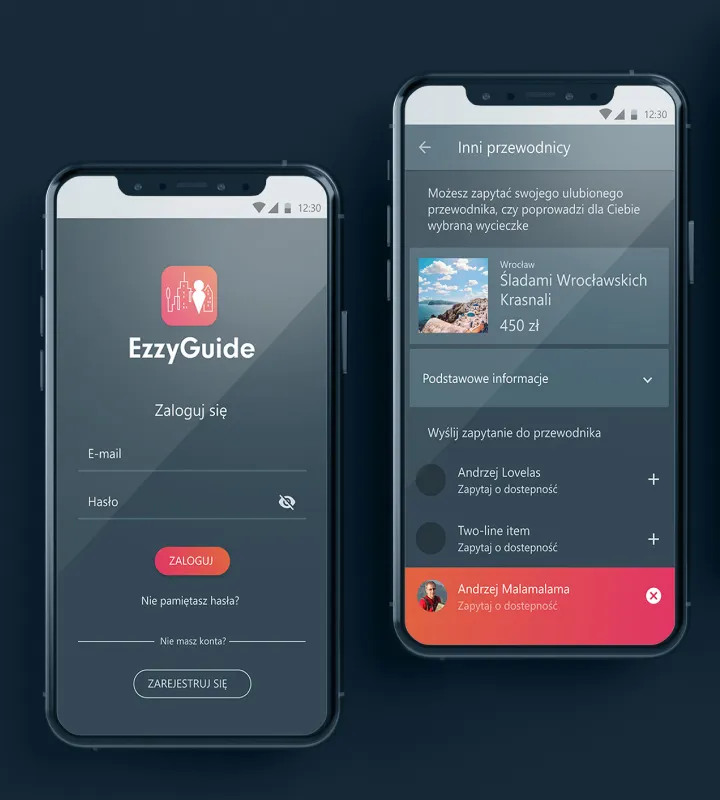
Read case studyBuilding on an existing specification, we designed the UX of a tours app together with its user interface (UI).
-
Transport & Travel
EzzyGuide
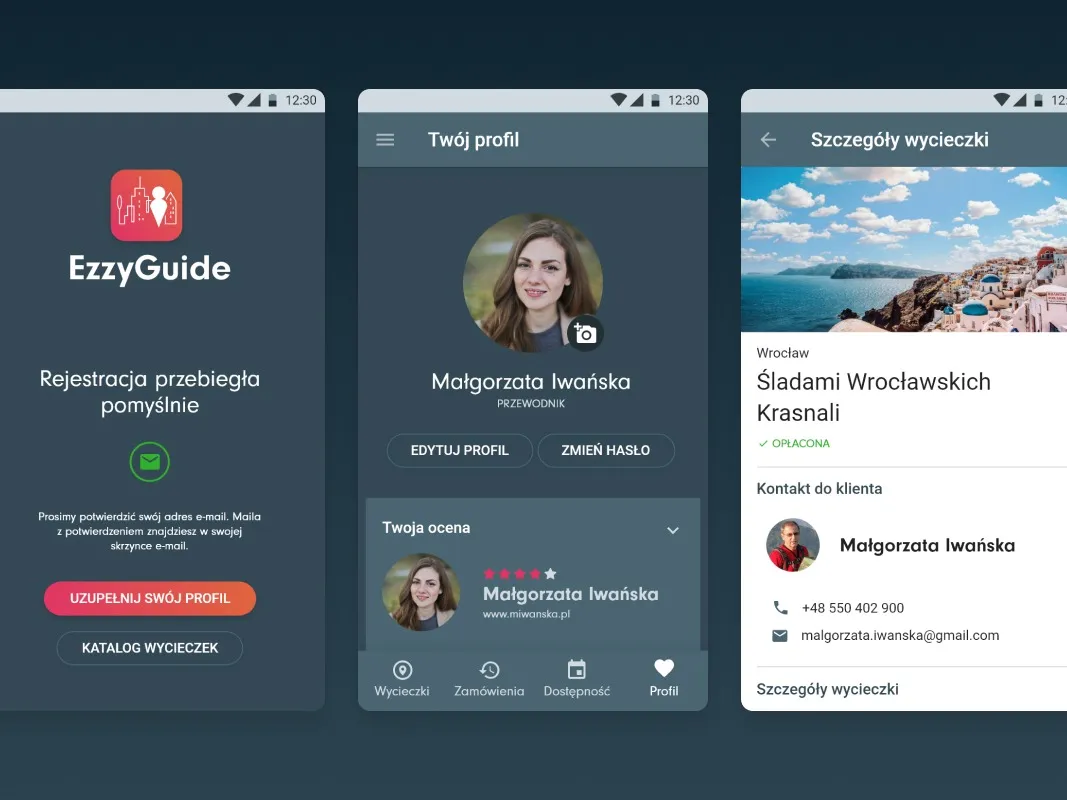
View projectEzzyGuide connects licensed mountain guides with people looking for tours: a catalogue of offers, date booking and contact with the guide, all in one app. We designed two account types, the tour order flow, and guide and traveller profiles.
-
Marcin Danych
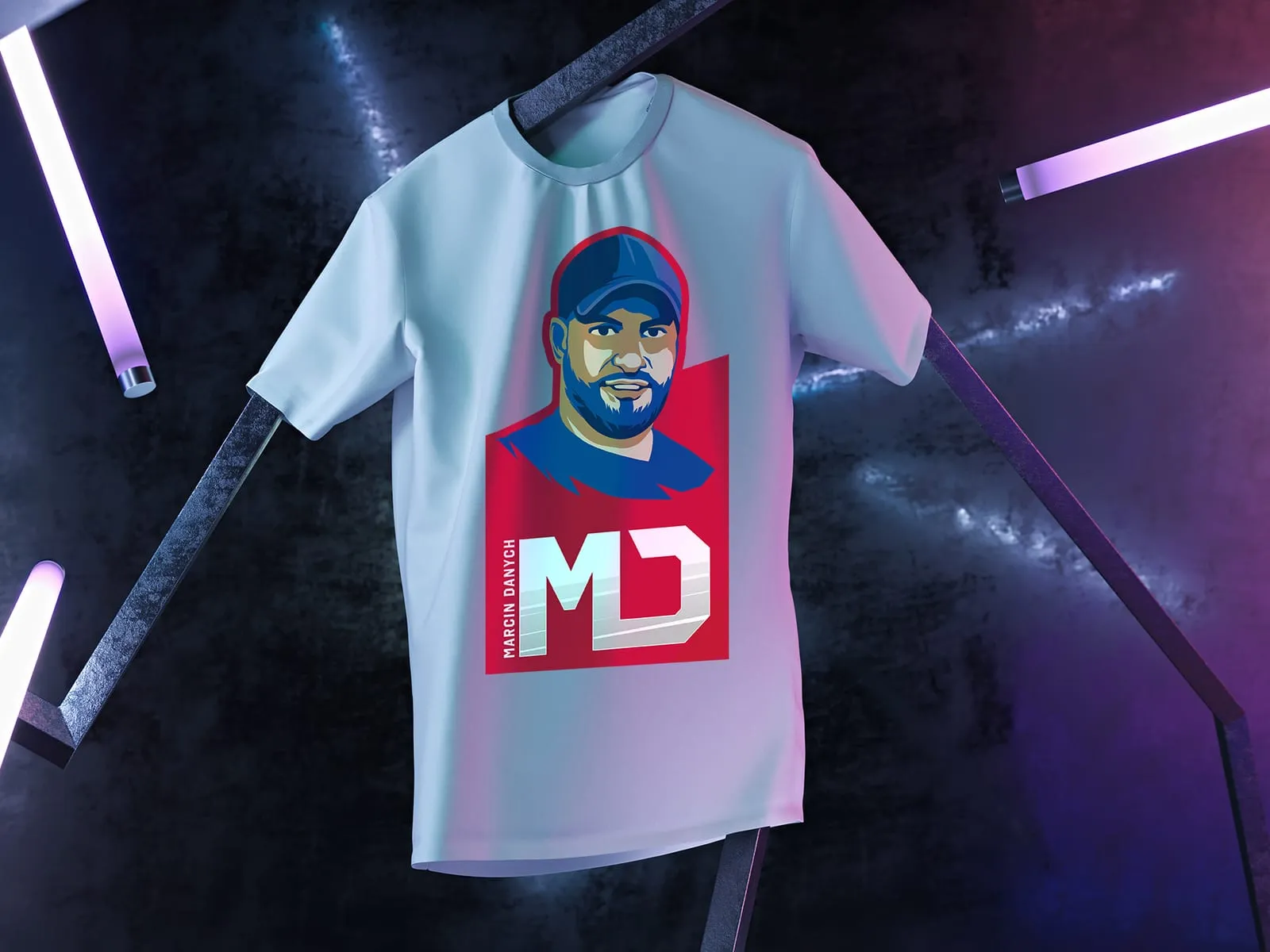
Personal brand logo and "Areny NBA Tour"
-
Mr Buzzer
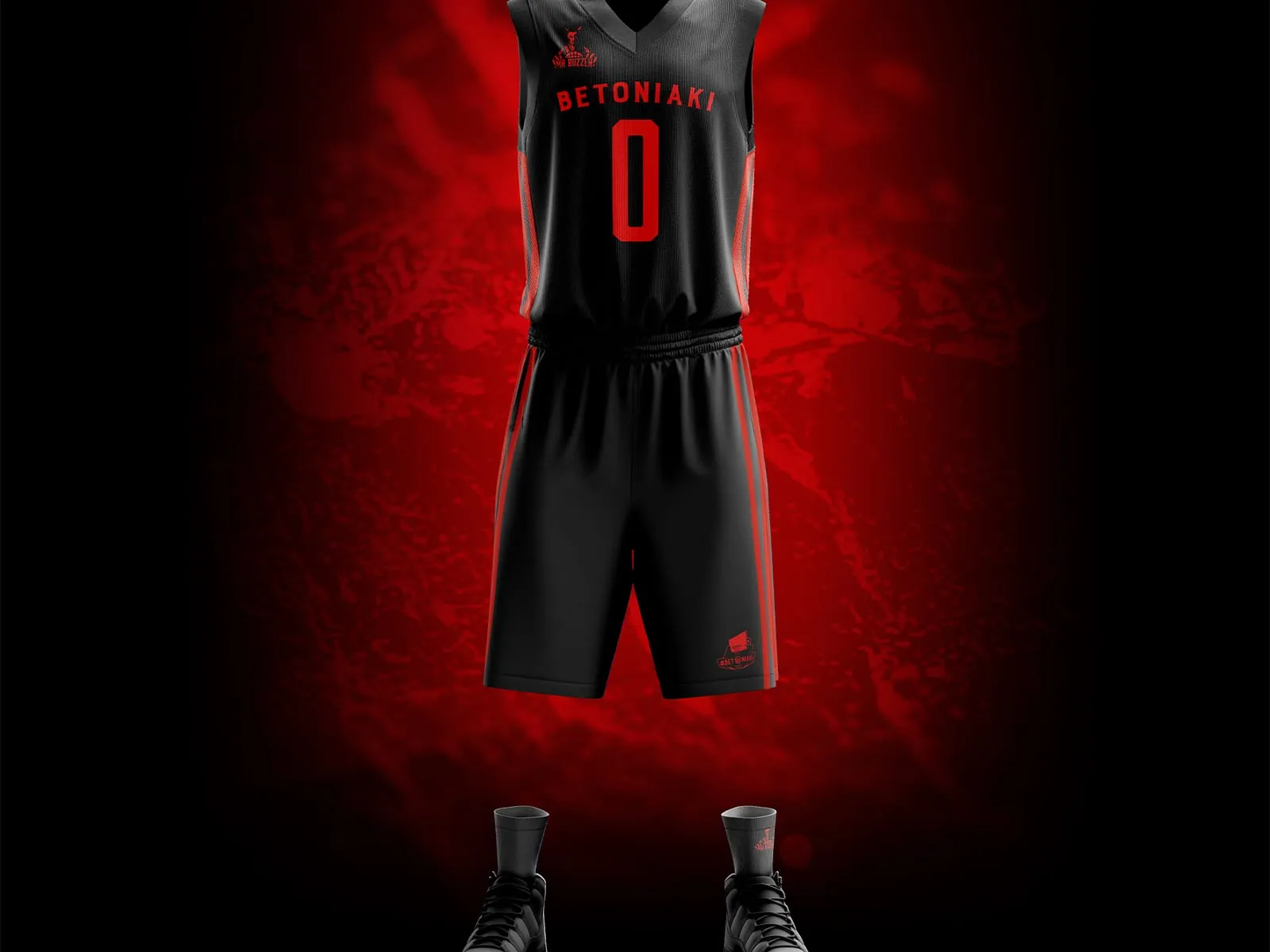
Club logo and basketball team kit
-

Joga Na Szlaku
Logo and promotional materials
-
Eurojumper
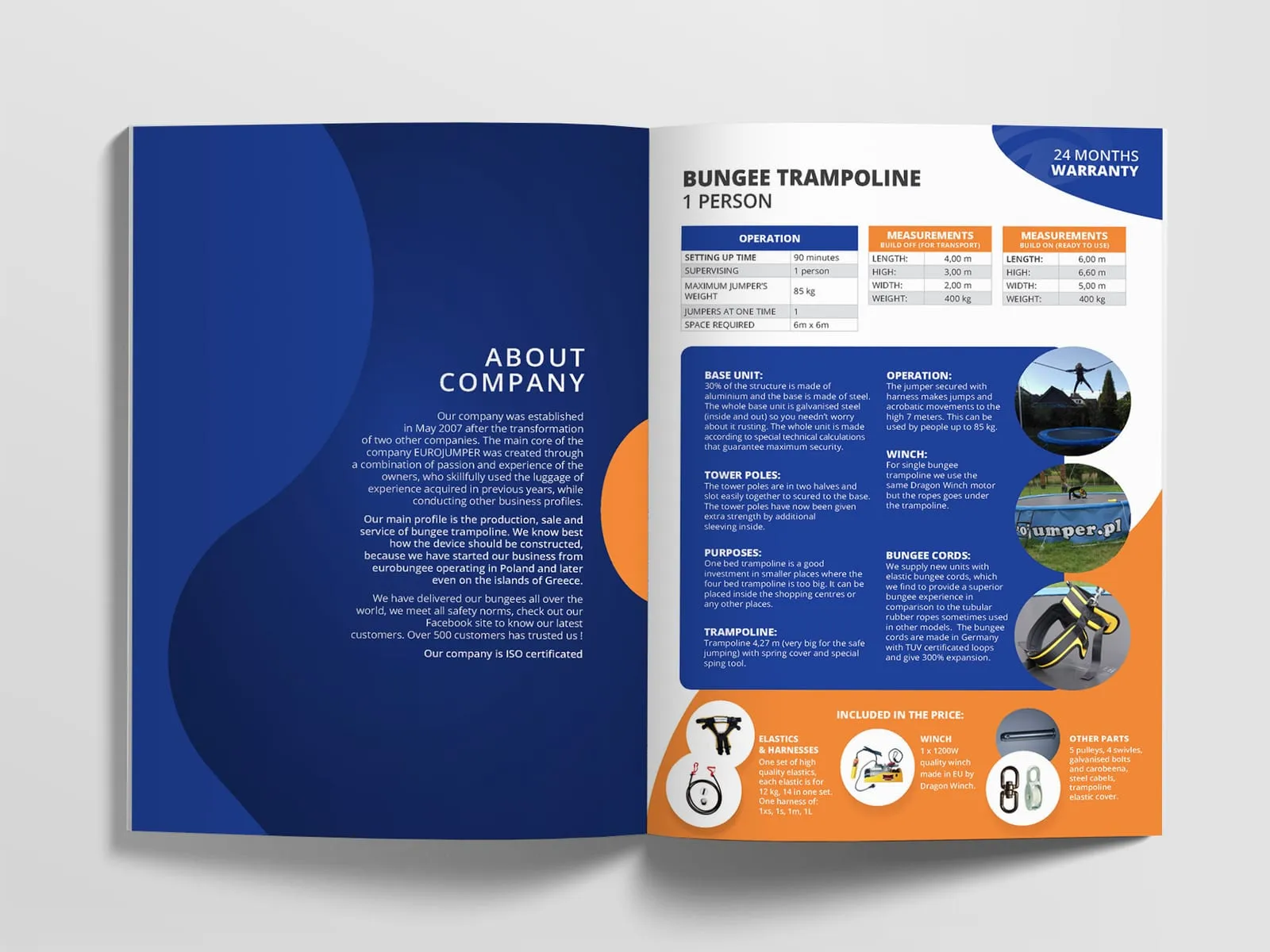
Product catalogue for bungee trampolines
-
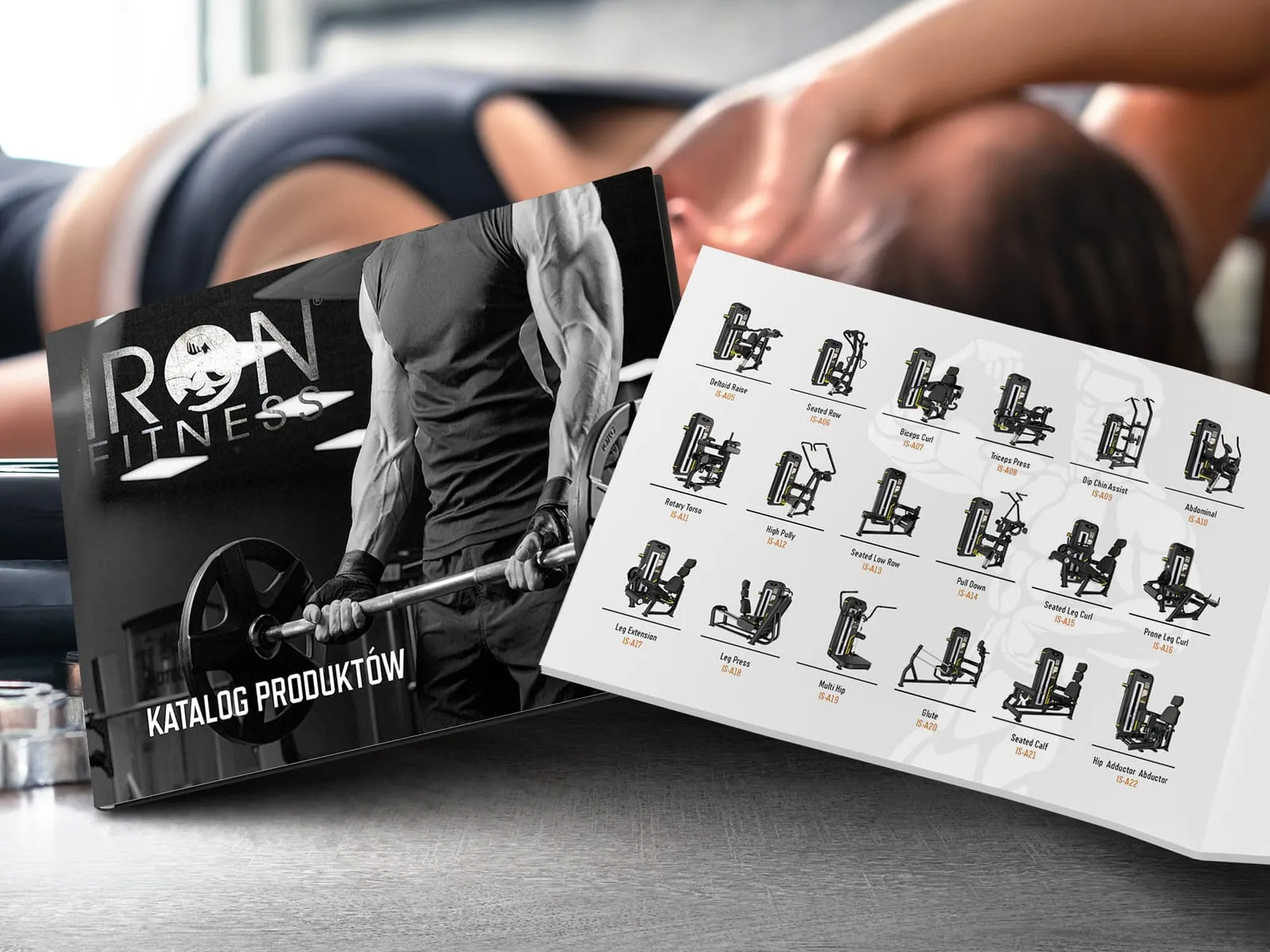
Iron Fitness
Product catalogue for strength machines
- See what else we build Projects
Start your sports software project
The club system, the member app and the fan app are designed by one team, from research at training and in the gym to the build.
Client voices
What our clients say
 Maja Wieloch-Silecka Operations Director, Bosfor Group

“Working with the Wzór team was a genuinely great experience! They always answered our questions quickly and were flexible about our comments. They have no shortage of creative ideas and are at the same time thoroughly reliable and on time. The end result fully met our expectations; we recommend them to anyone looking for professionals who care.”
 Piotr Alberski Chief Operating Officer, Agencja XO Media

“Our clients expect us to act fast and effectively across a very wide scope - from building a brand, through a website with a store, to running an effective sales campaign. Not an easy task, but doable when you have a tight-knit team and partners who take on challenges on the fly. For us, quality, accountability and commitment are key, and working with UX Agency Wzór gives us that 100%.”
 Mateusz Swół Chief Operating Officer, Sellace

“Our cooperation with UX Agency Wzór started with our own website. We really liked the way they work, so we decided to subcontract projects for our clients to them on a White Label basis. We loved their workflow, the way they hand projects over to our team, their documentation and their work on the design system. Now we can take on bigger risks.”



























The team
Who will design your sports software?
-

Aleksandra Bondar
Senior UX/UI Designer
View profileHow can I help you?
“I will design the staff panel for the computer, the parents' app for their phones, and the coach's screen so that it can be used with one hand at the pitch.”
-

Katarzyna Adamczuk
Prezes, Analityk Biznesowy
View profileHow can I help you?
“I will map out with you a player's path through the club system, from joining a group to walking out for a match, and work out where data from watches and payments comes from.”
-
Patryk Korycki
CEO, Analityk Biznesowy
View profileHow can I help you?
“I will agree the scope and budget with you, and plan the rollout so that the new system does not go live in the first week of the season or of sign-ups.”
-

Tadek Wadas
Senior UX/UI Designer
View profileHow can I help you?
“I will talk to coaches, parents and members before any screen is drawn and find out when and where each group checks club information: a parent on the way to training, a member at home in the evening.”
FAQ
Frequently asked questions about sports software
What is sports club management software?
Sports club management software is a system in which a club keeps its players, training groups, timetable, attendance, fees and communication with players or their parents. The board sees payments and attendance in it, coaches work on their phones, and parents check their child's timetable in the app. We start work on such a system by splitting what is done every day at training from what is done once a month in the office, and lay out each of those parts for a different device.
What is the difference between gym management software and sports club management software?
Gym management software differs from sports club management software in who it serves: members who buy passes and book classes, rather than players in training groups, with a coach, fees and often parents. When a business runs both a fitness club and sports sections, we keep the member account and the player card apart, even if they belong to the same person.
How does a personal trainer app work?
A personal trainer app connects two sides: the trainer builds plans and tracks clients' progress in it, and the client has the plan on their phone and logs completed sessions there. During a session the app usually shows the exercise, the weight, the number of reps and the rest time. In the plans we design, the trainer changes one template for several clients at once and sets the differences for each person.
What is training load?
Training load is a measure of the work an athlete has done in training, counted as external load, the work completed regardless of the athlete's characteristics, or internal load, the relative physiological and psychological stress that this work imposes on them. One simple method multiplies the athlete's rating of effort on a scale of 1 to 10 by the session length in minutes, and the Garmin Forerunner 945 watch shows training load as the combined EPOC value from the last seven days. In a staff panel we place the load from the watch next to the post-session effort rating and mark with colour where they drift apart.
What is an athlete management system (AMS)?
An athlete management system (AMS) is software in which the staff gather the data on each athlete in one place: planned and completed training, load, data from wearables and answers to wellness questionnaires. The coach and the staff base their decisions on training and recovery on it. We cut the wellness questionnaire down to a few taps, because athletes fill it in on their phones in the morning, not at a desk.
What is a fan engagement app?
A fan engagement app is a club's app for fans that combines match information, such as the line-up, fixtures and live coverage, with club content, membership and a loyalty programme, and often tickets and a shop as well. Some clubs sell tickets in a separate app. We lay out the match screen so that the line-up, the score and the next event fit on one phone screen without scrolling.
What is a class booking system?
A class booking system is the part of a fitness club's or studio's software in which members check the timetable, book and cancel classes, and the club sets spot limits and rules for bookings that are not cancelled. In many clubs the rules block bookings after several no-shows or charge a fee for them. We show the club's rule to members right at the booking button, not only in the terms and conditions.
How do you design an app for a sports club?
An app for a sports club is designed around the parent's account, because one account can hold several children in different groups and age groups, each with their own timetable and fee. Switching between children takes one tap from the home screen and needs no separate login.
Can a member app be changed without replacing the club's system?
A member app can get new screens without replacing the club's system if that system offers an interface for passes, bookings and entries. Members then see a new app, while reception and billing stay in the software the club already knows. We list the gaps in the interface at the start of the project: they decide which parts of the app can be changed straight away.
Related services
Services related to sports software
You know parents avoid the club system and email the office instead.
Let us start by finding the point where they give up on it.
You want to replace spreadsheets and messenger groups with your own club app.
We will work out what staff, coaches and parents need and start with the smallest version that can carry it.
You have screens designed for fans or members and would like to check them before they go to developers.
We will talk them through with you or prepare a prototype for testing on fans' phones.