


Pharma
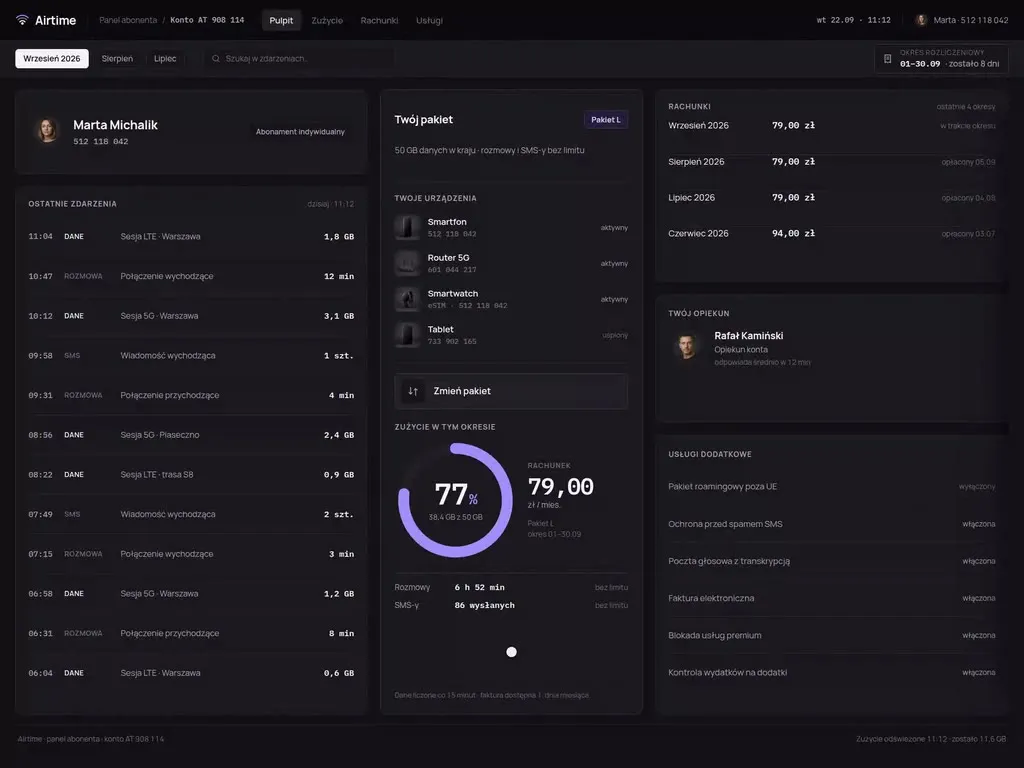
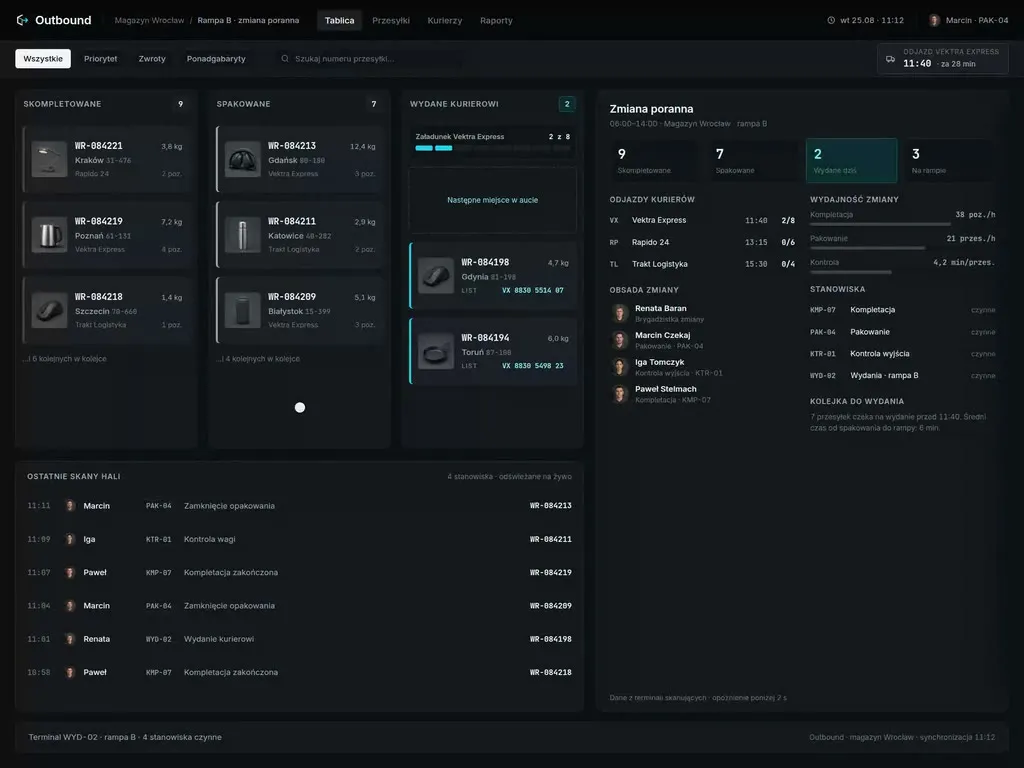
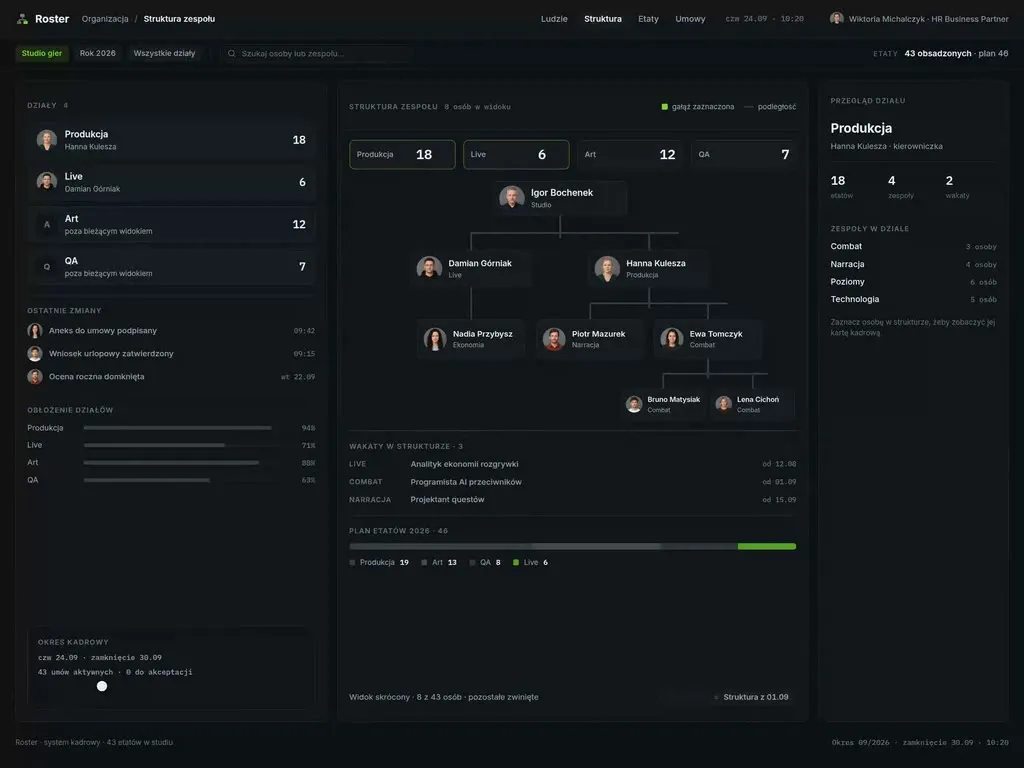
At Wzór UX agency you receive an interactive design of your pharma software, be it an online pharmacy, a medical rep app or an MES for drug manufacturing, and either our team or your own developers can then build it. For supplement and cosmetics brands we designed the MitoRevita online store and the ZhongZhou store selling an acne cream.







Challenges
What challenges do we help solve in pharma?
Our approach
We design the prescription screen so that all of the patient's medicines sit on it at once, with the ones already dispensed marked. When the pharmacist swaps a pack of 56 tablets for two packs of 28, the rest of the bundle stays in place and nobody types the code in again.
Scope of services
Our approach
We lay out the electronic batch record so that review starts with the deviations, not with page one. The QA reviewer signs off entries within tolerance in a single pass, and their time goes to the ones that need a decision.
Scope of services
Our approach
In the rep app a visit opens where the last one ended: on the promise made to the doctor and the material shown at the time. The rep saves the note with a few taps while still in the waiting room, so the report does not wait until evening.
Scope of services
Who it is for
Which pharma companies do we design software for?
Online pharmacies and supplement stores
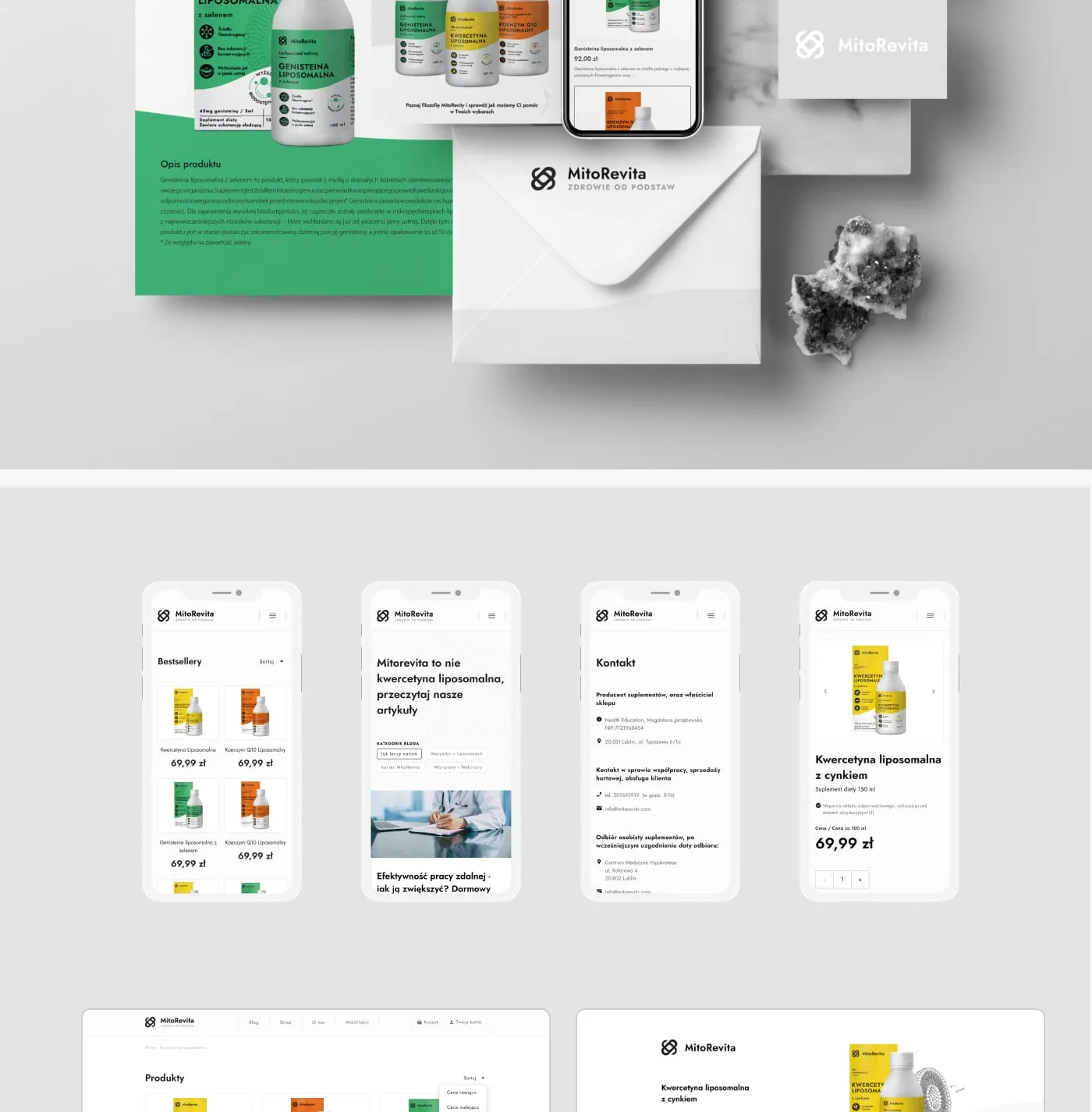
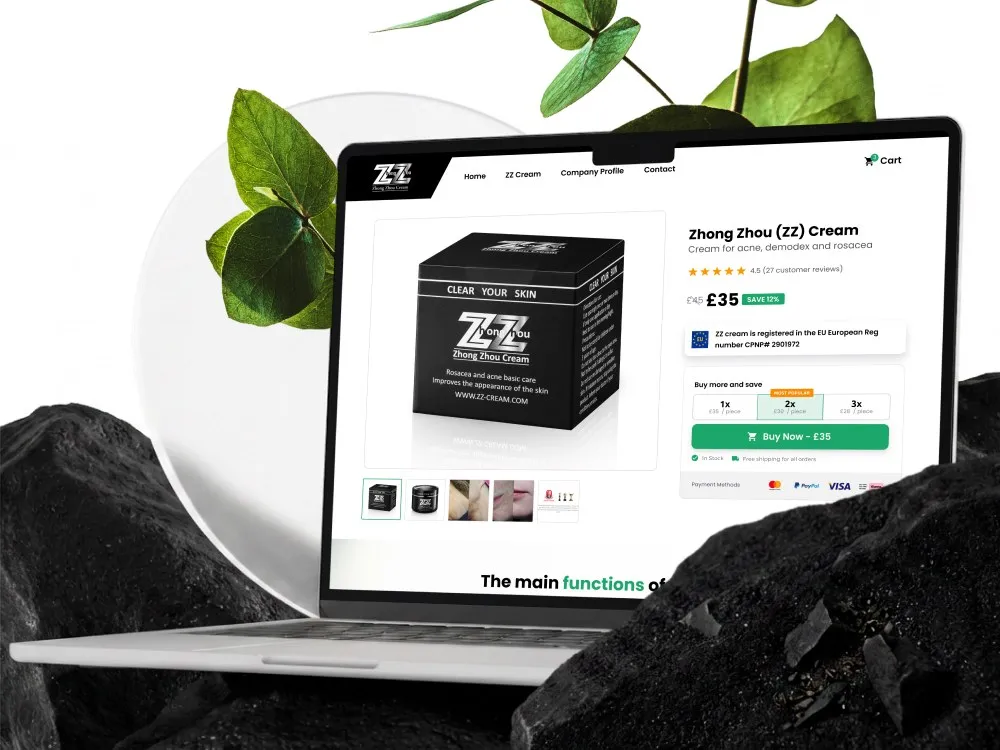
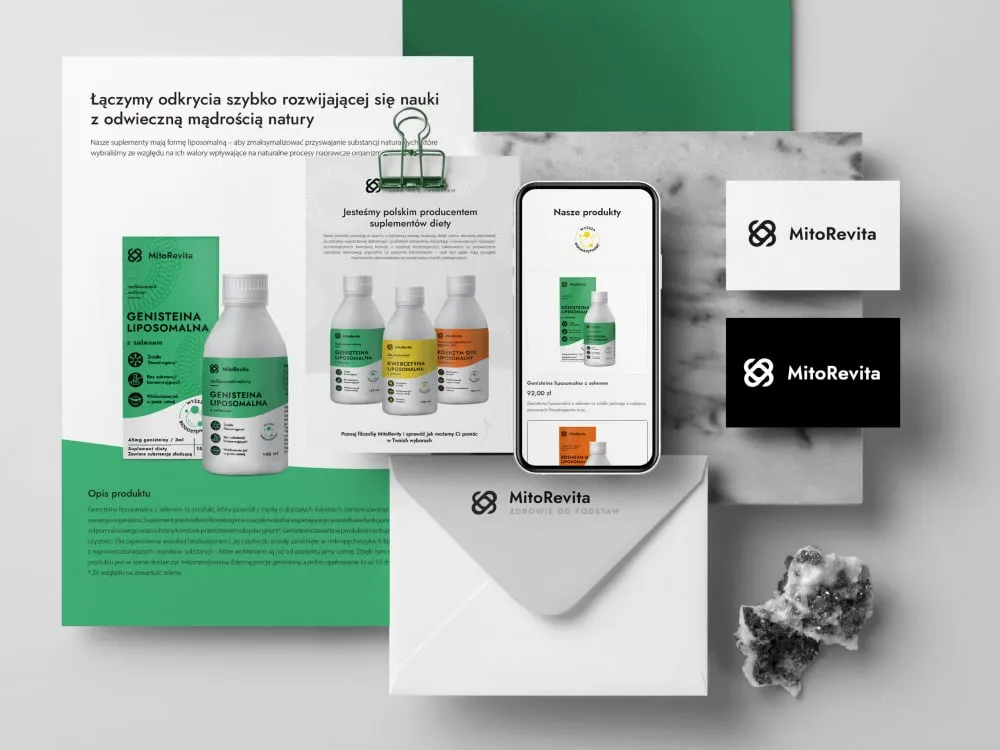
In an online pharmacy we design two purchase paths, parcel delivery and reservation for collection at the pharmacy, and which one a medicine takes shows next to the buy button and again in the basket; alongside pharmacies, makers of supplements and skincare products sell online. We have designed online stores for two such brands: MitoRevita with liposomal supplements, from the product page to the basket on a phone, and ZhongZhou with ZZ Cream. In ZhongZhou the three-step application guide and the before-and-after photos sit on the same page as the buy button, because customers want to know how to use the cream before they buy it.
CRM and medical rep apps
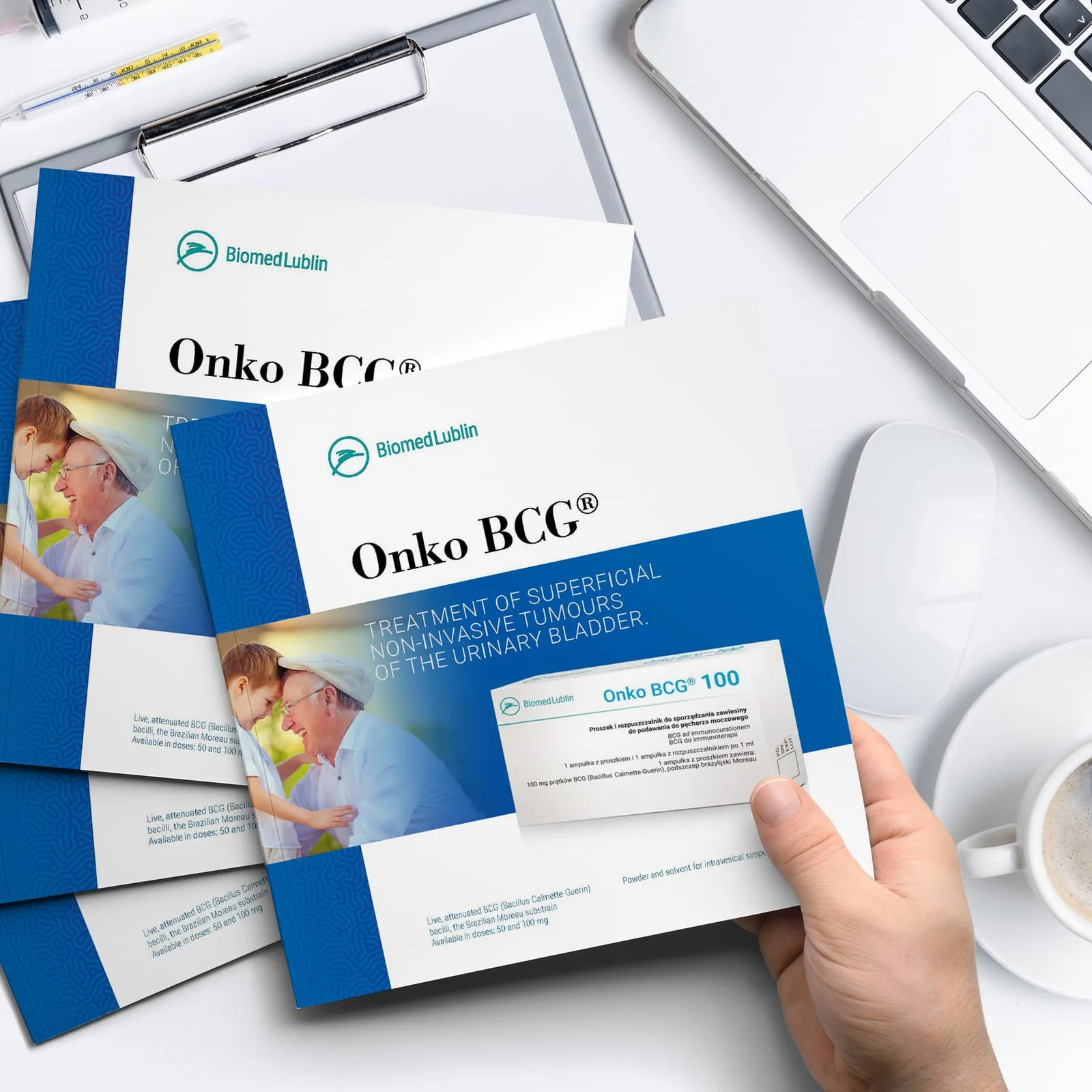
Pharmaceutical companies run their reps' visits in a CRM, which the rep opens on a tablet between a doctor and a pharmacy, in the car or in the waiting room. We have designed material for doctors in print: the Onko BCG catalogue for Biomed Lublin leads from the product profile through the mechanism of action and efficacy to the safety profile. On the rep's tablet we lay out the material so that within a few minutes of a visit they reach the page the doctor asked about.
Pharmacy management systems
Community pharmacies and pharmacy chains sell, fill e-prescriptions and order stock in a pharmacy management system, and the pharmacist looks at it all shift long at the counter, scanner in hand. On that same screen we place online reservations and shortages to order from the wholesaler, so the pharmacist knows what is coming with the next delivery before the patient asks.
MES and electronic batch records
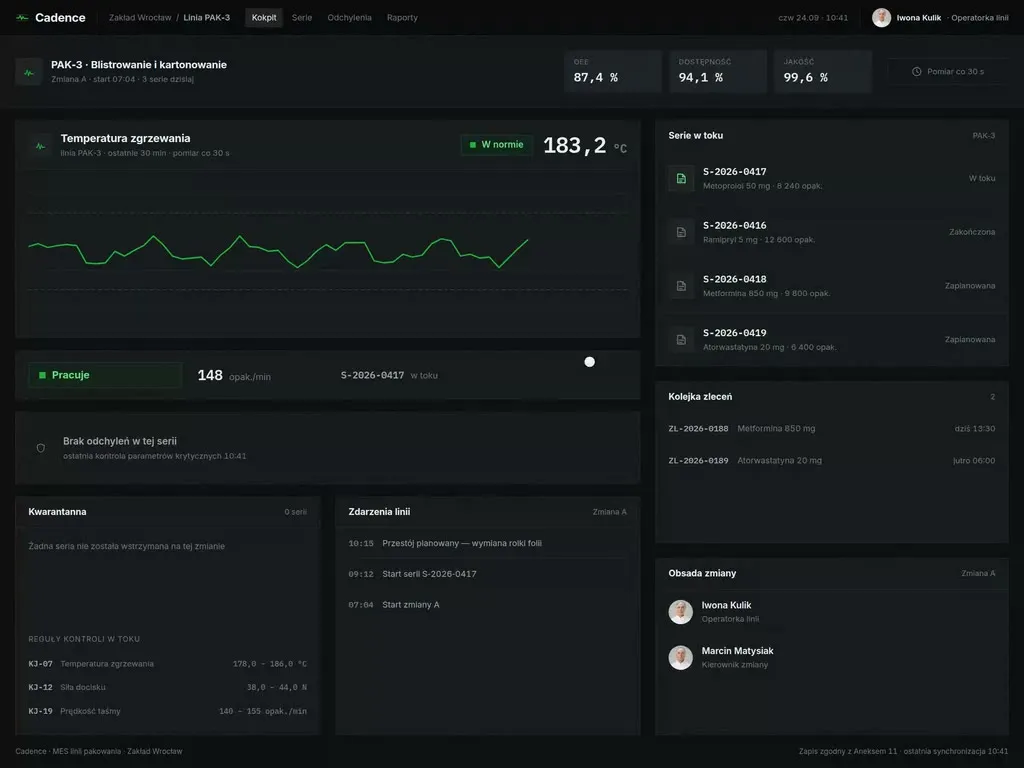
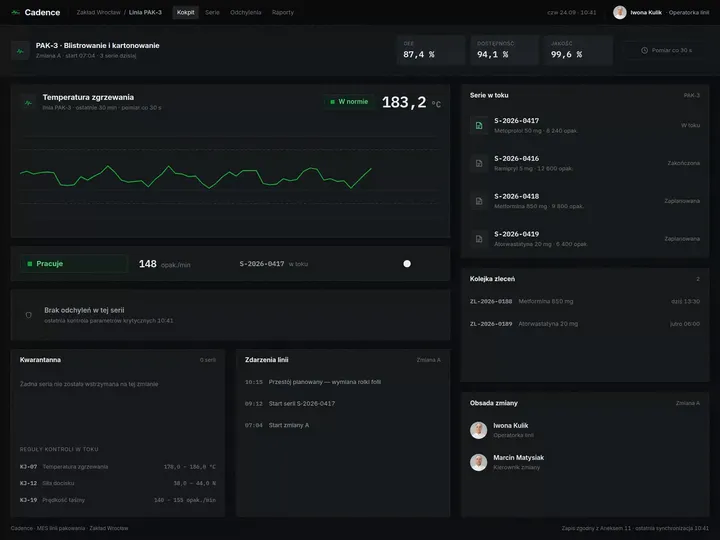
Drug manufacturers run each batch in an MES, where the line operator records parameters at a panel on the shop floor and quality assurance reviews them before the batch is released. We design the operator panel to show only the state of the line in normal running and, when a parameter leaves tolerance, to open a deviation record at once and move the batch to quarantine.
Pharmaceutical wholesaler ordering portals
Pharmaceutical wholesalers take pharmacy orders from the pharmacy system, from an online portal and by phone, and transfer orders from manufacturers through a transaction system. In the wholesaler's portal we put shortages up front: the pharmacy sees when a missing medicine will be back in stock, and its account manager does not have to phone with the news.

Why us?
Why choose our UX agency?
-
More reservations collected at the pharmacy
A patient who reserved a medicine in the pharmacy app gets a message when the medicine is really waiting on the shelf. They come to you for it, not to the pharmacy across the street.
-
Inspections without binders
The change history of every batch, with the reason, signature and time, sits on one screen, so the inspector does not wait for printouts. Quality assurance does not spend the week before an inspection assembling paperwork.
-
Fewer calls between pharmacy and wholesaler
The pharmacy checks a complaint, a duplicate invoice or a payment status in the wholesaler's portal at any hour. The phone is left for matters the system cannot settle.
-
A senior team
A team of senior UX designers who have been designing interfaces for nine years, today for large organisations, SaaS companies and software houses. Seniors will take on your online pharmacy, rep app or MES, from kick-off to sign-off.
-
Proven client trust
We have designed for 115 brands, and most of them come back to us with their next project.
-
Higher quality with AI
A designer with AI tools checks more variants of an e-prescription screen or a batch record than they could draw by hand and picks the one that works. What reaches you is a tested version, not the first one that came out.
Process
How will we design your pharma system, step by step?
-
A conversation with your team

We set the goals and list the systems you work on today
We sit down with the people responsible for the pharmacies, production, quality or sales, depending on whose system the project changes. We pick the process to change, list the systems and regulations that apply to it and agree how you will know the project has worked.
Key steps
- Conversations with pharmacy, production, quality or sales managers
- A review of systems: pharmacy system, MES, CRM, ERP
- A list of the regulations that apply to the process: e-prescriptions, GMP, GDP
- Agreeing the measures: patient service time, batch review time, visit reports
Deliverables
- Project brief
- Map of systems and their owners
- List of measures
- Scope of the first stage
-
Discovery at the counter, on the shop floor and on the road
We watch the work where medicines are dispensed, packed and discussed with doctors
We stand behind the pharmacist at the busiest hours, next to the line operator and the QA reviewer, and we ride with a rep from a doctor to a pharmacy. We look for workarounds: a note of codes by the scanner, a printout of the batch next to the MES, a notebook on the passenger seat.
Key steps
- Observing work at the counter at peak hours
- A session at the operator panel and at batch review
- A day on the road with a medical rep
- Interviews with new and experienced staff
- A review of tickets, complaints and deviations
Deliverables
- Research report
- Process map showing where people work around the system
- Prioritised list of problems
-
Interactive system design
A design you click through on test data, with no patient data
The screens are designed straight for the target devices: the monitor and scanner at the counter, the panel on the shop floor, the rep's tablet. We fill the prototype with test data instead of patient data and test it with the people who will work in it before it reaches the developers.
Key steps
- Screen architecture by role: pharmacist, operator, QA, rep, patient
- Interactive design for the target devices
- Exception states: a PLMVS alert, a parameter out of tolerance, a medicine out of stock at the wholesaler
- Prototype tests with staff
Deliverables
- Interactive design of every screen
- Component library
- Description of behaviour in exceptions
- Prototype test report
-
Build or design hand-off
The new screens reach your system together with the integrations
Our team builds the design, or we hand it over to your developers or your system vendor. Either way, we spell out the connections to e-prescriptions, PLMVS, ZSMOPL, the ERP, the LIMS or the CRM and describe how each screen behaves, so that your quality team can base validation on that description.
Key steps
- Screen and field specification for developers
- Integration map: e-prescriptions, PLMVS, ZSMOPL, ERP, LIMS, CRM
- Description of screen behaviour for validation
- Tests on the target devices before launch
Deliverables
- A working system or a package ready to build
- Integration specification
- Pre-launch test report
-
Measuring after launch
We check against data from the pharmacy, the plant or the field whether the change worked
After launch we compare patient service time, batch review time or the number of visits recorded on the same day with the measurement taken before the change. That comparison tells us which screen to improve next.
Key steps
- Measuring service and review times
- A review of tickets and deviations after launch
- Conversations with staff after launch
- Plan for the next improvements
Deliverables
- Measurement report
- Prioritised list of improvements
- System development plan
Methods and technologies
Systems, standards and regulations we work with in pharma
-
KS-AOW
When a pharmacy runs on KS-AOW, orders to the wholesaler, urgent ones included, are built in it from sales analysis, and stock levels live only there. When we design an online pharmacy or a chain's app, we take availability from that same program, so patients do not reserve a medicine the pharmacy neither has nor will order.
-
Veeva CRM
When reps work in Veeva CRM, they are still checking during the conversation with the doctor whether a product is in the current campaign. Beside the CRM we add a view where this shows with the material before the rep walks into the surgery.
-
E-prescription
The pharmacist retrieves an e-prescription with a barcode from the patient's phone or with a four-digit code and the patient's PESEL number, and the prescription may already have been partly filled at another pharmacy. So we put the number of packs already dispensed from the prescription next to the medicine name, not in the prescription history.
-
PLMVS
A PLMVS alert when the 2D code is scanned can mean a falsified medicine, but also a fault in the pharmacy software or a badly configured scanner. We word the alert so the pharmacist can tell these cases apart and set a doubtful pack aside until PLMVS replies.
-
GMP Annex 11
For systems covered by GMP Annex 11 the audit trail has to be readable, not merely present. We lay out a batch's change history for QA and the inspector: who changed what, when and why, on a single line.
-
GDP guidelines
The GDP guidelines let a wholesaler put a medicine returned by a pharmacy back into saleable stock only once five circumstances are confirmed, among them a return within an acceptable period, an unopened and undamaged pack and storage in line with its requirements, as shown by the customer. We map out goods-in for returns at the wholesaler as five checks before the stock goes back on the shelf.
Selected work
Our work in pharma
These are projects for clients: two online stores, product catalogues for doctors and for laboratories, and a brand identity for medical masks.
-
Pharma
ZhongZhou
View projectThe ZZ Cream (Zhong Zhou) online store - a cream for acne, demodex mites and rosacea. A product page with customer ratings and bundle discounts, a cream-function and application-guide section, a before-and-after photo gallery, the product's history, customer reviews and a colour-identity board, across desktop and mobile.
-
Pharma
MitoRevita
View projectAn end-to-end project for MitoRevita - a Polish maker of liposomal dietary supplements. Visual identity (logo, palette, Jost type), packaging design (Genistein, Quercetin, Coenzyme Q10) and an online store with product pages, cart and checkout, across desktop and mobile.
-
Biomed Lublin
Catalogue for the Onko BCG immunotherapy
-
bioMérieux
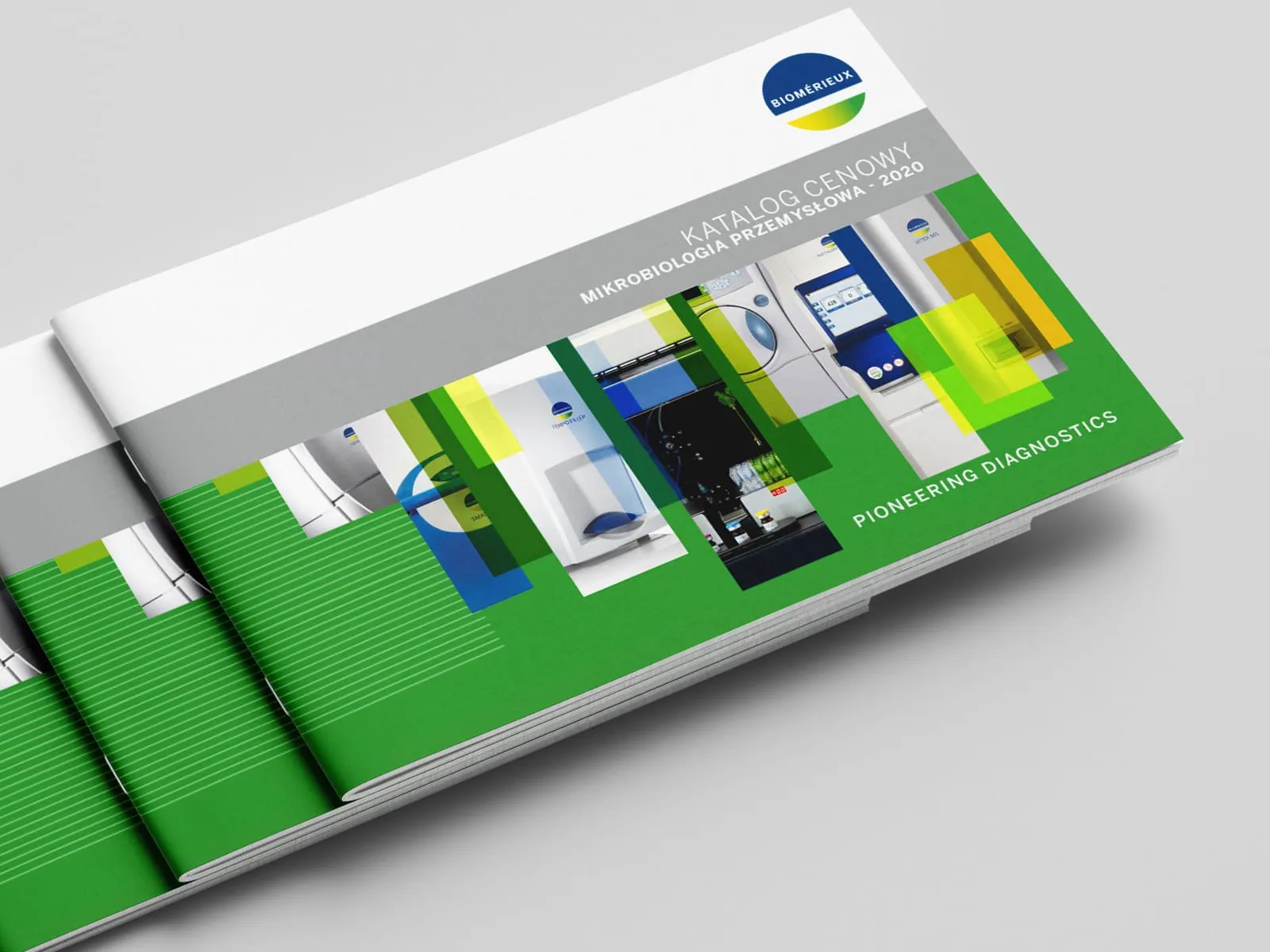
Price catalog for industrial microbiology
-
MedicMask
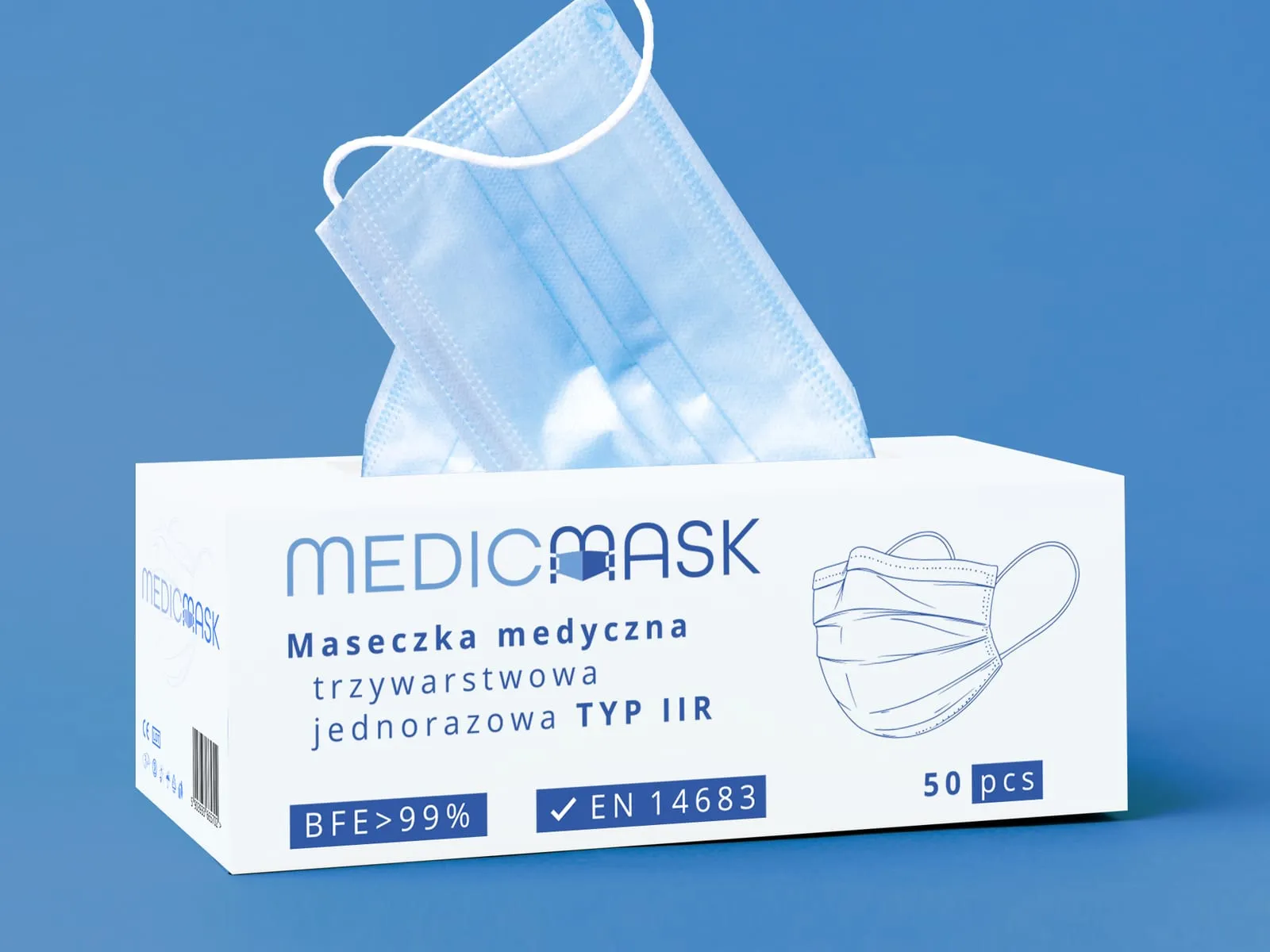
Logo and packaging for a medical mask brand
- See what else we build Projects
Start your pharma software project
One team designs your online pharmacy, pharmacy system, rep app and MES, from research at the counter to the build.

Client voices
What our clients say
“The design of our store and our packaging matches the character of our product. Wzór brought out its most important features, and the design is memorable. The package of services UX Agency Wzór provided, along with their advice, made launching a new product easier for us.”
“I have worked with UX Agency Wzór for over 3 years, and in that time we have delivered several projects together covering promotional materials such as leaflets, posters, product catalogues and packaging designs. On the strength of that experience I can sincerely recommend the services of UX Agency Wzór. I will add that contact with the agency staff is always quick and highly professional.”
 Maja Wieloch-Silecka Operations Director, Bosfor Group

“Working with the Wzór team was a genuinely great experience! They always answered our questions quickly and were flexible about our comments. They have no shortage of creative ideas and are at the same time thoroughly reliable and on time. The end result fully met our expectations; we recommend them to anyone looking for professionals who care.”






























The team
Who will design your pharma system?
-

Aleksandra Bondar
Senior UX/UI Designer
View profileHow can I help you?
“I will design the e-prescription screen and the batch record so that the pharmacist and the operator on the shop floor see first what needs their decision.”
-

Katarzyna Adamczuk
Prezes, Analityk Biznesowy
View profileHow can I help you?
“I will map out with you the path of a medicine from the production line through the wholesaler to the pharmacy counter, so the system matches how you really work.”
-
Patryk Korycki
CEO, Analityk Biznesowy
View profileHow can I help you?
“I will agree the scope and budget of the project, and during the build I will keep watch over the connections to e-prescriptions, PLMVS and your ERP.”
-

Tadek Wadas
Senior UX/UI Designer
View profileHow can I help you?
“I will test the prototype with pharmacists at the counter and with reps between visits, and every place where they hesitate will go on the list of fixes.”
FAQ
Frequently asked questions about pharma software
Can an online pharmacy ship prescription medicines?
An online pharmacy in Poland may ship only non-prescription medicines, except those whose supply is restricted by the patient's age; this is set out in Article 68(3) of the Pharmaceutical Law. Patients can reserve prescription medicines through it and collect them in person at the pharmacy. We separate these two paths on the medicine page itself, so nobody puts in the basket something that cannot be shipped.
How can you check that an online pharmacy is legal?
A legal online pharmacy shows the EU common logo clearly on its website and appears on the list of pharmacies authorised to sell by mail order, which the Chief Pharmaceutical Inspector publishes in the Public Information Bulletin. The logo is defined in Commission Implementing Regulation (EU) No 699/2014. We place the logo with a link to the list in the footer and at checkout, where buyers check who they are paying.
Does an e-prescription have to be filled at one pharmacy?
A patient can start filling an e-prescription at one pharmacy and buy the next batch of medicines at another, provided that second pharmacy has switched the feature on with the Centrum e-Zdrowia; its manager submits the request. That is why, when a patient chooses where to collect, we mark the branches that have the feature.
Since when has medicine serialisation applied?
Medicine serialisation, meaning the safety features on packs under Commission Delegated Regulation (EU) 2016/161, has applied since 9 February 2019; member states that already had their own systems of this kind on 21 July 2011 apply Articles 1 to 48 of the regulation from 9 February 2025 at the latest. The regulation covers prescription medicines except the categories listed in Annex I, such as homeopathic medicinal products, medicinal gases and allergen extracts, the non-prescription medicines listed in Annex II, namely omeprazole in 20 mg and 40 mg capsules, and medicines to which a member state has itself extended the obligation. The pharmacy verifies the 2D code and decommissions the pack's unique identifier in the PLMVS system at the moment the medicine is dispensed to the patient. We lay out goods-in around that same scan: the batch number and expiry date then fill themselves in.
What is ZSMOPL?
ZSMOPL, the Polish Integrated System for Monitoring the Trade in Medicinal Products, collects data on stock levels and on the trade in medicines, reimbursed foods for special medical purposes and reimbursed medical devices. Pharmacies, pharmacy outlets and pharmaceutical wholesalers have reported to it since 1 April 2019. The report is usually sent by the pharmacy's or the wholesaler's own software, so we make sure every figure that goes into it has one source in the stock records.
What is GMP Annex 11?
Annex 11 is the part of the EU Good Manufacturing Practice guidelines (EudraLex, Volume 4) on computerised systems, in operation since 30 June 2011. Among other things it says that the reason for any change or deletion of GMP-relevant data should be documented, and that an electronic signature should be permanently linked to its record, with the date and time. In the MES we put the reason field and the signature in the same window as the change, so the system meets the requirement, not a paper procedure.
What is a pharmacy management system?
A pharmacy management system, also called pharmacy software, is the program in which a pharmacy sells medicines, fills e-prescriptions, keeps stock, orders from wholesalers and reports to state systems such as ZSMOPL. One such program is KS-AOW by KAMSOFT. Alongside the pharmacy system we design what the patient sees: reservation in the app and stock in the nearest branch.
Can prescription medicines be advertised to the public?
Prescription medicines may not be advertised to the public. Article 57 of the Pharmaceutical Law bans advertising aimed at the general public for prescription-only medicines, medicines containing narcotic drugs or psychotropic substances and medicines on the reimbursement lists, as well as for medicines that share their name with a prescription-only medicine and non-prescription medicines that share their name with a medicine on those lists; protective vaccinations listed in the Chief Sanitary Inspector's notice are exempt. So we present an online pharmacy's product page as plain information about what it is, what it costs and whether it is available, and leave any promotional element, for non-prescription medicines too, to the client's lawyer to assess.
What is a pharma CRM?
A pharma CRM is the system in which a pharmaceutical company plans and reports its medical reps' visits to doctors and pharmacies and keeps the contact history and the material shown during visits. Reps use it in the field, on a tablet and a phone, and ready-made systems include Veeva CRM, for example. We centre the rep app on a single visit: with whom, what was discussed last time and what to show today.
Related services
Services related to pharma software
Your pharmacists or medical reps work around the system, and you do not know why.
We will start by finding the step where people go back to notes and phone calls, and why.
You are choosing a vendor for a pharmacy, plant or wholesaler system, or want to build your own.
We will work out with reps, operators and pharmacists what they cannot work without, before you sign a contract.
You run an online pharmacy or a patient service and want every patient to manage it, older or visually impaired ones too.
We will check it against WCAG criteria and tell you what to fix first.