

Fashion & Accessories
At Wzór UX agency you receive an interactive design of your fashion and accessories software, be it a brand store with a size advisor, a PLM system for your collections or a wholesale ordering platform, and either our team or your own developers can then build it.






Challenges
What challenges do we help solve in fashion and accessories?
Our approach
We place the size advisor next to the size buttons, not in a tab with the size chart, because that is where the customer makes the decision. For returns we design a single question, too small or too big, and from those answers the e-commerce team learns which cut does not match the brand's sizing.
Scope of services
Our approach
In the PLM we design for companies that produce their own collections, the style specification carries its version number on every screen and every printout. The supplier portal shows the sewing contractor only the latest approved version, and the technologist knows which version a sample was sewn from before measuring it.
Scope of services
Our approach
In the digital showrooms we design, a boutique buyer places a pre-order straight from the season's line sheet. The wholesale team sees the total ordered for every style and size at once and orders production from that same list.
Scope of services
Who it is for
Which fashion and accessories companies do we design software for?
Clothing and footwear brand stores
Clothing and footwear brands sell the same style in their stores in several colours and a dozen or more sizes, and every season the e-commerce team loads a whole collection into the store. We build the admin panel for this around the whole garment rather than individual variants: the description and size chart are added once, and each colour only gets its own photos.
PLM and collection specifications
At companies that produce their own collections, the designer, the technologist, the purchasing team and the factory all work from the same style specification, each with a different question: what it should look like, how to sew it, which materials to use and in what quantity. In the PLM we design, each of these people has their own view of the same specification: the technologist starts from the measurements, purchasing from the bill of materials with quantities and the designer from the sketch and colours.
Wholesale platforms and digital showrooms
Boutiques and department stores buy a brand's collection ahead of the season, through pre-orders placed in a showroom or at a trade fair. We arrange the line sheet in a digital showroom into looks from a single campaign, the way the clothes would hang in the boutique, and the buyer can set aside what they will decide on later.
Store associate apps
Store chains and premium brands give associates on the shop floor a phone or tablet with an app for serving regular customers, so that a conversation does not start with a question about size. When designing such an app, we put on the first screen what the associate needs in the first minute of the conversation: the sizes this person buys in and the wishlist items that happen to be in that store.
Eyewear configurators and virtual try-on
Optical chains, eyewear brands and jewellers sell online the things a customer usually tries on in front of a mirror: frames, rings, watches. Before the virtual try-on we explain why it needs camera access, because without that consent the try-on will not start at all, and next to it we show the frame width in millimetres for those who will not turn the camera on.

Why us?
Why choose our UX agency?
-
Prescription glasses ordered fully online
The customer chooses frames, lenses and their power, enters their pupillary distance and pays in a single pass through the store, with no trip to a store just to finish the order. The opticians then have time for the people who came in for an eye test.
-
Sales even when the size is not on the shelf
The associate checks in the app whether the same style is in stock at other stores or in the online store's warehouse and orders the missing size to the customer's home. The customer leaves the store with a purchase, not with a promise that the size might turn up some day.
-
Fabric changes without surprises in purchasing
When a supplier drops a colour or raises the price of a fabric, the purchasing team sees at once which styles use it and how many metres were planned. A replacement is then chosen before the fabric is ordered, not after it arrives.
-
A senior team
A team of senior UX designers who have been designing interfaces for nine years, today for large organisations, SaaS companies and software houses. Seniors will take on your brand store, PLM or store associate app, from research at fittings and in store to sign-off.
-
Proven client trust
We have designed for 115 brands, and most of them come back to us with their next project.
-
Higher quality with AI
A designer with AI tools checks more variants of a product page with a size advisor or a wholesale order screen than they could draw by hand and picks the one that works. What reaches you is a tested version, not the first one that came out.
Process
How will we design your fashion and accessories software, step by step?
-
A conversation with your team

We set the goals and list the systems a style and an order pass through
We invite the people responsible for the store, the collection, wholesale and the stores to the first meeting, together with someone from IT, because each of them sees a different stretch of a style's path from sketch to customer. We choose the process we start with and the measure by which you will know the change works.
Key steps
- Conversations with the e-commerce director, the head of product, wholesale, the store network and IT
- A list of systems: store, PLM, ERP, PIM, wholesale platform, store tills and loyalty programme
- Choosing the process we start with
- Agreeing the measures: size-related returns, sample rounds per style, time from a buyer's order to the factory order
Deliverables
- Project brief
- Map of a style's path through the systems
- List of measures
- Scope of the first stage
-
Discovery in product development, in store and at returns
We study the work where a style is measured, sold and sent back
We sit with the technologist during a sample fitting, stand next to the sales associates in store on a Saturday afternoon and open parcels with the returns team. We note every workaround, because it shows what the system does not provide: a spreadsheet with the size chart beside the PLM, a photo of a sample sent over a messenger, a notebook with regular customers' phone numbers, a slip of paper with the reason for a return.
Key steps
- Observing a sample fitting with the technologist
- A Saturday in store with the sales associates
- A day at the returns desk
- Conversations with boutique buyers after the order season
- Interviews with customers who sent something back because of its size
Deliverables
- Research report
- Process map showing the workarounds
- Prioritised list of problems
-
Interactive system design
A design that customers, associates, technologists and buyers go through
We fill the prototype with styles from your current collection, their photos and size charts, so that a long colour name and a style in twelve sizes test the layout straight away. Customers go through it on their phones, associates in store, and technologists and buyers at their desks, and whatever makes them stop we change while it is still a prototype.
Key steps
- Screen architecture by role: customer, e-commerce team, technologist, buyer, sales associate
- Interactive design built on data from the current collection
- Exception states: sold-out size, sample needing changes, late wholesale order, customer without a loyalty card
- Prototype tests with customers and the team
Deliverables
- Interactive design of every screen
- Component library
- Description of behaviour in exceptions
- Prototype test report
-
Build or design hand-off
We connect the new screens to the systems your collection and sales run on
The build is carried out by our team, your developers or the system vendor, and we spell out for them how the new screens connect: to the ERP, PLM and PIM, the store platform and the size advisor, JOOR or NuORDER, the store tills and loyalty programme, and returns handling. Before the whole company switches over, we test it on a single collection.
Key steps
- Screen and field specification for developers
- Integration map: ERP, PLM, PIM, store, size advisor, wholesale platform, tills, returns
- Support for the implementation team
- A trial on one collection before launch
Deliverables
- A working system or a package ready to build
- Integration specification
- Pre-launch trial report
-
Measuring after the first season
We check against sales, returns and production data whether the change worked
After launch we compare size-related returns, sample rounds per style, the time from a buyer's order to the factory order and sales of stock from outside the store with the measurement taken before the change. We discuss the results with the e-commerce team, product development and sales, and rank the fixes starting with the one that costs the company most.
Key steps
- Measuring size-related returns
- A review of sample rounds and order dates
- Conversations with the team after the season
- Plan of fixes
Deliverables
- Measurement report
- Prioritised list of fixes
- System development plan
Methods and technologies
Systems, standards and regulations we work with in fashion and accessories
-
PLM
When your collection lives in a PLM, such as Lectra or Onbrand, an approved style moves into the ERP as an item with its bill of materials, and from then on a fabric change affects two systems. That is why approval is a separate step in the design, with a list of the fields that will go to the ERP, so the technologist knows what stops being a working version after it.
-
Fit Finder
When the recommended size is unavailable, a size advisor such as Fit Finder tells the customer so or suggests other garments that should fit, and that message has to agree with the rest of the product page. We lay it out together with the size buttons, so the advisor's note and the crossed-out size say the same thing and the suggested styles appear where the customer looks for them.
-
JOOR and NuORDER
When boutique and department store buyers order your collection through JOOR or NuORDER, the season's line sheet has to look the same there, in the brand's own showroom and in the files for retailers with their own platforms. So photos, wholesale prices and ranges come from one source in the PLM or PIM, with nothing retyped for each channel.
-
GS1 GTIN
According to GS1, every colour and size of the same style gets its own GTIN, so a style in five colours and six sizes means thirty codes. Each variant gets its own record with a code from the PLM to the store, so that a return, a stock level and a wholesale order all point to the same size in the same colour.
-
Regulation 1007/2011
Regulation 1007/2011 requires the fibre composition of textile products, apart from the exceptions it lists, to be clearly visible to the consumer before the purchase, including when buying online. The composition becomes a field of the style in the PLM, and both the label and the product page read it from there.
-
ESPR
From 19 July 2026 the ESPR prohibits the destruction of unsold apparel, clothing accessories and footwear, with derogations set by the Commission; the ban does not apply to micro and small enterprises and will apply to medium-sized ones from 19 July 2030. In the returns and stock panel, every item that cannot be sold in its original channel therefore gets a recorded next step: outlet, repair or donation, together with the reason.
Selected work
Our work in related fields
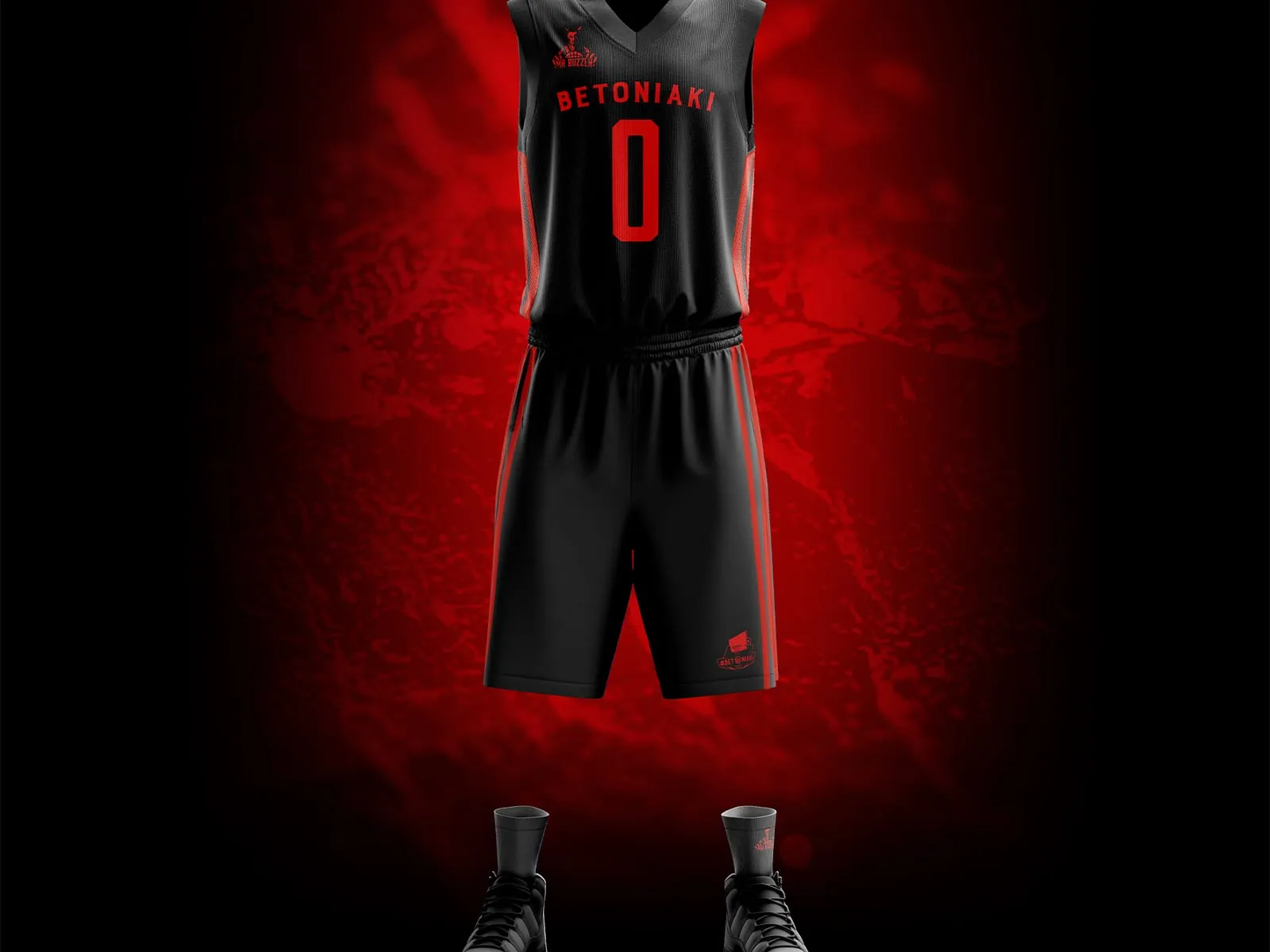
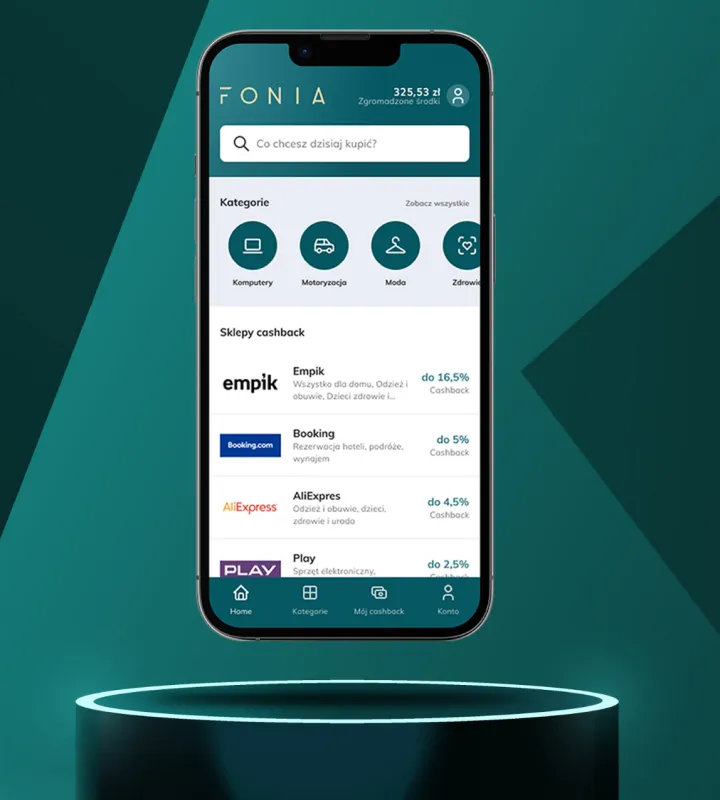
Our portfolio does not yet include a project for a clothing, footwear or jewellery brand. Closest to fashion is a logo and kit for a basketball team, a project mainly from sport, and next to it stand a cashback app and a cosmetics online store after a redesign, both from e-commerce.
-
Sport
Mr Buzzer
View projectA logo for the Mr Buzzer brand - a demon mascot holding a basketball, set inside a round crest with the "Mr Buzzer" wordmark - plus a kit visualisation for the "Betoniaki" team: a black jersey and shorts with red accents, a club patch, and a player number.
-
E-commerce
Fonia
Read case studyWe built a cashback app that gives users a convenient space for online shopping where they can save money.
-
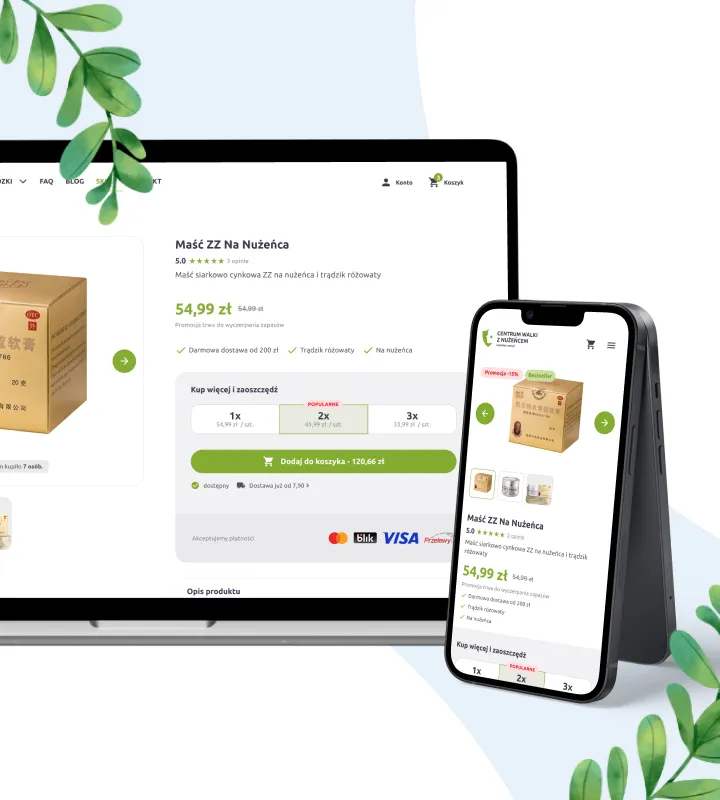
CWZN
New UX/UI design for an online cosmetics store
- See what else we build Projects
Start your fashion and accessories software project
One team designs the store with a size advisor, the PLM, the wholesale platform and the store associate app, and then builds them.
Client voices
What our clients say
 Maja Wieloch-Silecka Operations Director, Bosfor Group

“Working with the Wzór team was a genuinely great experience! They always answered our questions quickly and were flexible about our comments. They have no shortage of creative ideas and are at the same time thoroughly reliable and on time. The end result fully met our expectations; we recommend them to anyone looking for professionals who care.”
 Piotr Alberski Chief Operating Officer, Agencja XO Media

“Our clients expect us to act fast and effectively across a very wide scope - from building a brand, through a website with a store, to running an effective sales campaign. Not an easy task, but doable when you have a tight-knit team and partners who take on challenges on the fly. For us, quality, accountability and commitment are key, and working with UX Agency Wzór gives us that 100%.”
 Mateusz Swół Chief Operating Officer, Sellace

“Our cooperation with UX Agency Wzór started with our own website. We really liked the way they work, so we decided to subcontract projects for our clients to them on a White Label basis. We loved their workflow, the way they hand projects over to our team, their documentation and their work on the design system. Now we can take on bigger risks.”



























The team
Who will design your fashion and accessories software?
-
Aleksandra Bondar
Senior UX/UI Designer
View profileHow can I help you?
“I will design the style page in many colours so that a shopper on the website and a buyer in the showroom see straight away what they can order.”
-

Katarzyna Adamczuk
Prezes, Analityk Biznesowy
View profileHow can I help you?
“I will map out with you how a style travels from its PLM specification to the ERP, the e-commerce site and the label, and agree who owns the measurement chart at each stage.”
-
Patryk Korycki
CEO, Analityk Biznesowy
View profileHow can I help you?
“I will agree the scope and budget with you, and during the build I will be responsible for the order in which online sales, wholesale and retail move to the new system.”
-

Tadek Wadas
Senior UX/UI Designer
View profileHow can I help you?
“I will test the prototype with customers who hesitate between two sizes and with associates in store on a Saturday afternoon, then write down what to change on the product page and in the associate app.”
FAQ
Frequently asked questions about fashion and accessories software
What is a PLM system in the apparel industry?
A PLM (Product Lifecycle Management) system in the apparel industry is the system in which a brand runs its collection from the first sketch until a style is withdrawn, with a history of changes and a clear answer as to which version is current. It keeps style specifications, the fabric library, samples and their approvals in one place, where without it they sit in separate files and spreadsheets. We start a PLM design by writing down who changes the specification today and who that change fails to reach.
What is a tech pack?
A tech pack is a style's technical specification, from which the factory sews the sample and the production run: the flat sketch, the list of materials and trims, the size chart with tolerances, the grading across sizes, the sewing instructions and the label details. In a PLM system this information is data attached to the style, not a separate file. We lay out the tech pack screen in the order in which the technologist fills it in, from the sketch to the labels.
How does a size advisor work in an online store?
A size advisor in an online store asks the customer for a few details, such as height, weight and age, compares them with other shoppers who entered similar details and recommends the size those shoppers kept most often. It works for clothing and footwear, on the product page. We decide what the advisor asks so that answering takes only a few seconds.
What is bracketing?
Bracketing is buying several sizes or colours of the same product with the intention of keeping one and sending the rest back. In fashion the most common reason is confusing sizing, and every variant sent back has to be received, checked, repackaged and listed again by the store. So the product page tells the shopper whether this style runs smaller or larger than the rest of the brand's sizing.
How does a virtual try-on for glasses work?
A virtual try-on for glasses turns a phone or computer screen into a mirror: once the customer allows camera access, it builds a 3D model of their face and places the chosen frames on it, and the customer turns their head to see them from the side. This way they can try on any number of styles without leaving home. The try-on is laid out so that comparing two frames does not require setting up the face in front of the camera again.
What is a line sheet?
A line sheet is the season catalogue from which a boutique or department store buyer orders a brand's collection: styles with photos, colours, size ranges and prices. It used to be a PDF or a spreadsheet, and today it is more and more often a page in a digital showroom from which buyers order directly. When designing a line sheet, we first establish what the buyer filters the season by: category, colour and delivery date.
What is clienteling?
Clienteling is a way of serving customers in store in which the sales associate has the customer's profile on a phone or tablet: purchase history from every channel, wishlist, loyalty programme and booked appointments. The associate identifies the customer by name, email address, loyalty card or QR code. The note field in the profile sits within thumb reach, so the associate completes it after the conversation before the next person comes over.
When will the digital product passport cover textiles?
The digital product passport will cover textiles from the date of application of the delegated act that the European Commission adopts for them under the ESPR. That date cannot be earlier than 18 months from the act's entry into force, except in duly justified cases. So in a new PLM we leave room in the style record for the data the textiles act will require, instead of assuming today's specification will be enough.
Does the ban on destroying unsold clothing cover returns?
The ban on destroying unsold clothing covers returns as well, because the ESPR counts products returned by a consumer who withdrew from the contract as unsold consumer products. The regulation lists reasons for which the Commission may set derogations, including damage detected after a product has been returned that cannot be repaired in a cost-effective manner. That is why receiving a return includes a check of the item's condition before it goes back into stock or onwards.
Related services
Services related to fashion and accessories software
You know customers send clothes back because of the size, but not which styles.
Let us start with the product pages and the returns data, to find the styles that come back most often.
You are choosing a PLM, a wholesale platform or a store associate app and are looking for a starting point.
We will write down with designers, technologists and sales what they need, before you compare vendors.
You have a design for a size advisor or an eyewear configurator and want to test it with shoppers.
We will go through it with you at a consultation or check it in a study before it reaches the store.