

Cybersecurity
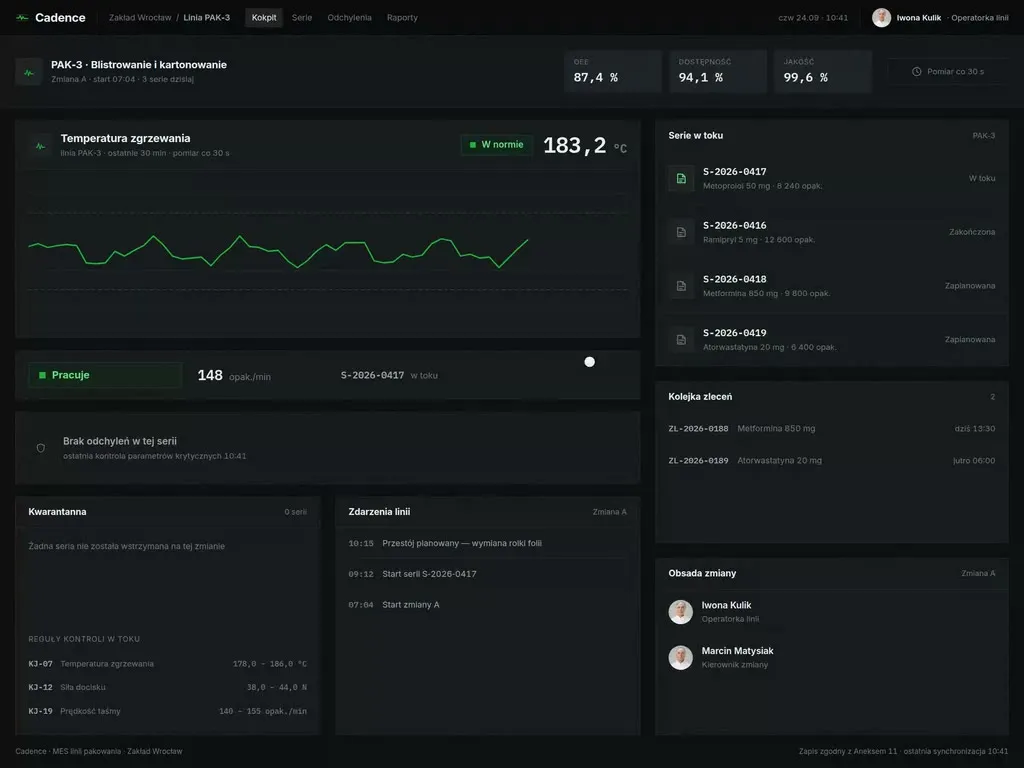
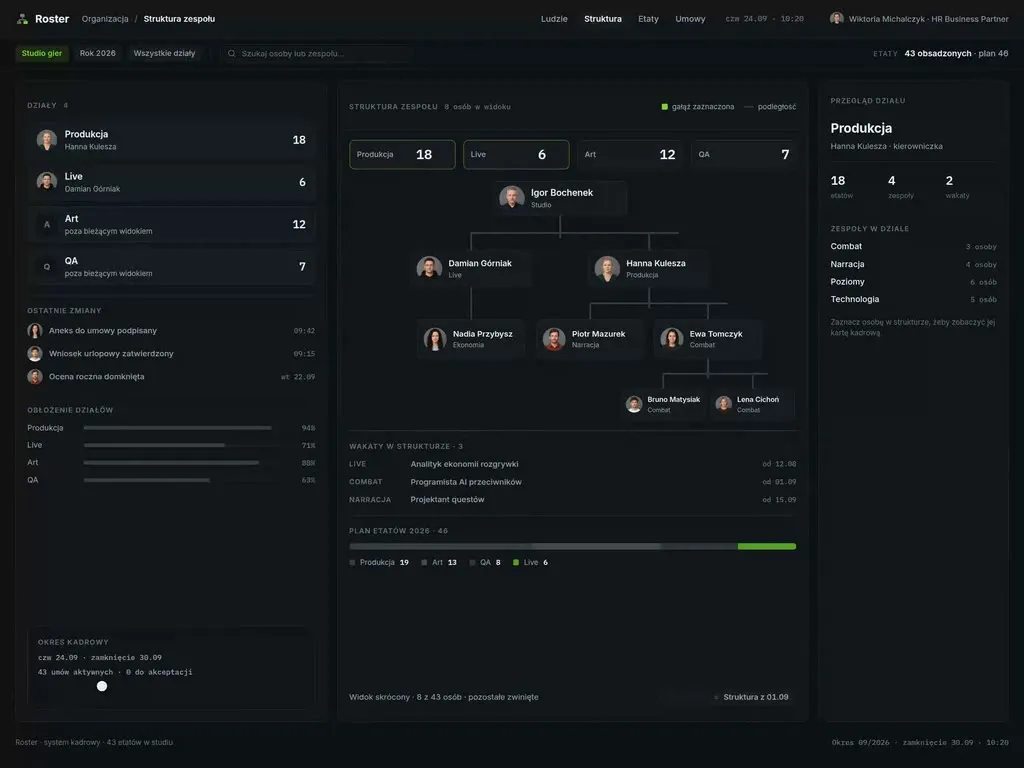
At Wzór UX agency you receive an interactive design of your cybersecurity software, be it a SIEM console, a fraud detection system or an EDR console, and either our team, which builds custom software, or your own developers can then implement it. Security vendors and distributors also order websites from us, including the Acronis Cyber Backup and Hexnode MDM product pages, among others.







Challenges
What challenges do we help solve in cybersecurity?
Our approach
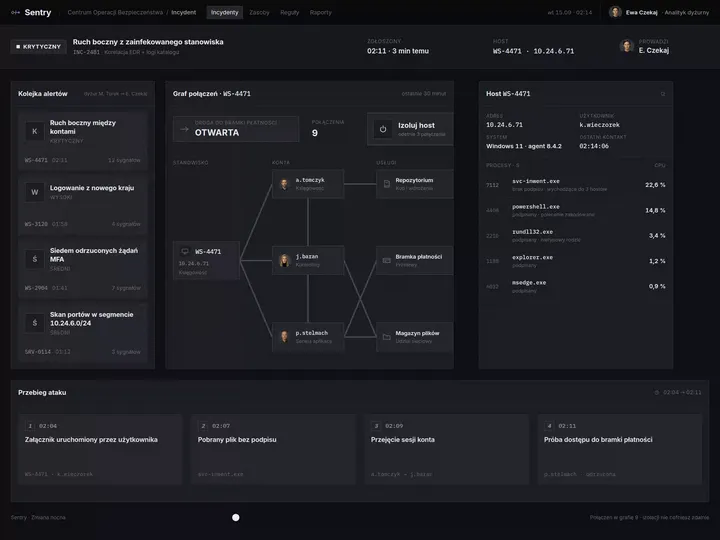
Next to every priority in the alert queue we put its reason: which rules fired, whose computer it is and what happened on it before. We tie closing an alert to choosing a reason, so in the morning you can see what the night shift dismissed and why.
Scope of services
Our approach
We lay out the decision view so that the fraud analyst sees the reason for the hold, the customer's history and the note from their call to the helpline on one screen. Releasing a transfer then takes one click, and every decision goes into the register along with its justification.
Scope of services
Our approach
In a console for the administrator of a mid-sized company we write the alert in their words: which computer, what happened on it and what the next step is, instead of the threat name from the vendor's database. Below it we leave one button with a safe response, such as cutting the computer off the network, and keep the other options for a specialist.
Scope of services
Who it is for
Which cybersecurity companies do we design software for?
Endpoint and mobile device protection consoles
Vendors and distributors of antivirus, EDR, backup and MDM products sell their console to an administrator who, in a mid-sized company, is responsible for everything from printers to licences. For such companies we have designed the Acronis Cyber Backup and Hexnode MDM product pages. When designing a console like this, we start with the first week after installation, because that is when the administrator decides whether to switch on the features the company has paid for.
PAM and privileged access
Companies that let their own administrators and external vendors into their servers route them through a PAM system, which records every session. For DAGMA we designed the landing page of an online conference about the Senhasegura PAM system. For the person who reviews hours of such recordings we provide a session timeline that marks the commands which changed the configuration.
SIEM and SOC consoles
A SIEM is worked around the clock, in shifts, both in a company's own SOC and at a provider that runs a SOC as a service for many clients at once. In such a provider's console we put the client's name next to the alert along with what has been agreed with them: whom to wake up at night and which systems may be cut off without asking.
SOAR and incident handling
The incident response team starts where the first-line analyst stops: SOAR runs a playbook, gathers data and blocks accounts, and a person approves the next steps. We lay out the automatic actions and people's decisions on a single incident timeline, from which the team reconstructs the attack without searching several systems.
Fraud detection systems
Banks, fintechs and large online shops hold suspicious transfers and payments in a fraud detection system, and a fraud analyst decides what to release. A customer whose transfer has been held calls the helpline, which is why we design the analyst's screen together with the message the customer sees in the app at that same moment.

Why us?
Why choose our UX agency?
-
Fewer honest customers blocked
Every fraud rule that holds honest payments costs the bank a helpline call, and sometimes a customer. In the fraud team's panel we show which rules most often hold transactions that are later released by hand, so the team knows what to fix first.
-
More incidents per shift
A second-line analyst stops copying findings from the SIEM into the ticketing system once a SOAR playbook opens the incident record with the gathered data on its own. The time that went into copying goes into analysis.
-
A board that understands the incident
Under the amended Polish Act on the National Cybersecurity System, the head of an essential or important entity is responsible for the entity carrying out its cybersecurity obligations, and where the head is a multi-member body, such as a board, and no responsible person has been designated, all members of that body are. We design the incident summary for the board separately from the SOC report: what happened, what was at risk and what has already been done, without technique numbers or IP addresses.
-
A senior team
A team of senior UX designers who have been designing interfaces for nine years, today for large organisations, SaaS companies and software houses. Seniors will take on your SOC console or fraud detection system, from research on the shift to sign-off.
-
Proven client trust
We have designed for 115 brands, and most of them come back to us with their next project.
-
Higher quality with AI
A designer with AI tools checks more variants of an alert queue or a fraud analyst's decision view than they could draw by hand and picks the one that works. What reaches you is a tested version, not the first one that came out.
Process
How will we design your cybersecurity system, step by step?
-
A conversation with your team

We set the goals and list the tools you work on today
We sit down with the people responsible for security, shifts and regulatory compliance. Together we pick the process to change, for example the path a SIEM alert takes to closure, and agree how you will know the project has worked.
Key steps
- Conversations with the CISO, the SOC manager and the person responsible for compliance
- A review of the tools: SIEM, EDR, SOAR, ticketing system
- Choosing the process we start with
- Agreeing the measures: response time, false alarms, analyst decision time
Deliverables
- Project brief
- Map of tools and their owners
- List of measures
- Scope of the first stage
-
Discovery on the shift
We study the work where analysts actually make decisions
For discovery we join a SOC shift, the night shift included, sit with a fraud analyst at the busiest hours and with an administrator who receives alerts from the console. We look for workarounds: a spreadsheet of rules to ignore, a query pasted from a file, a note handed over when the shift changes.
Key steps
- Observing a SOC shift, the night shift included
- A session at the fraud analyst's workstation
- Interviews with first- and second-line analysts
- A review of alerts closed without being opened
- A conversation about the shift handover
Deliverables
- Research report
- Map of the alert's path showing where people work around the system
- Prioritised list of problems
-
Interactive system design
A design your analysts click through at their own workstation
The screens are designed straight for the target workstation, from several monitors in the SOC to the administrator's laptop. We test the prototype with analysts on attack scenarios prepared together with your team and refine it before it reaches the developers.
Key steps
- Screen architecture by role: SOC analyst, fraud analyst, administrator, board
- Interactive design of the alert queue, the incident record and the decision view
- Exception states: no data from one source, an alert without an owner, a night-time escalation
- Prototype tests on attack scenarios
Deliverables
- Interactive design of every screen
- Component library
- Description of behaviour in exceptions
- Prototype test report
-
Build or design hand-off
The new screens reach your system together with the integrations
Our team builds the design, or we hand it over to your developers or to the system vendor. Either way, we spell out where each field takes its data from, be it the SIEM, the EDR, the user directory or the transaction database, and what the screen shows when one of those sources stops responding.
Key steps
- Screen and field specification for developers
- Integration map: SIEM, EDR, SOAR, user directory, ticketing system, transaction database
- Description of permissions and the activity log
- Pre-launch tests on test data
Deliverables
- A working system or a package ready to build
- Integration and permissions specification
- Pre-launch test report
-
Measuring after launch
We check against shift data whether the change worked
After launch we compare the time from alert to response, the number of alerts closed without being opened and the fraud analyst's decision time with the measurement taken before the change. From those three figures we choose what to improve next.
Key steps
- Measuring response time and decision time
- A review of alerts closed without being opened
- Conversations with analysts after launch
- Plan for the next improvements
Deliverables
- Measurement report
- Prioritised list of improvements
- System development plan
Methods and technologies
Systems, standards and regulations we work with in cybersecurity
-
Microsoft Sentinel
A team working on Microsoft Sentinel faces a move from the Azure portal to the Microsoft Defender portal, because after 31 March 2027 Sentinel will only be available there. For that move we list with you the views and habits that have to be rebuilt in the new portal before the old one stops working.
-
EDR and XDR
In EDR and XDR, cutting an infected computer off the network takes one click, and a mistake that hits a server stops a whole department's work. So beside the isolation button we show whose computer it is and what depends on it, and where the system allows it we offer isolation with exclusions.
-
MITRE ATT&CK
Consoles label alerts with MITRE ATT&CK technique numbers, and a number such as T1021 means something only to a specialist. Next to the number we put the technique's name and its tactic, meaning the attacker's goal, so that a first-line analyst does not have to look it up.
-
NIS2 and the Polish KSC Act
NIS2 and the Polish Act on the National Cybersecurity System give essential and important entities 24 hours for an early warning about a significant incident and 72 hours for the notification. The data for those reports usually sits in several systems, which is why we design the report fields to fill in while the incident is handled, not after it is closed.
-
DORA
DORA requires a major incident to be reported to the Polish Financial Supervision Authority (KNF) within 4 hours of its classification, and whether an incident is major depends on thresholds: the number of clients, downtime, lost data. We put the thresholds alongside the current values, so the team sees an incident approaching classification before anyone starts counting.
-
Test data instead of real logs
Test data instead of real logs is how we test a prototype: we prepare alerts, sessions and transactions together with your team, close to the real ones but without any customer or staff data. The security department then agrees to the tests, and no log leaves your network.
Selected work
Our work for cybersecurity companies
These are product pages and landing pages for vendors and distributors of backup, MDM and PAM systems, antivirus and storage.
-
Cybersecurity
DAGMA
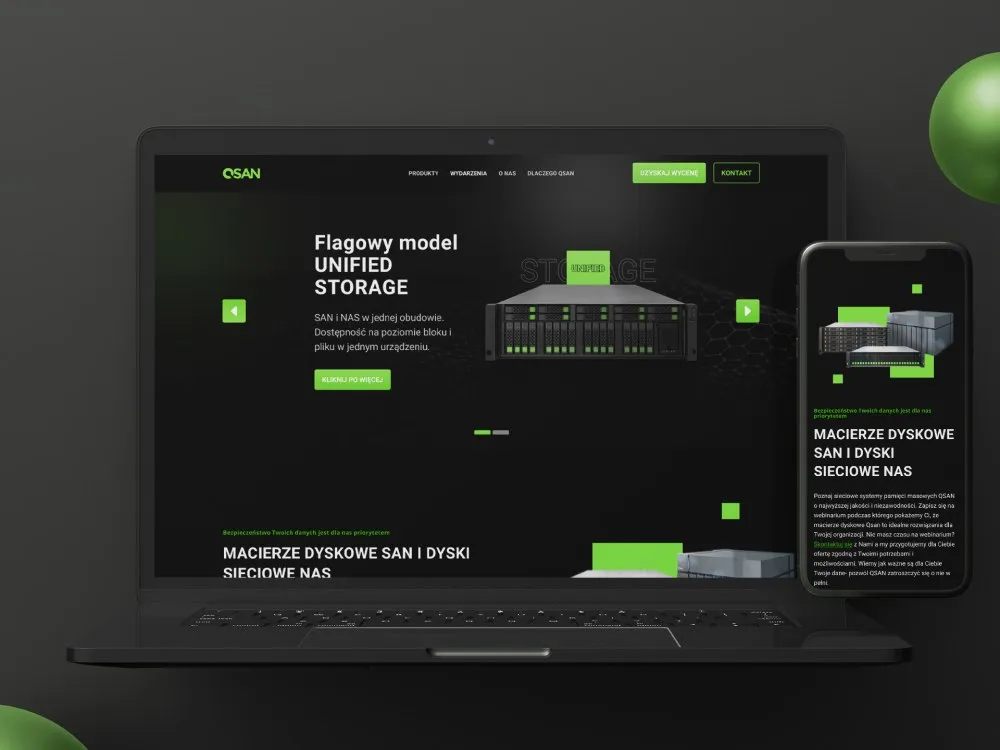
View projectA QSAN product page run by DAGMA - SAN disk arrays and NAS network storage, with the flagship Unified Storage model. A dark, technical layout with a green accent, a hero showing the device, "why QSAN" arguments and a quote CTA. Desktop and mobile.
-
Cybersecurity
ESET
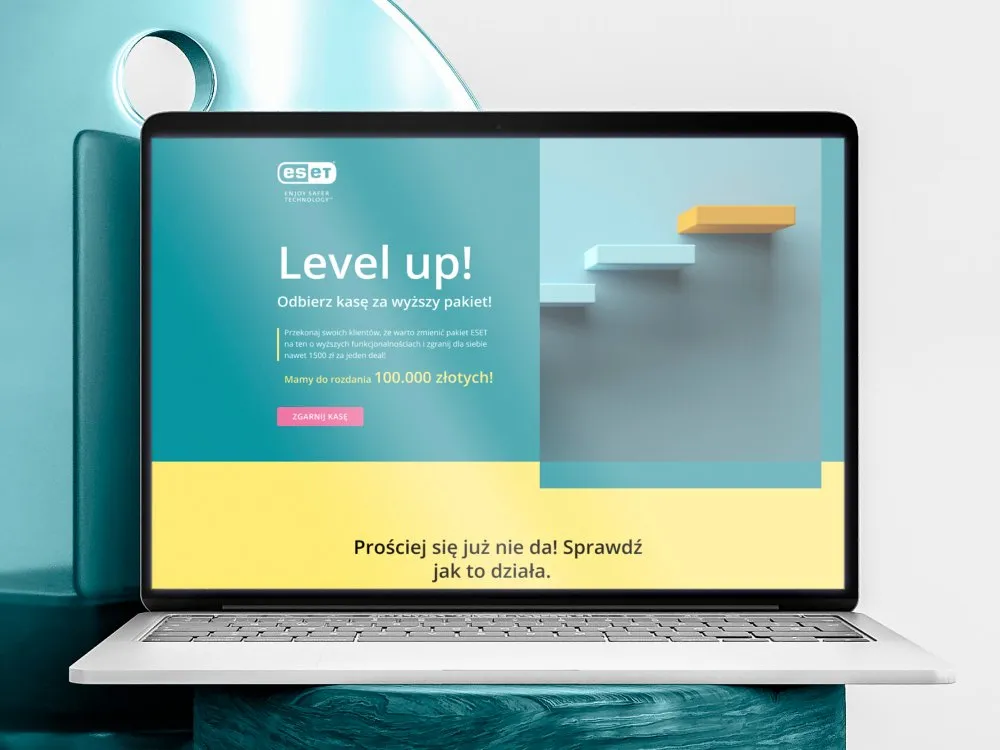
View projectThe "Level up!" campaign landing page for ESET - a partner incentive rewarding sales of higher antivirus tiers from a prize pool. An energetic teal-and-yellow layout with a hero, the mechanics in steps, a benefits calculator and an entry form. Desktop and mobile.
-
DAGMA
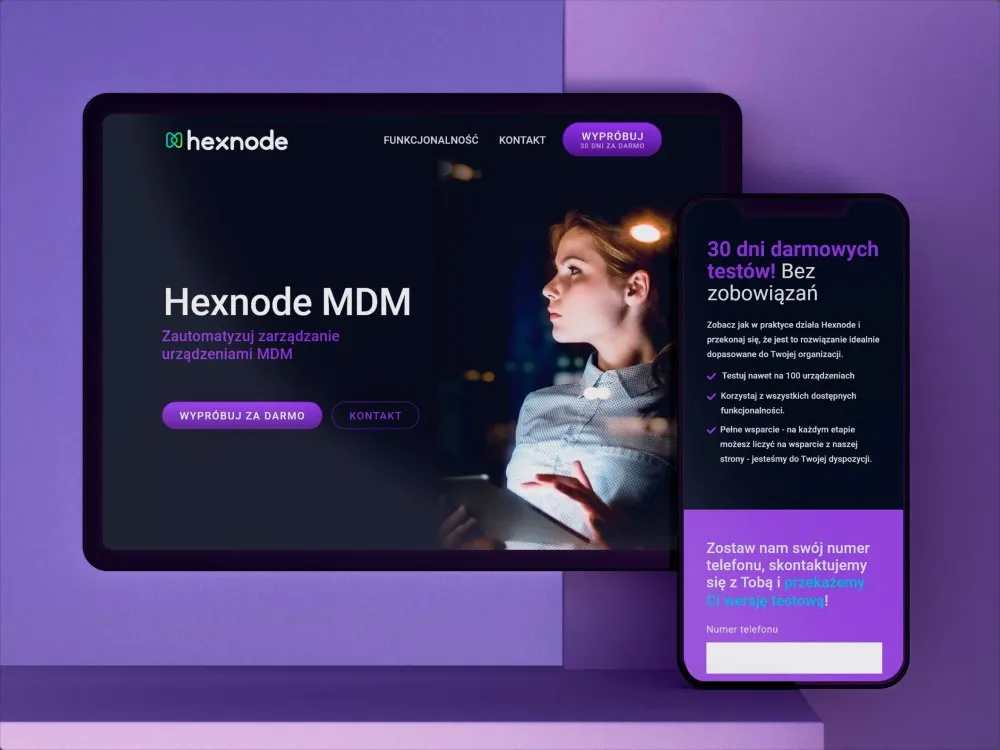
Product page for the Hexnode MDM system
-
Acronis
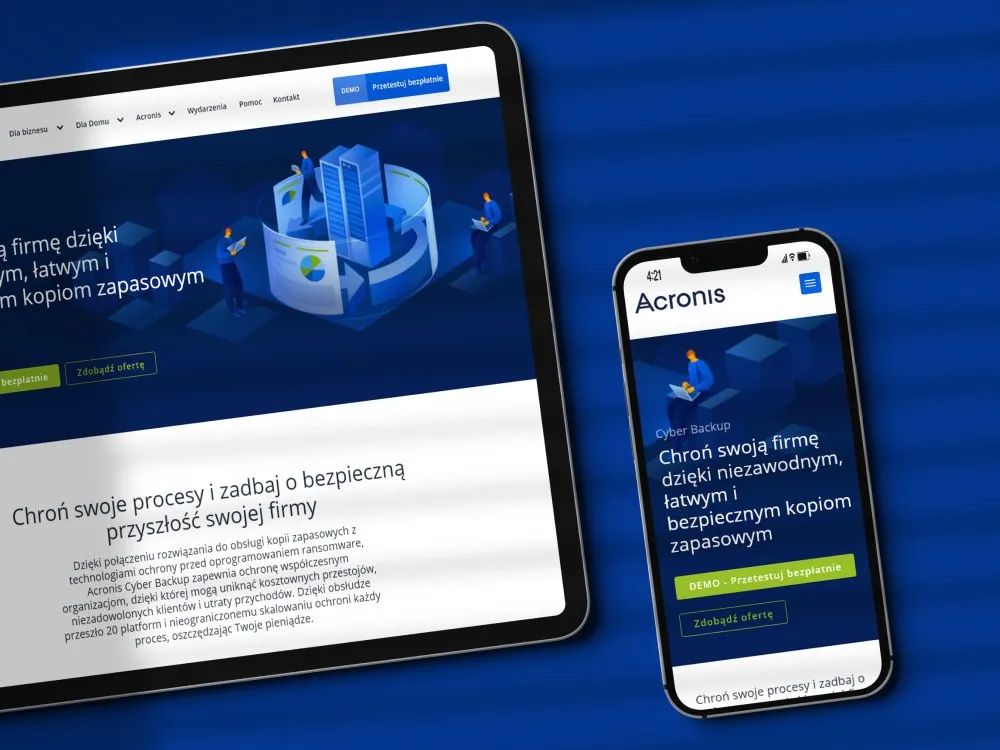
Product page for ransomware protection
-
Senhasegura
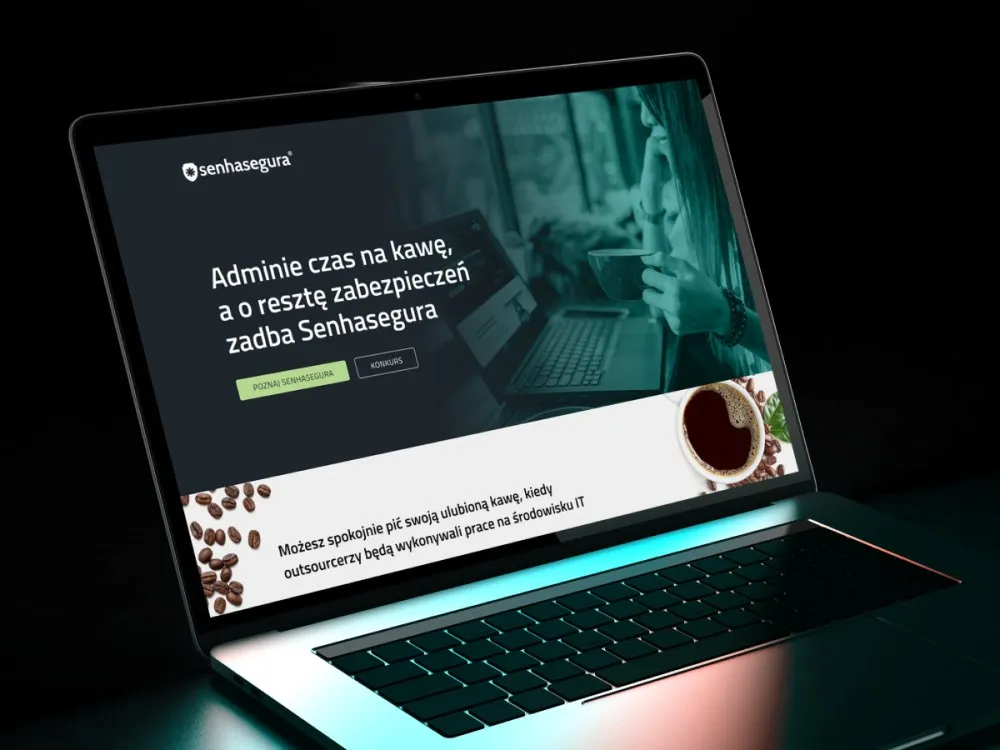
Coffee time - Senhasegura handles security
- See what else we build Projects
Start your cybersecurity software project
One team designs your SOC console, fraud detection system or administrator console, from the first shift in the SOC to the build.
Client voices
What our clients say
“UX Agency Wzór has been delivering website and landing page designs for our company for two years now. Every project was soundly planned and efficiently delivered. We particularly value the creative process, in which Wzór generates a range of concepts to choose from.”
 Maja Wieloch-Silecka Operations Director, Bosfor Group

“Working with the Wzór team was a genuinely great experience! They always answered our questions quickly and were flexible about our comments. They have no shortage of creative ideas and are at the same time thoroughly reliable and on time. The end result fully met our expectations; we recommend them to anyone looking for professionals who care.”
 Piotr Alberski Chief Operating Officer, Agencja XO Media

“Our clients expect us to act fast and effectively across a very wide scope - from building a brand, through a website with a store, to running an effective sales campaign. Not an easy task, but doable when you have a tight-knit team and partners who take on challenges on the fly. For us, quality, accountability and commitment are key, and working with UX Agency Wzór gives us that 100%.”




























The team
Who will design your cybersecurity system?
-

Aleksandra Bondar
Senior UX/UI Designer
View profileHow can I help you?
“I will design the alert queue and the incident record, then test them with your analysts on an attack scenario before they reach the developers.”
-

Katarzyna Adamczuk
Prezes, Analityk Biznesowy
View profileHow can I help you?
“I will map out with you the path of an incident from the first alert through escalation to the report, and mark who makes the decision at each point.”
-
Patryk Korycki
CEO, Analityk Biznesowy
View profileHow can I help you?
“I will agree the scope and budget of the project, and during the build I will keep watch over the connections to the SIEM, the EDR and the ticketing system, and over data permissions.”
-

Tadek Wadas
Senior UX/UI Designer
View profileHow can I help you?
“I will sit in on the SOC's shifts, night shifts included, and test the message about a held transfer with the bank's customers.”
FAQ
Frequently asked questions about cybersecurity software
What is a SIEM?
A SIEM (Security Information and Event Management) is a system that collects logs and events from across the organisation, links them together and, on that basis, sends alerts to the security team. The person working in it is above all the SOC analyst, who classifies an alert and decides whether to pass it on. Work on its screens starts from what the person on shift needs in the first minute after opening an alert.
What is the difference between SIEM and SOAR?
A SIEM detects events and links them into alerts, while SOAR automates the response: after an alert it runs a playbook that gathers data about the incident and carries out the next steps, such as blocking an account. The first system tells you what is happening, the second helps you stop it. In the incident record we therefore separate the steps the playbook has already taken from those waiting for a person's approval.
What is the difference between EDR and XDR?
EDR detects and responds to threats on individual devices such as laptops and servers, while XDR combines data from devices, the network, email and the cloud to see an attack spread across several layers. Both let you isolate an infected computer from the network. We design an EDR console for two different people: a SOC specialist and the administrator of a mid-sized company who handles security alongside everything else.
Is Wazuh a SIEM?
Wazuh is an open-source security platform that works both as a SIEM and as an XDR: it collects and analyses events in real time and responds to threats on devices. The code is open, so a company can rebuild its dashboard for its own team. A rebuild like that starts with conversations with the analysts, the administrators and the compliance officer, and each of those roles then gets its own view.
What is alert fatigue?
Alert fatigue is the state in which SOC analysts receive so many alerts, many of them false, that they stop responding to them with full attention. The result is missed attacks, slower response and a burnt-out team. What changes the most here is a visible reason for the priority: an analyst who sees why the alert matters dismisses the ones that do not matter more quickly.
How does fraud detection work in banks?
A bank's fraud detection system monitors logins and transactions in online and mobile banking, and holds a suspicious operation for confirmation or rejects it. A held transaction goes to a fraud analyst and usually waits until the customer confirms it with the helpline. The hold message in the app is easy to overlook in a project, yet it decides whether the customer calls calm or upset.
What is a PAM system?
A PAM (Privileged Access Management) system manages access to accounts with elevated permissions: it keeps passwords in a vault, gives administrators and external vendors access only to the resources they need and for a set time, and records their sessions. The recordings serve audits and post-incident analysis. In a PAM panel our main focus is the access approval for a vendor: who is asking, for which server, for how many hours and why.
What is MITRE ATT&CK?
MITRE ATT&CK is a publicly available knowledge base of attacker tactics and techniques, described on the basis of real attacks. Each technique has a number, such as T1021 for remote services, and an assigned tactic, meaning the attacker's goal, in this case lateral movement across the network. We build the scenarios for prototype tests from ATT&CK techniques, so that the SOC team checks the prototype against an attack sequence based on real cases.
Can you change a SIEM interface without replacing the system?
A SIEM interface can be changed without replacing the system in two ways: through custom dashboards and views that the vendor allows, or through a separate app for the team that pulls data from the SIEM through an API. The first route is faster, the second gives full freedom over the screen layout. We choose it with you after checking how much of your team's daily work happens outside the SIEM today.
Related services
Services related to cybersecurity software
You know your analysts lose time on false alarms, but not where.
Let us start by walking an alert's path and finding the step where the most time goes.
You are building a new security product or replacing a console.
We will work out what analysts, administrators and the board need before the team starts coding.
You have screen designs and want to test them before they reach the shift.
We will talk them through or prepare a prototype to try out on an attack scenario with your SOC team.