

Mobile app development
At Wzór UX agency you get full mobile app development, from code to publication in the App Store and Google Play, and after launch our team or your own developers can ship its next versions. A first version meant only to test the idea ships as an app MVP.







Challenges
What challenges does mobile app development help you solve?
Our approach
We register the App Store and Google Play accounts to your company, so the store lists your name as the seller. Google holds the Android app signing key under Play App Signing, a lost upload key can then be reset, and you grant and revoke our access yourselves.
Scope of services
Our approach
Before submission we go through the list of problems Apple names as the most common: crashes and placeholder content, a missing demo account for the reviewer and gaps in the privacy policy, plus the in-app account deletion both stores require. We do not promise the review outcome, because it belongs to Apple and Google, but we prepare the replies to reviewers' comments ourselves.
Scope of services
Our approach
From launch day we put the dates on which Google raises the required Android level into the plan, so the app does not disappear for new users on newer phones. We hand the releases to your team along with a checklist and the testing tracks, and on request we keep running them separately.
Scope of services
Who it is for
Which companies do we provide mobile app development for?
Customer apps in the public stores
For an app anyone can find in the App Store and Google Play, we prepare for a full review in both stores: description, screenshots, privacy policy and data declarations. Before sending, we check that the declarations match what the app actually collects, because the account owner is responsible for their accuracy.
Apps for your employees
When only your employees use the app, we release it outside the public store, yet it still goes through Apple's review, so we prepare sample data and access for the reviewer. It then reaches work phones through your device management system.
Apps for business customers
In an app for business customers, sign-in relies on accounts your company creates, and Apple's guidelines then do not require an extra sign-in through a third-party service. Inside, we split permissions by the customer's roles, for example the person ordering and the person approving.
Financial and health apps
With financial or health services we work on your company's organisation accounts from day one, because Apple accepts such an app only from the entity that provides those services, and Google Play recommends an organisation account for it. The D-U-N-S number both stores require for such accounts is the first item on our list.
Apps that sell
We set the payment path according to what the app sells. Digital content and features are unlocked in the App Store through in-app purchase, while goods and services used outside the app are paid for by ordinary methods, such as Apple Pay or a card.
- E-commerce
- Software
- Banking & Finance
- Healthcare
- Energy
- Media
- Aerospace & Defense
- Automotive & Mobility
- Crypto & Blockchain
- Education
- Entertainment
- Fashion & Accessories
- Grocery Retail
- Gaming
- Public Sector
- Insurance
- Logistics & Fulfilment
- Industrial Manufacturing
- Pharma
- Real Estate
- Retail & FMCG
- Cybersecurity
- Services
- Sport
- Telecommunications
- Transport & Travel

Why us?
Why choose our UX agency?
-
Progress on your own phones
Every batch of screens ends with a build you install on your own phones through TestFlight and Google Play internal testing. You judge progress in an app you hold in your hand.
-
Independence after hand-off
We finish the hand-off with a release your team does on its own, on a testing track and following our checklist. You ship the next versions without us and come back to us when you want to.
-
Lower maintenance cost
We choose one codebase for iOS and Android wherever the app's features allow it, because a fix then reaches both stores in a single release. Separate code for each platform is kept for the features that genuinely need it.
-
A senior team
A team of senior UX designers who have been designing interfaces for nine years, today for large organisations, SaaS companies and software houses, including the Tip Card platform and the Jawny Lublin portal. When a build has no design yet, the same team prepares it as part of the project.
-
Proven client trust
We have designed for 115 brands, and most of them come back to us with another project.
-
Higher quality with AI
A designer with AI tools checks more variants than they could draw by hand and picks the one that works. What reaches you is the tested version, not the first one that came out.
Process
How will we run your mobile app development, step by step?
-
A conversation with your team

We agree the starting point, the scope of the first release and the technology
We check what we are starting from: a finished design, existing code or just an idea, and which features must go into the first release. On that basis we choose the technology and settle which device permissions the app really has to ask for, because each one has to be justified in the store.
Key steps
- A review of the starting point: design, code, accounts
- First-release features and the ones for later
- Technology choice: one codebase or native
- Device permissions and the reasons for them
Deliverables
- First-release scope
- Technology decision
- List of accounts and access to set up
-
Requirements and accounts
We check what the stores require of this app and set up the accounts in your company's name
We put together the App Store and Google Play requirements that apply to this particular app: sign-in, payments, personal data and your industry. In parallel you set up the organisation accounts, with their D-U-N-S number, together with us, and we prepare the test and production environments.
Key steps
- Store requirements for this app's features
- D-U-N-S number and organisation accounts in both stores
- Play App Signing and Apple certificates
- Test and production environments
Deliverables
- Store requirements list
- Your company's developer accounts
- Configured environments
-
Building the app
We build the screens and integrations from the design
Screens are built from the design, and the integrations come with them: sign-in, payments, notifications, offline work and syncing once the connection is back. We also check the test versions on a weak signal and after a permission is denied.
Key steps
- Screens built in batches from the design
- Integrations with your systems, sign-in and payments
- Offline work and data sync
- Tests across screen sizes and system versions
Deliverables
- Test builds after every batch
- The app on both stores' testing tracks
- Device test report
-
Publication or release hand-off
We bring the app into both stores and agree who ships the next versions
We assemble the descriptions, screenshots, privacy policy, App Privacy and Data safety declarations and a demo account, then take the submission through to publication. After that, the next releases either stay with us or move to your team along with the access and a checklist.
Key steps
- Metadata, screenshots and privacy policy
- App Privacy and Data safety declarations
- Submission and replies to reviewers' comments
- Hand-off of access, checklist and testing tracks
Deliverables
- App published in the App Store and Google Play
- Release checklist
- Access on your company's side
-
After launch
Your team runs the next releases, or ours does if you prefer
After the hand-off, crash monitoring stays in place, so you can see what breaks for real users. Your team runs the further releases, and if you would rather outsource them, our team takes them on separately.
Key steps
- Crash monitoring for users
- Google Play requirement deadlines in the release plan
- Releases run by your team
- Maintenance with us, separately, if you ask for it
Deliverables
- Working crash monitoring
- Release plan with the stores' requirement deadlines
Methods and technologies
Frameworks and technologies we use in mobile app development
-

React Native
We choose React Native with Expo when an app is built around forms, lists, sign-in and payments. We upgrade the framework as we go, because postponed upgrades pile up changes from many versions at once.
-

Flutter
We suggest Flutter when you want the app to look the same on both platforms. We set iOS and Android patterns such as navigation in it deliberately, because Flutter adapts only system behaviours on its own.
-

Swift
We choose Swift for iPhone where heavy graphics, intensive background work or close hardware integration matter. We are upfront about the cost of that choice: every change then has to be made a second time in the Android code.
-

Kotlin
We choose Kotlin for Android for the same reasons as Swift for iPhone, when the app needs native code. We test on phones of different sizes and older system versions, because on Android the same app lands on very different devices.
-

TestFlight
TestFlight gives your team test versions on iPhone as soon as they are built, but external testers only get them after Apple approves the first build. We plan that review ahead, so testing with your customers does not have to wait.
-

Google Play Console
We set up Google Play Console on your company's organisation account, because new personal accounts have to pass a 14-day closed test with at least 12 testers before publication. Internal testing starts there without that requirement, so you get the first builds straight away.
Selected work
Our work
-
Transport & Travel
EzzyGuide
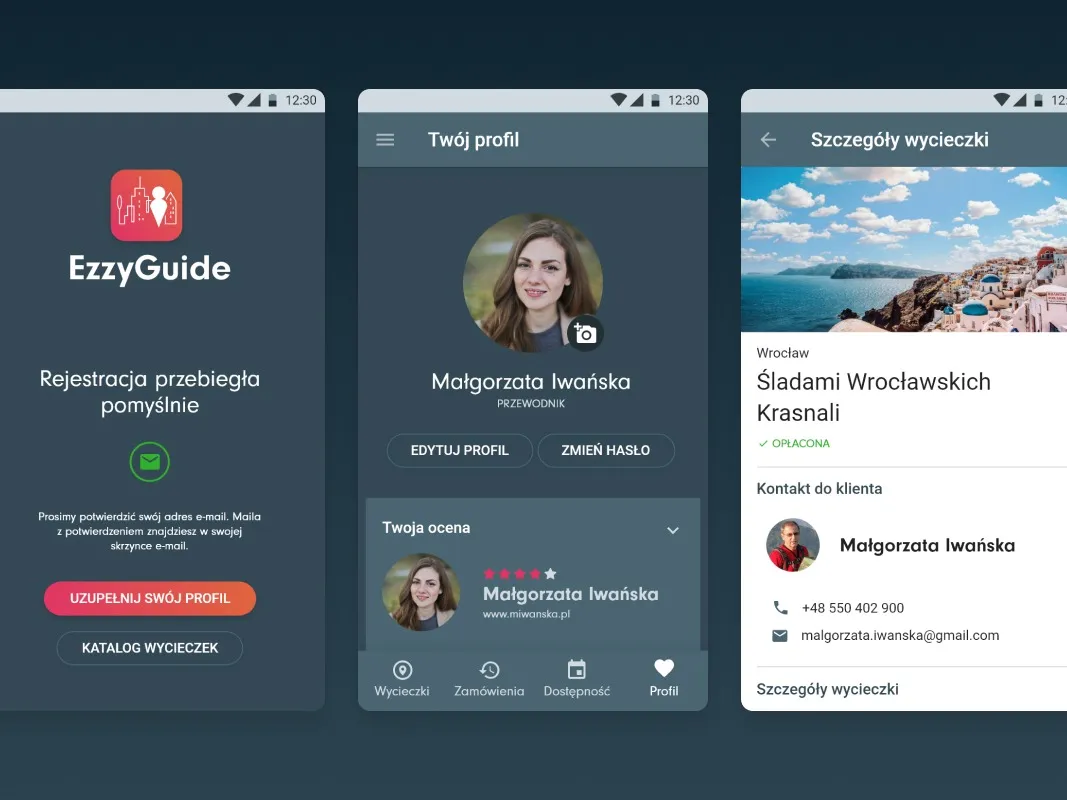
View projectEzzyGuide connects licensed mountain guides with people looking for tours: a catalogue of offers, date booking and contact with the guide, all in one app. We designed two account types, the tour order flow, and guide and traveller profiles.
-
E-commerce
Fonia
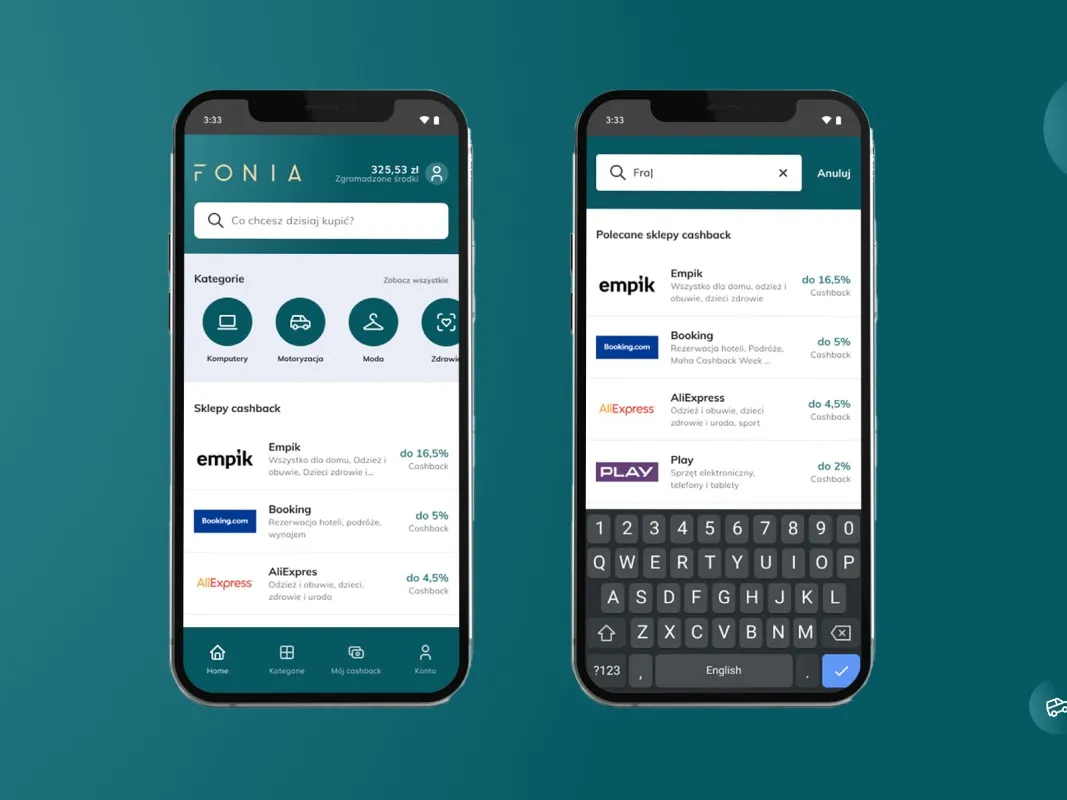
View projectFonia connects online shopping with cashback: users search for a store, shop, and get part of the money back. We designed the full path from the cashback store search, through sign-up and payouts, to an account panel with balance and withdrawals.
-
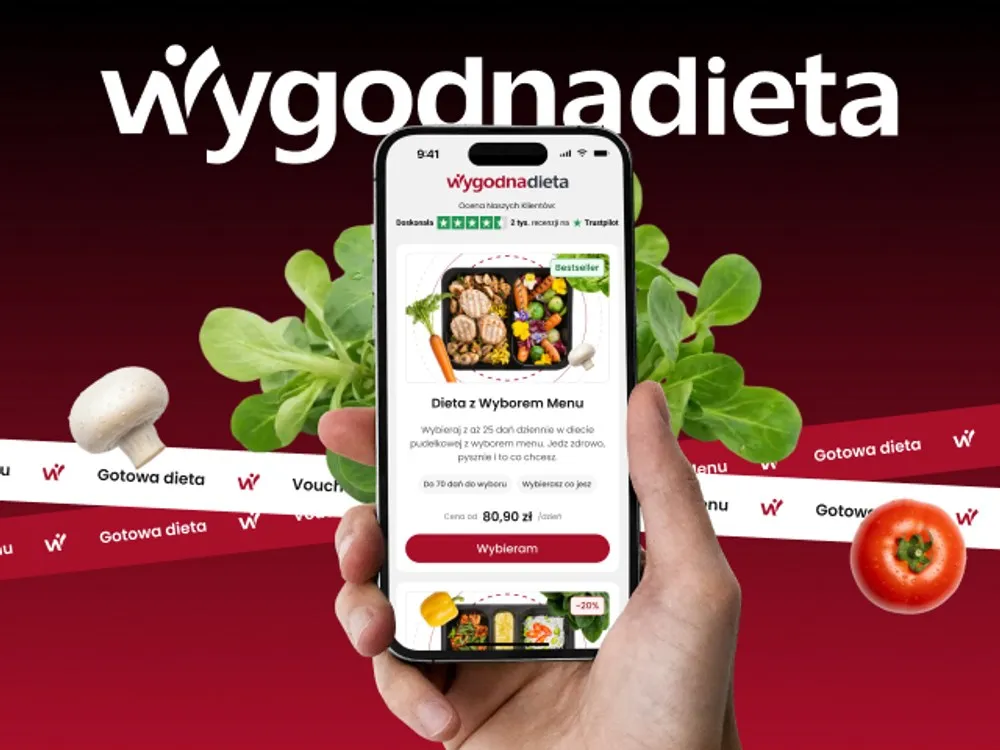
WygodnaDieta
App and online store for a meal-box diet service
-
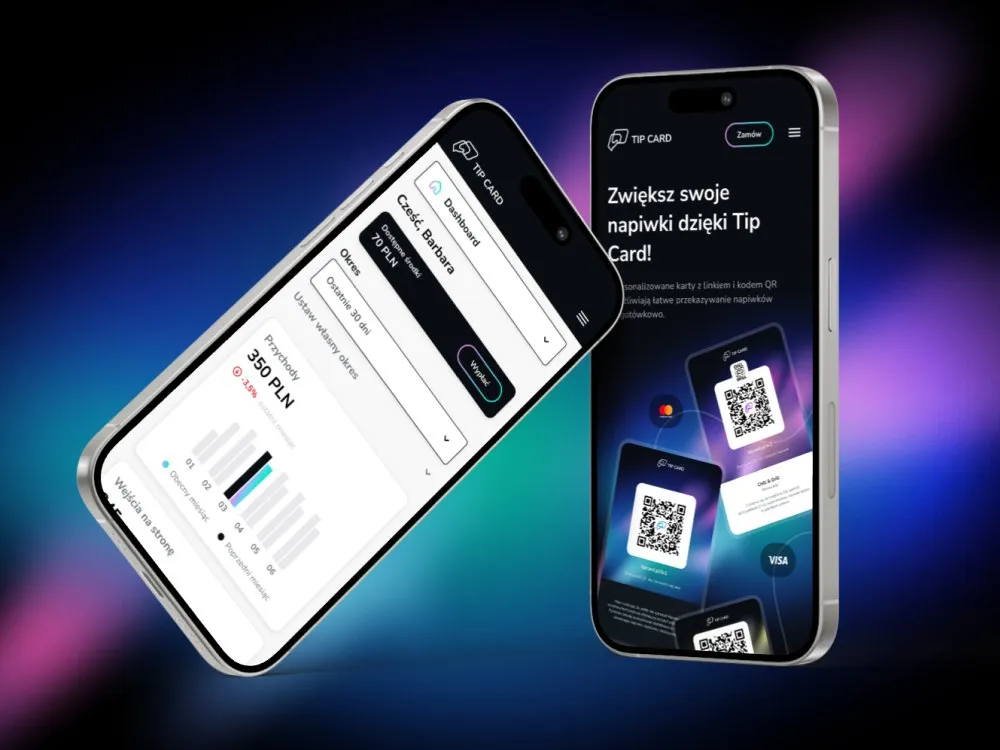
Tip Card
Cashless tipping platform
-
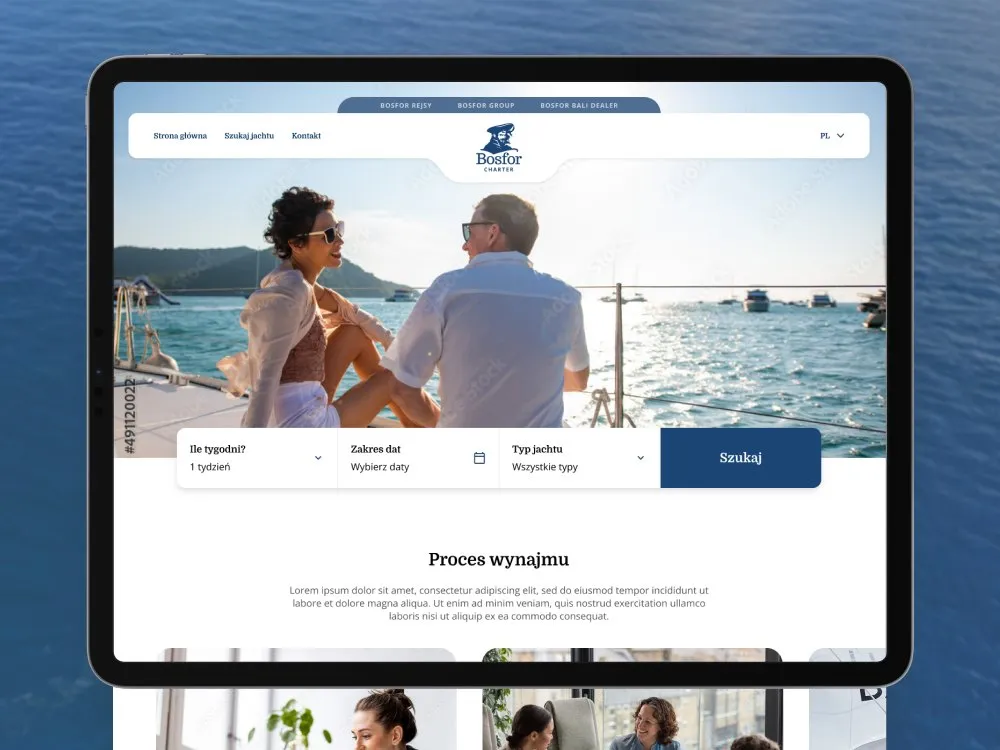
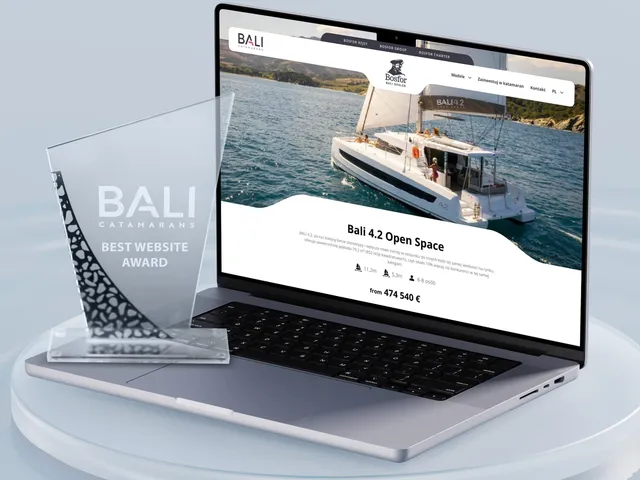
Bosfor Charter
Yacht charter platform with booking
-
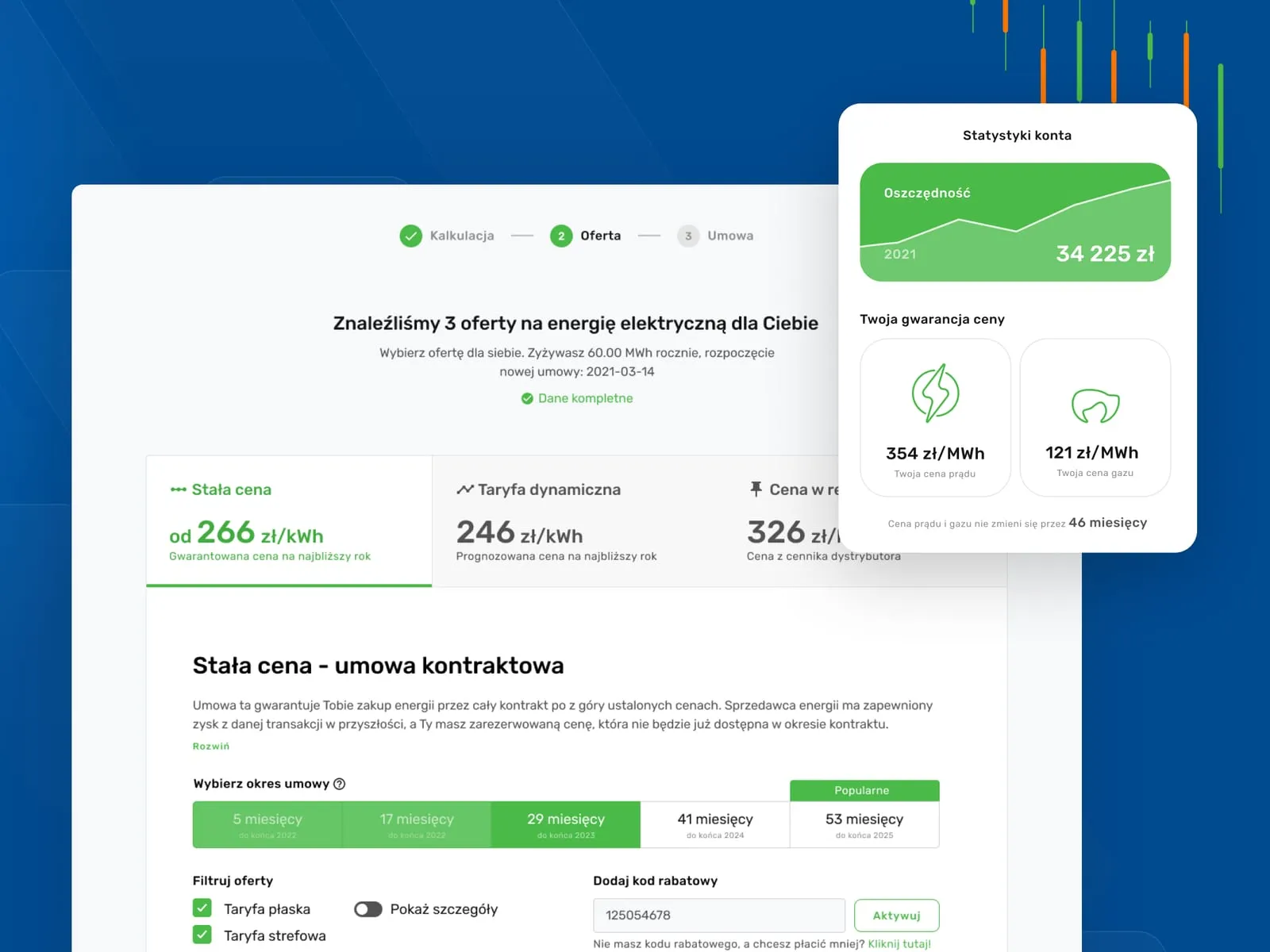
Wolumen
Energy and gas price comparison for businesses
-
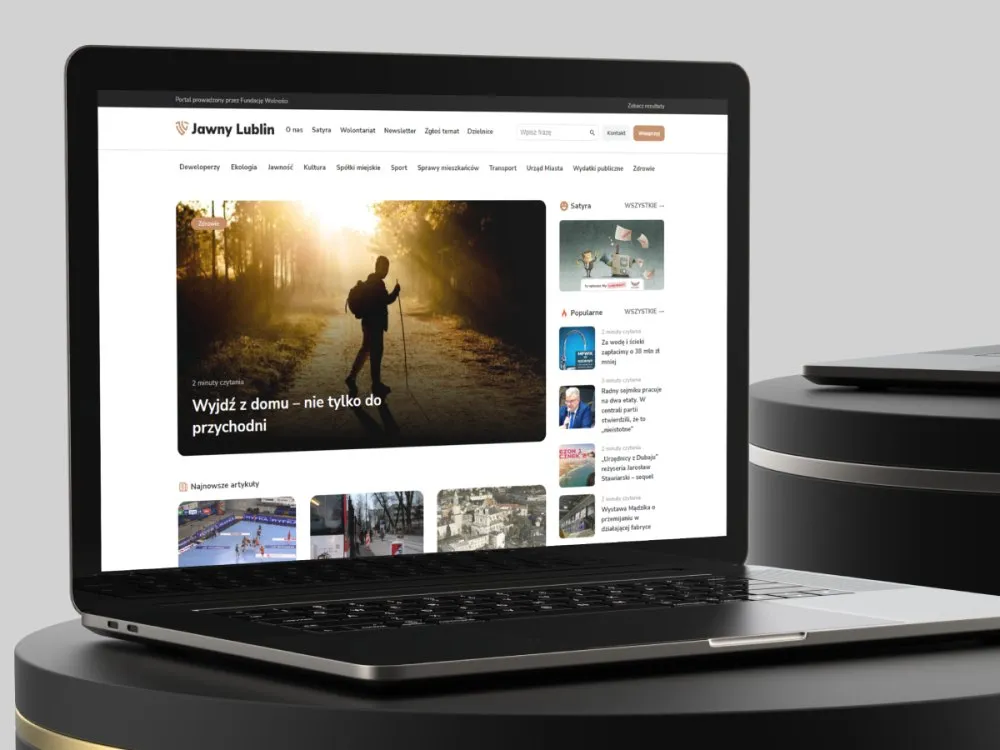
Jawny Lublin
A watchdog portal on city transparency
-
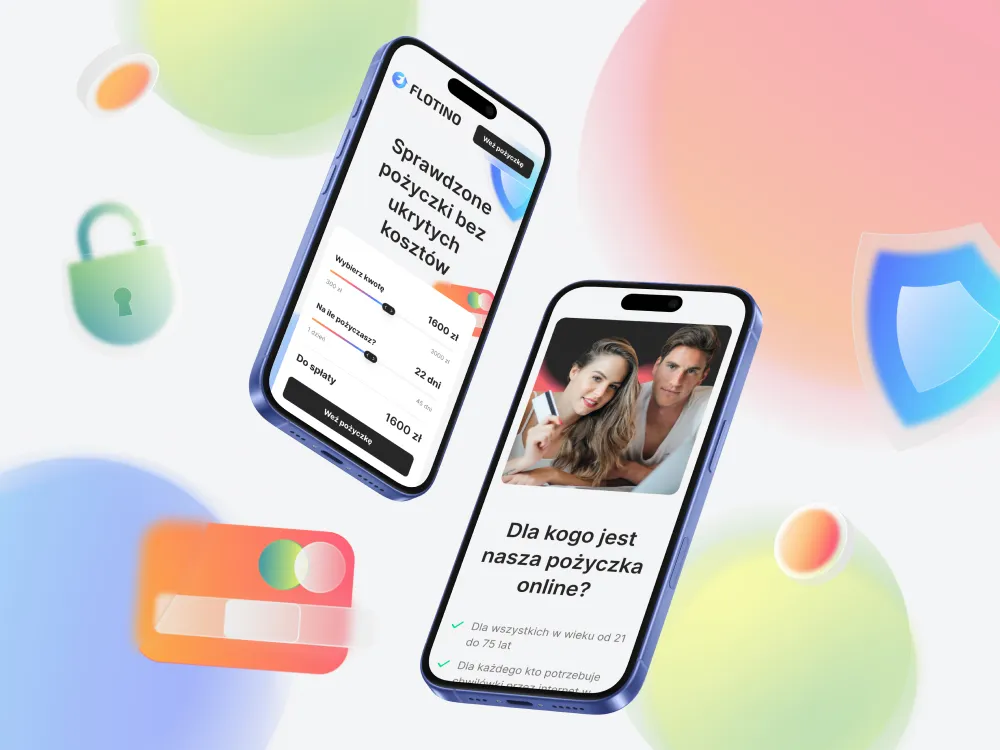
Flotino
Online cash loan service
-
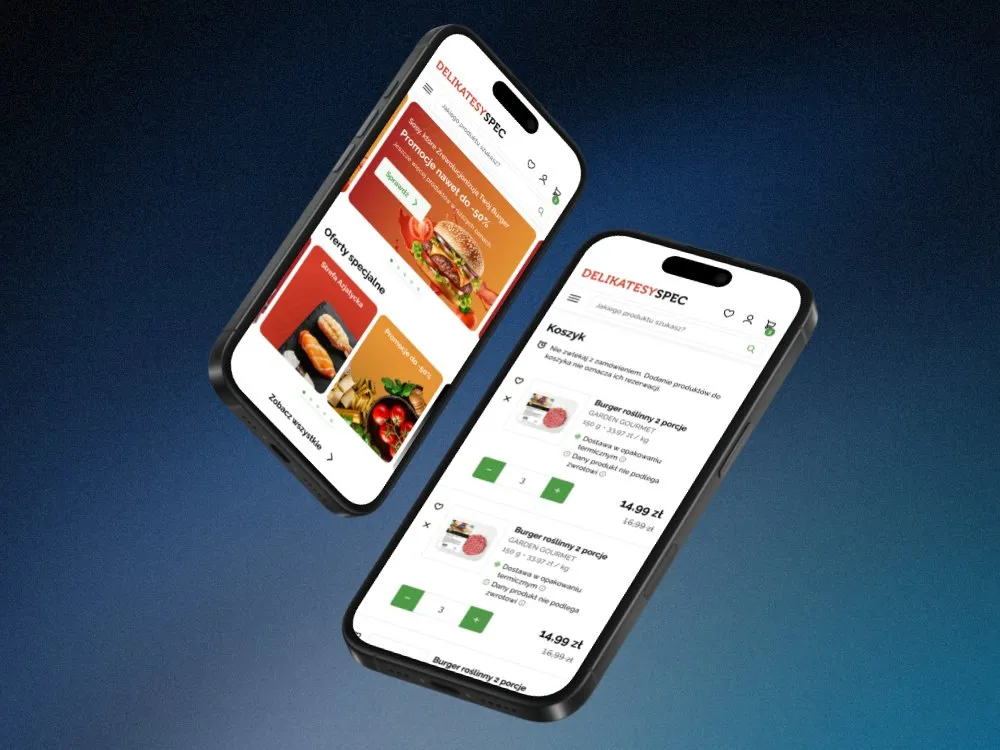
SPEC Food
Online store for a food delicatessen
- See what else we build Projects
Start your mobile app development
The build, test builds on your phones and a release in both stores.
Client voices
What our clients say

“Working with the UX agency Wzór on the NXC Liquid Cooling website went remarkably smoothly and professionally. The team stands out for its excellent, partner-like approach and its flexibility at every stage of the work. A major advantage was designing directly in code, which significantly shortened the time to launch while ensuring excellent technical and visual quality of the site. The end result meets our expectations 100%. I wholeheartedly recommend Wzór as a reliable partner.”
 Mateusz Swół Chief Operating Officer, Sellace

“Our work together started with our own website. We really liked the way they work, so we decided to hand over the UX/UI projects we deliver for our clients on a White Label basis. We value their processes, the way projects are prepared for implementation with documentation, and their work on the design system. Together we can do more.”
 Kacper Maraszkiewicz Project Manager, EMBIQ

“UX Agency Wzór is a real treasure for us. From the very start, on every one of our UX/UI projects, we can count on their full commitment and professionalism. Their approach to design and to the way they work fits our needs perfectly - from thorough documentation to finished designs that are simply easy to implement. They have a great flow, so everything runs smoothly, and every project looks excellent and is thought through from the user’s side. We wholeheartedly recommend Wzór as a dependable partner for any software house!”
 Paweł Kowalski Managing Director, IBIF

“Working with UX Agency Wzór is a pure pleasure. From the very beginning we could count on their professionalism, creativity and flexible approach to every project. Both the documentation and the finished designs are prepared in a way that makes implementation easy and delivers an excellent user experience. Wzór’s working flow keeps the process smooth, and the end results always exceed our expectations. We warmly recommend UX Agency Wzór.”




























The team
Who will lead your mobile app development?
-

Aleksandra Bondar
Senior UX/UI Designer
View profileHow can I help you?
“I will add the screens developers will need and that are usually missing from the design.”
-

Katarzyna Adamczuk
Prezes, Analityk Biznesowy
View profileHow can I help you?
“I will map out with you how the app handles accounts, payments and customer data before it all goes into the privacy declarations in both stores.”
-
Patryk Korycki
CEO, Analityk Biznesowy
View profileHow can I help you?
“I will agree the first release's scope and dates with you, then make sure the accounts and access stay on your side.”
FAQ
Frequently asked questions about mobile app development
How long does mobile app development take?
Mobile app development takes around 12-16 weeks from agreeing the scope to publication in the App Store and Google Play. A build on a finished design and one codebase sits nearer the lower end, an app with payments, offline work or no design yet nearer the upper end, and we give the exact date once we know the scope.
Is it better to build a mobile app natively or with one codebase for both platforms?
We build a mobile app with one codebase for both platforms, in React Native or Flutter, when its features allow, because you then maintain one codebase and one team. We keep native code in Swift and Kotlin for features the shared code will not handle well, such as heavy graphics. We decide after going through the feature list.
Whose name should the App Store and Google Play developer accounts be in?
The App Store and Google Play developer accounts belong to your company: they are organisation accounts registered to your details. Both stores require a D-U-N-S number for them, which takes up to several working days to be issued, so we file the request with you right at the start. You grant us access within those accounts and revoke it whenever you want.
How long does App Store review take?
App Store review usually takes less than a day: according to Apple, 90% of submissions are reviewed in under 24 hours. An incomplete submission, for example without a demo account or with a broken link, lengthens the review or ends in rejection, which is why we plan the first release with a margin.
Can an app be transferred to our company's account?
An app can be moved to your company's account in both stores without losing its ratings and reviews, and users keep receiving updates. Apple and Google have a transfer procedure for this, but the code and build materials come from the previous owner, so we start by checking what you will actually get from them.
Can an app be published for a company's employees only?
An app for a company's employees only is published without the public store: with Apple as a custom app in Apple Business Manager, and with Google as a private app in managed Google Play. Only users in your organisation can see it.
What happens if we stop updating our Android app?
An Android app without updates stops being available to new users on newer phones once it falls below the API level Google requires. From 31 August 2026, an app targeting Android 14 (API 34) or lower is available to new users only on devices running a system no newer than its target, and new apps and updates have to target Android 16 (API 36). An update for a new requirement is a new release that goes through review, so we plan it ahead of the deadline.
Will you build an app from a finished design in Figma?
We build apps from a finished design in Figma, including one prepared by another company, and before the build we ask about what is usually missing from it: the states for empty lists, errors, no connection and denied permissions. When there is no design, we start with mobile app design as part of the same project.
Who ships the next versions of the app after launch?
The next versions after launch are shipped by your team or by ours, depending on what you choose. With a hand-off, your team gets the access, the testing tracks and a release checklist. Maintenance on our side runs separately, at an agreed monthly scope.
Related services
Services related to mobile app development
You do not have the screens designed yet.
We will design the app and test it on a prototype before the build begins.
You have an app from another vendor and do not know what state it is in.
We will assess what it stands on and plan the changes in stages.
You want to test the idea on people first.
We will build a first version with a single path, or talk through the assumptions.