


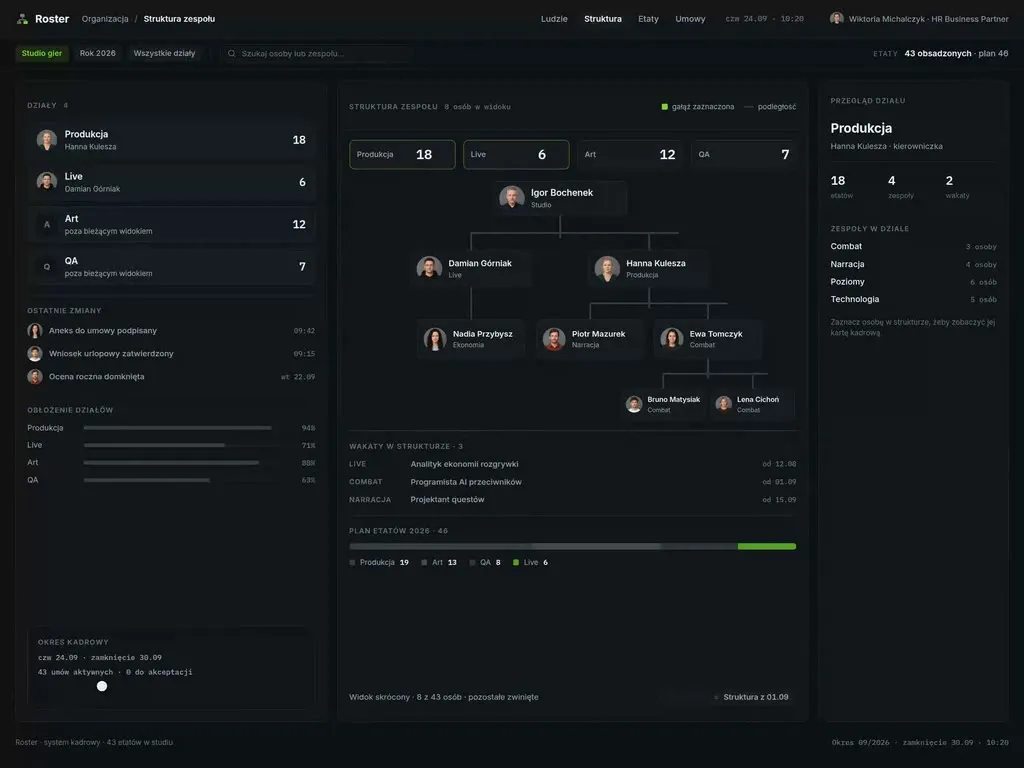
Ecommerce implementation
At Wzór, a UX agency, you get an ecommerce implementation on an existing platform, complete with data migration and integrations, and your team or ours can then take over looking after the store. After launch, the store can keep growing through conversion improvements based on data from the first months.







Challenges
What challenges does an ecommerce implementation help you solve?
Our approach
No address from your current store disappears without a redirect. Before we switch the domain, we map every product, category, filter and content page URL to its new one, and we check each 301 redirect before the store takes its first customer.
Scope of services
Our approach
At the start we settle where each piece of data lives: whether stock, prices and product records are kept in the ERP or in the store, and which way the sync runs. Before the store opens, we place a real order and take it through payment, the sales document and the carrier label all the way to a return, so an integration error shows up with us rather than with your first customer.
Scope of services
Our approach
We recommend a platform together with a list of what you will not be able to do on it, and the point at which that starts to get in the way: the number of variants, the way discounts are calculated, access to order data. You decide knowing where each platform's ceiling is.
Scope of services
Who it is for
Which companies do we implement ecommerce stores for?
Brands launching their own store
We launch the first own stores of brands whose goods have so far gone through distributors or a marketplace. At a start like that we settle with you the things the design says nothing about: who packs the orders, where the store gets its stock levels and what a customer sees when a product has just sold out.
Stores changing platforms
We move stores that have outgrown their current engine to a new platform: the old engine no longer gets updates, or keeping it running costs more than it gives back. The catalogue, customer accounts and order history come across, while the plugins added over the years for one campaign each stay behind on the old one.
Companies with a finished store design
We step in where the store mockups are signed off, the catalogue is described, and the team that could launch it is busy with the product that earns money today. We take the implementation over in full, including the technical decisions the design does not settle.
Companies selling wholesale alongside retail
Where the same buyers have individual price lists, credit limits and repeat orders, and your sales desk retypes them from emails today, we add a second path to the store for trade customers. We wire it into the same warehouse and the same sales documents that retail uses.
Agencies outsourcing implementation under their own brand
If you are an agency, we run implementations under your brand and within your communication with the end client. You keep that relationship and the margin.
- E-commerce
- Software
- Banking & Finance
- Healthcare
- Energy
- Media
- Aerospace & Defense
- Automotive & Mobility
- Crypto & Blockchain
- Education
- Entertainment
- Fashion & Accessories
- Grocery Retail
- Gaming
- Public Sector
- Insurance
- Logistics & Fulfilment
- Industrial Manufacturing
- Pharma
- Real Estate
- Retail & FMCG
- Cybersecurity
- Services
- Sport
- Telecommunications
- Transport & Travel

Why us?
Why choose our UX agency?
-
Campaigns without waiting on a vendor
We configure the store so your team changes a banner, a seasonal category or a discount code itself, from the admin panel. A campaign goes live when marketing planned it, with no wait for a free slot at a vendor.
-
The full cost picture
Next to the implementation quote we list the costs that do not come to us: the platform subscription, hosting, paid plugins and payment provider fees. The budget you take to the board therefore covers the whole store, running costs included.
-
Store operations that do not hang on one person
The admin documentation describes the routine jobs separately for each role in your team: adding a product with variants, handling a return, correcting stock. A new person learns the store from it on their own, without hunting for someone who remembers how it is done.
-
A senior team
A team of seniors that has been designing interfaces for nine years, today for large organisations, SaaS companies and software houses, and whose work includes the SPEC Food, Kafezzo and WygodnaDieta stores. Your implementation is run by people who know the buying path from the design side.
-
Proven client trust
We have designed for 115 brands, and most of them come back to us with another project.
-
Higher quality with AI
With AI tools we write up more test-order scenarios than we could come up with by hand: a payment declined on the first attempt, a discount code on a product already on sale, an item that sells out mid-checkout. The store goes through cases that can really happen, including those far from the simplest path.
Process
How will we run your ecommerce implementation, step by step?
-
A conversation with your team
We agree what the store has to sell, what it connects to and when it goes live
We start with your assortment and the markets you sell in, and with the systems the store cannot take an order without: payments, carriers, the ERP, invoicing. We also establish whether we are working from a finished design or the store has to be designed first, because the order of all the work depends on it.
Key steps
- The assortment, variants and markets the store has to handle
- A list of systems to connect and the people responsible for them
- The state of the design: finished, to be reviewed or still to be commissioned
- The launch date and the periods when sales must not stop
Deliverables
- Agreed implementation scope
- List of integrations
- List of data to migrate
-
Data review and platform choice
We check the state of the catalogue before anyone assembles a single page
The first document is a catalogue review: products with no description, variants kept in a text field, two prices on the same item code. Only then do we know how much work the migration really holds, and on that basis we match the platform to your assortment and integrations.
Key steps
- A review of the catalogue export, price lists and customer accounts
- An inventory of the store's current URLs
- A platform recommendation with a list of its limits
- A migration plan: what moves, what gets cleaned up, what stays behind
Deliverables
- Data review with an assessment of its condition
- Platform recommendation
- Migration plan
-
Configuration, migration and integrations
We assemble the store in a test environment before the first customer sees it
The whole store takes shape in a test environment: a theme built on the visual design, categories and filters, tax rules, delivery methods, returns and terms. We import the data on a sample first, and release the full set only once the sample comes through with nothing missing.
Key steps
- A theme, categories and filters that follow the design
- Taxes, delivery, returns and terms
- Import of the catalogue, customer accounts and order history, on a sample first
- Integrations with payments, carriers, the ERP and invoicing
- A 301 redirect map for every URL that changes
Deliverables
- Configured store in a test environment
- Imported catalogue, customer accounts and order history
- Working integrations
- 301 redirect map
-
Launch and hand-over
We switch the domain and hand the store to the people who will run it
Launch closes with the domain switch, the certificate and the first orders on real traffic. Before that we train the people who will run the store, role by role; ongoing care after launch is a separate decision, independent of the implementation itself.
Key steps
- A test order from cart to return
- Domain switch and certificate
- Training for the store staff, split by role
- Admin documentation covering the routine jobs
Deliverables
- Live store on your domain
- Trained team
- Admin documentation
-
The first weeks of selling
We stay with the store as the first real orders come in
For thirty days after launch we answer tickets and fix the edge cases that only show up under real traffic: an unusual combination of variants, a rarely used delivery method, a return of part of an order.
Key steps
- Watching the first orders and the indexing of the new URLs
- Answering tickets from the store staff
- Fixing edge cases
- Handing the store over to your team or to ongoing care
Deliverables
- Ticket list with fixes
- Decision on ongoing care
Methods and technologies
Platforms and tools we use in ecommerce implementation
-

Shopify
We build stores on Shopify when a fast launch and as little upkeep on your side as possible matter most. We check every feature in the platform itself first, because an app added for a single feature lands on the bill every month.
-

WooCommerce
We implement WooCommerce when the store has to run next to an existing content site and hosting has to stay under your control. We keep only the plugins the store cannot do without, because each extra one is another thing that can clash with an update.
-

PrestaShop
We choose PrestaShop when the store already runs on it and has to move up from an older version of the same engine. We set the new version up on a copy of the store first, and move sales onto it only after the modules and theme have been tested.
-
Magento
We turn to Magento for large catalogues, complex pricing logic and wholesale alongside retail. We pick the version with its end-of-support date in view, and make changes in a way that keeps the next upgrade from turning into a rewrite of the store.
-
Google Analytics 4
In Google Analytics 4 we set up the ecommerce events, from a product view to a purchase and a refund. We check them before launch, because a purchase counted twice or a refund missing from the report skews every later decision about the store.
-
Google Search Console
We open Google Search Console with you in the first weeks after launch and watch the new URLs get indexed. Some ranking movement after a platform change is normal, so we look in the reports for what is not: URLs returning errors and redirects that lead nowhere.
Selected work
Our work
-
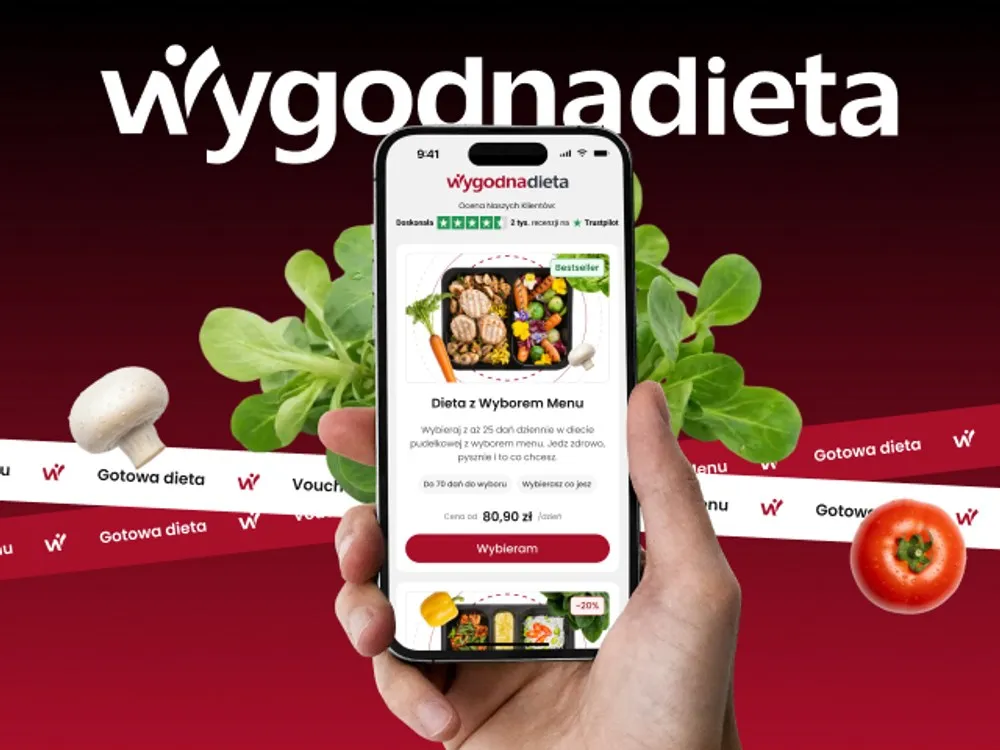
Grocery Retail
WygodnaDieta
View projectThe WygodnaDieta.pl app and online store - a meal-box diet service with menu-choice diets, ready-made plans and gift vouchers. Diet selection and setup with a dietitian consultation, account management (delivery calendar, balance, notifications), picking add-ons for kids, and finalising an order with a choice of payment method (Blik, card, bank transfer, GooglePay), across mobile and web.
-
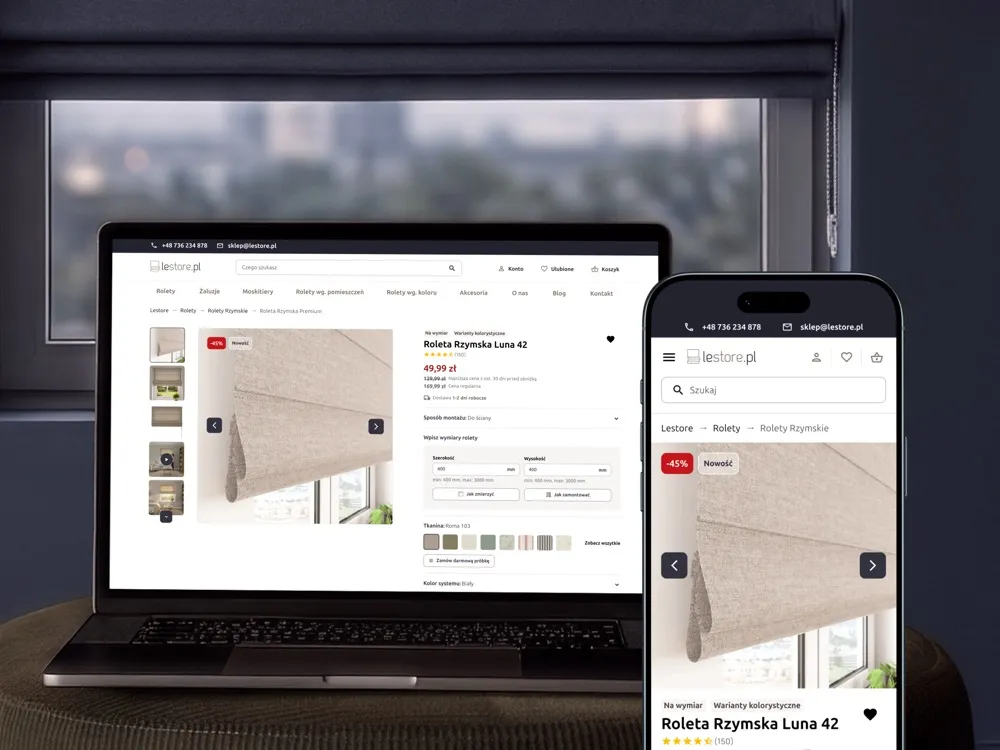
E-commerce
Lestore
View projectLestore online store - specialising in made-to-measure Roman blinds and shades. A product page with a size-and-fabric configurator, a category listing with filters and promotions, "How to measure your window" and "How to install it" sections, a free fabric-sample order and customer reviews, across desktop and mobile.
-
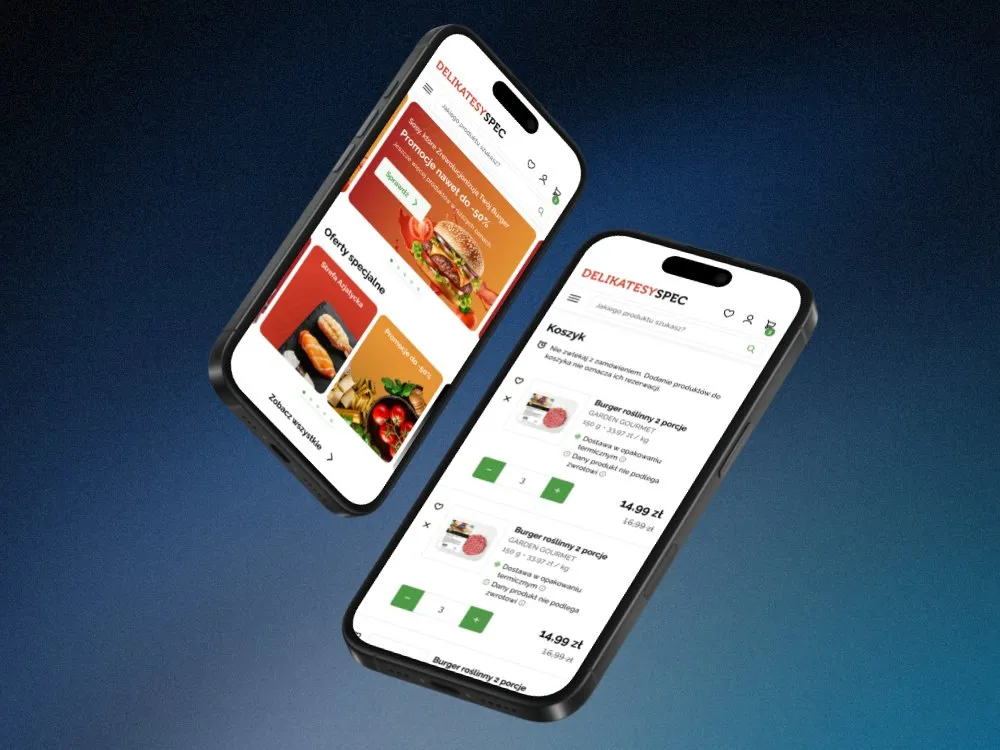
SPEC Food
Online store for a food delicatessen
-
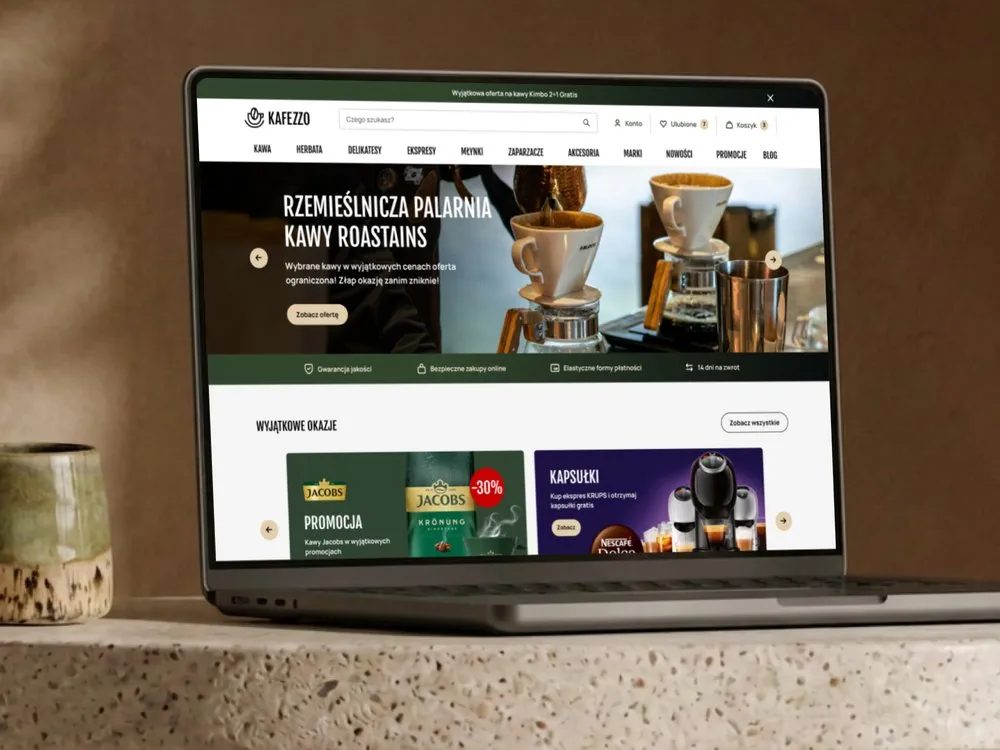
Kafezzo
Online store for coffee and tea
-
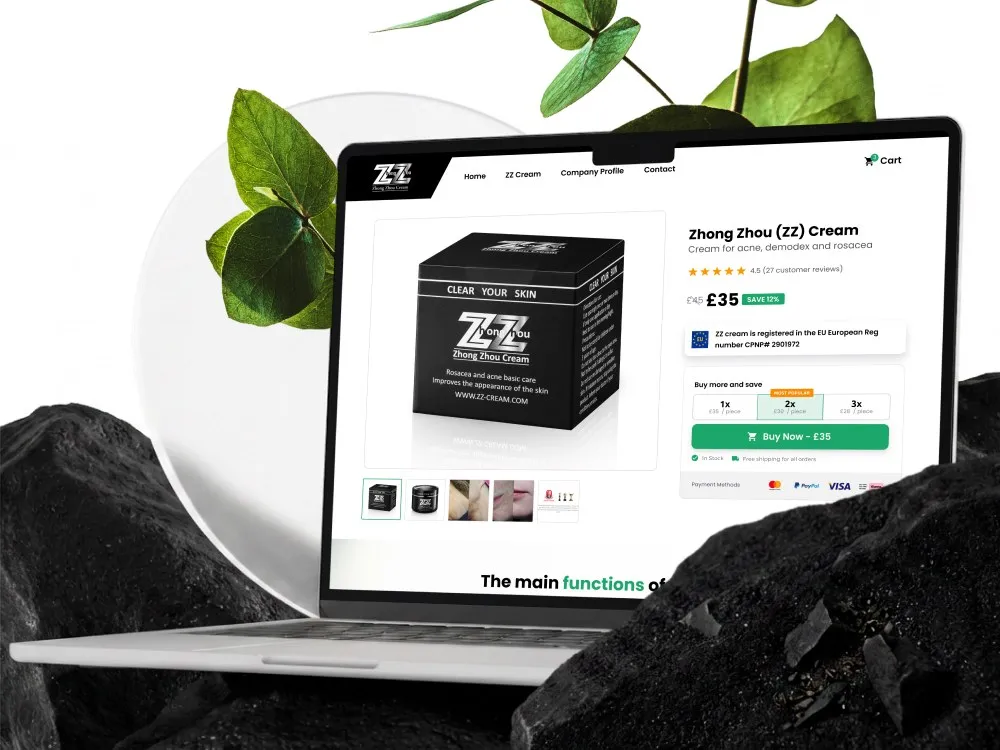
ZhongZhou
Online store for an acne, demodex and rosacea cream
-
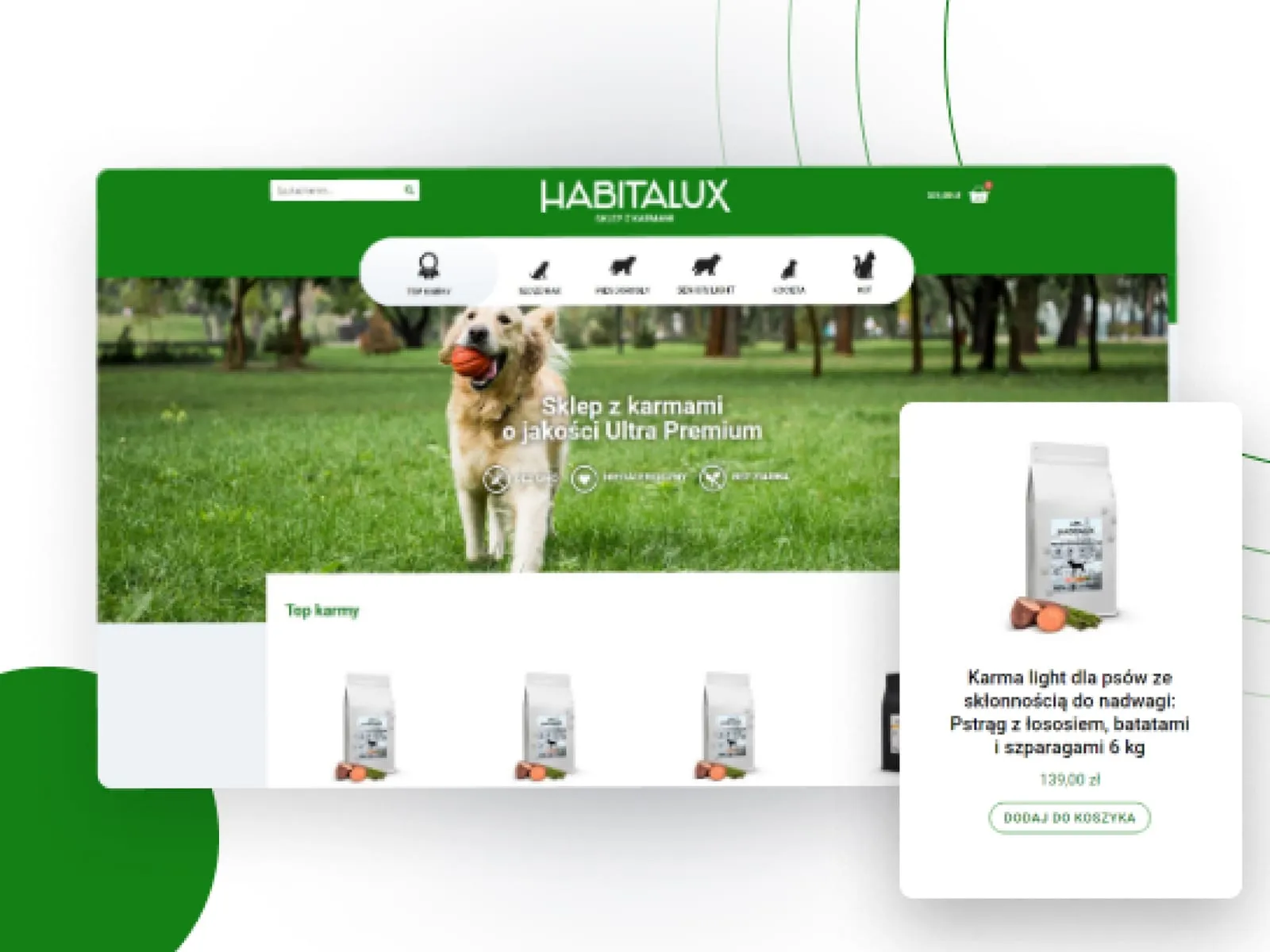
Habitalux
Online store and branding for pet food
-
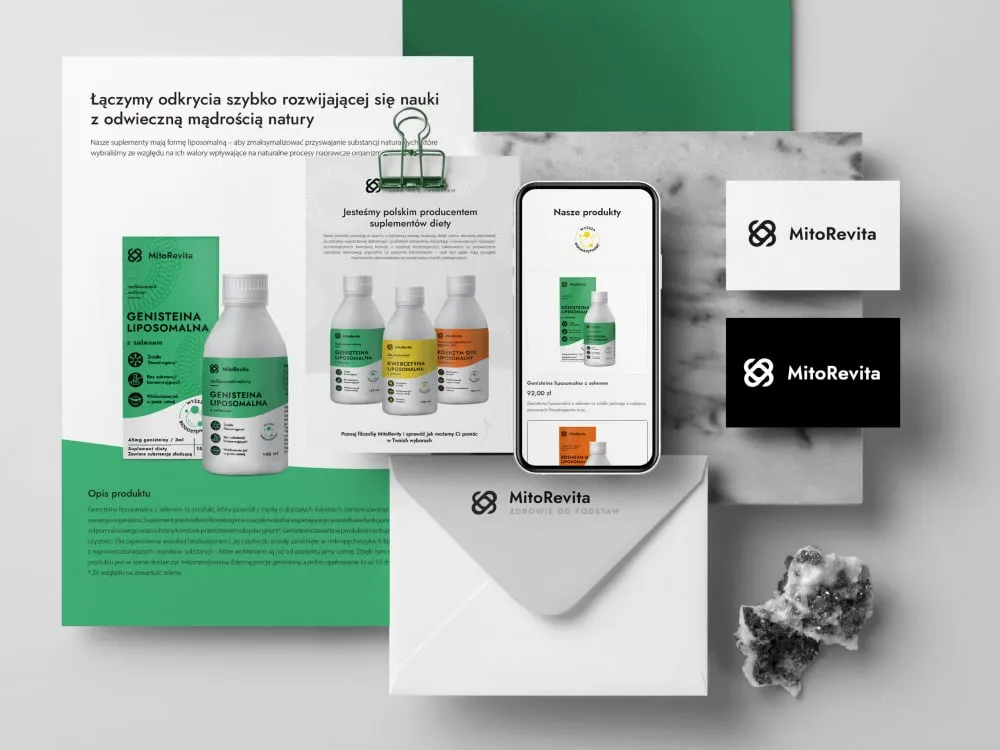
MitoRevita
Branding & store for liposomal supplements
-
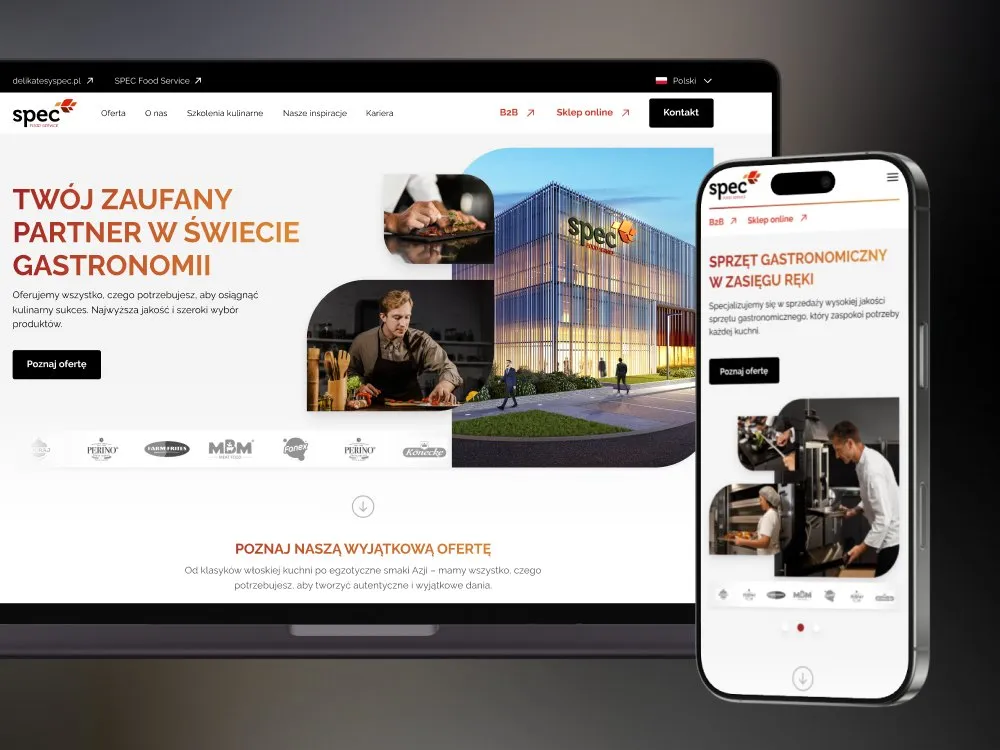
SPEC Food
Website for gastronomy - SPEC Food Service
-
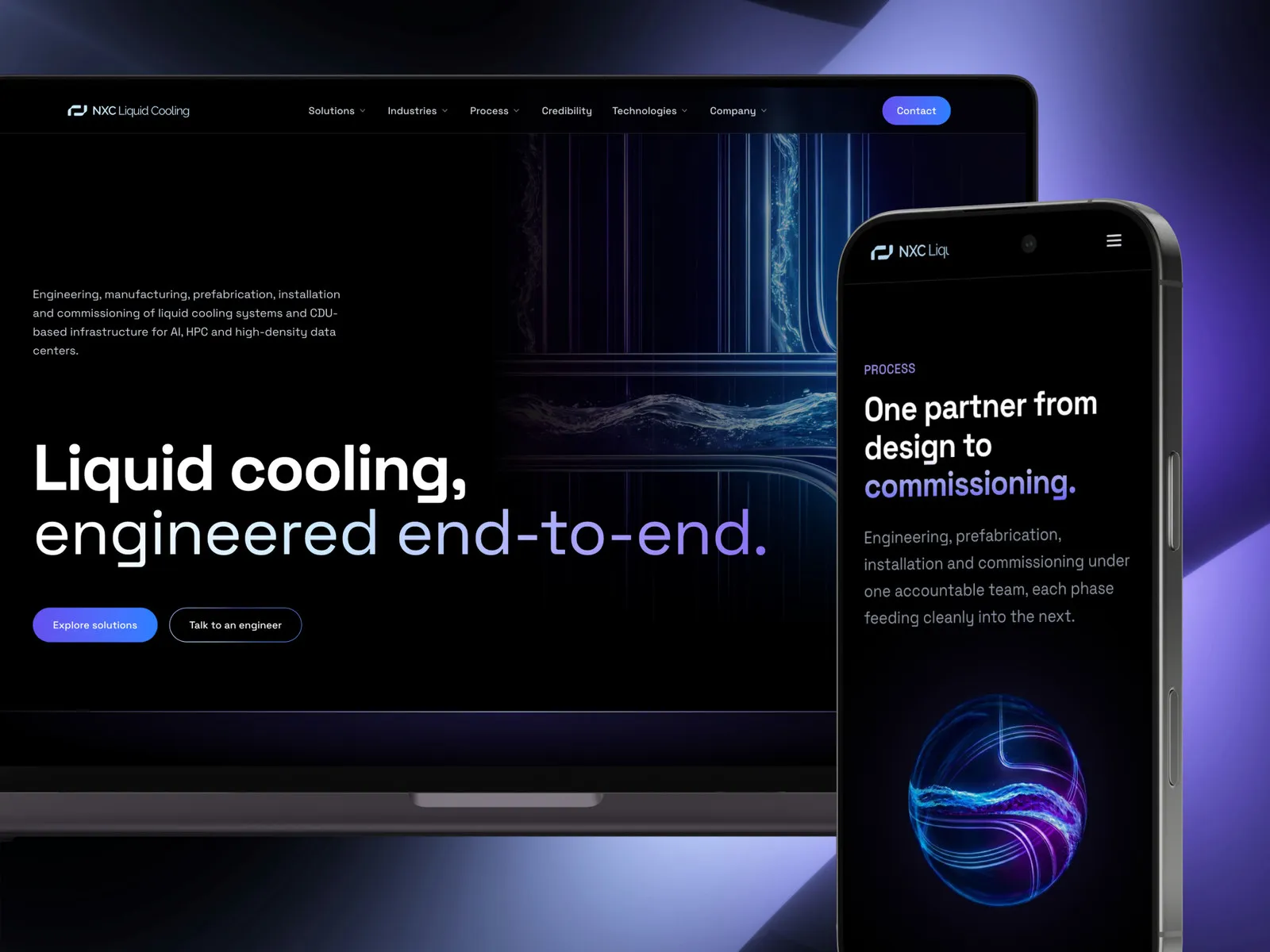
NXC Liquid Cooling
A liquid cooling systems website
- See what else we build Projects
Start your ecommerce implementation
From the catalogue review to the first orders on your new platform.
Client voices
What our clients say
 Piotr Alberski Chief Operating Officer, Agencja XO Media

“Our clients expect us to act fast and effectively across a very wide scope - from building a brand, through a website with a store, to running an effective sales campaign. Not an easy task, but doable when you have a tight-knit team and partners who take on challenges on the fly. For us, quality, accountability and commitment are key, and working with UX Agency Wzór gives us that 100%.”

“Working with the UX agency Wzór on the NXC Liquid Cooling website went remarkably smoothly and professionally. The team stands out for its excellent, partner-like approach and its flexibility at every stage of the work. A major advantage was designing directly in code, which significantly shortened the time to launch while ensuring excellent technical and visual quality of the site. The end result meets our expectations 100%. I wholeheartedly recommend Wzór as a reliable partner.”

“After our meeting with Wzór, our site literally came back to life. We got a fresh design, and every comment we made was implemented promptly. The walkthrough video on running the site made our work distinctly easier. We are very happy with this collaboration.”

“The design of our store and our packaging matches the character of our product. Wzór brought out its most important features, and the design is memorable. The package of services UX Agency Wzór provided, along with their advice, made launching a new product easier for us.”





























The team
Who will run your ecommerce implementation?
-

Aleksandra Bondar
Senior UX/UI Designer
View profileHow can I help you?
“I will check on phone and desktop that the implemented store matches the design, from the product page to the order confirmation.”
-

Katarzyna Adamczuk
Prezes, Analityk Biznesowy
View profileHow can I help you?
“I will map out with you which product, price and order data your ERP keeps and which the store keeps, before the first import runs.”
-
Patryk Korycki
CEO, Analityk Biznesowy
View profileHow can I help you?
“I will agree the scope and the launch date with you, and before the domain switch I will run the tests of the whole store.”
FAQ
Frequently asked questions about ecommerce implementation
How is ecommerce implementation different from online store design?
Ecommerce implementation means launching the store on an existing platform: configuration, data migration, integrations and go-live, while online store design means designing the buying path, the catalogue, the product page and the cart. They are two separate services, which you can order together or one at a time.
How long does an ecommerce implementation take?
An ecommerce implementation in its basic scope takes roughly 6-8 weeks. The timeline grows mainly with a large catalogue with many variants, with migrating customer accounts and order history, and with integrations that need API work instead of a ready plugin. We confirm the exact time once we know the scope.
Which platforms do you implement ecommerce stores on?
We implement ecommerce stores on Shopify, WooCommerce, PrestaShop and Magento. We choose the platform after reviewing your assortment, price lists and integrations, and hand over the recommendation together with a list of the chosen platform's limits.
Will changing store platforms hurt our Google rankings?
Changing store platforms can move your Google rankings for a few weeks or more, because the search engine has to crawl the site again, but it should not take your traffic away for good. Every URL that changes gets a 301 redirect before launch, and after the domain switch we watch the new URLs being indexed together with you.
Will you move customer accounts and order history?
We move customer accounts and order history along with the catalogue, on a sample first, so gaps in the data show up before the full import. Customer passwords usually do not carry over to a new platform, because the old system stores them encrypted, so customers get an invitation to set a new password.
Will the online store connect to our ERP?
We connect the online store to your ERP with a ready plugin, through the API or through a middleware layer, depending on what your system offers. We sync stock levels, product records, price lists including individual ones for trade customers, orders and sales documents. We set the direction of each sync at the start, because it decides where the single source of truth about a product lives.
Will you implement a store design prepared by another agency?
We implement a store design prepared by another agency or by your own team the same way as our own. First we check in the mockups which elements the platform handles out of the box and which need extra work, and we discuss that with you before configuration starts.
Who runs the online store after implementation?
After implementation your team runs the online store, once trained and with admin documentation split by role. We answer your store staff's tickets for the first thirty days after launch and correct edge cases that surface only under real traffic, and later we can stay on in ongoing care with updates, monitoring and new features. Ongoing care is a separate decision, not a condition of the implementation.
Do you implement stores under an agency's brand?
We also implement stores under an agency's brand, as its subcontractor in a white label model. Towards the end client we appear as your own team.
Related services
Services related to ecommerce implementation
You know the store is losing orders, but not where.
Let us start by checking whether the cause lies in the buying path or in the engine itself.
You do not have a store design yet.
We will design the buying path, the catalogue and the product page before anything gets configured.
Your store already runs on the new platform.
We will find out with your shoppers what holds them back, and raise sales from what you already have.