

E-commerce
At Wzór UX agency you receive an interactive design of your e-commerce software, whether a store platform, a B2B ordering portal or an order management system, and our team or your own developers can then build it. A new store starts with e-commerce design, and in a live one we lift conversion where customers drop off. Our work for companies in this industry includes the Lestore made-to-measure blinds store and the Fonia shopping app.







Challenges
What challenges do we help solve in e-commerce?
Our approach
We design the PIM so that a product's description, attributes and photos live in one record, which the store and Allegro pull from on their own. The content manager sees what is still missing for each channel and publishes the product page only once it is complete.
Scope of services
Our approach
We lay out the order panel so that before packing it checks stock against a single source, which we agree with you is the true one. A second order for the same item then goes to the top of the list before anyone packs it.
Scope of services
Our approach
On the first screen of the B2B platform we put what the buyer used to call the sales rep for: their prices, credit limit and last order. With those three things up front, a wholesale customer has no reason left to send an email.
Scope of services
Who it is for
Which e-commerce companies do we design software for?
Store platforms and their admin panels
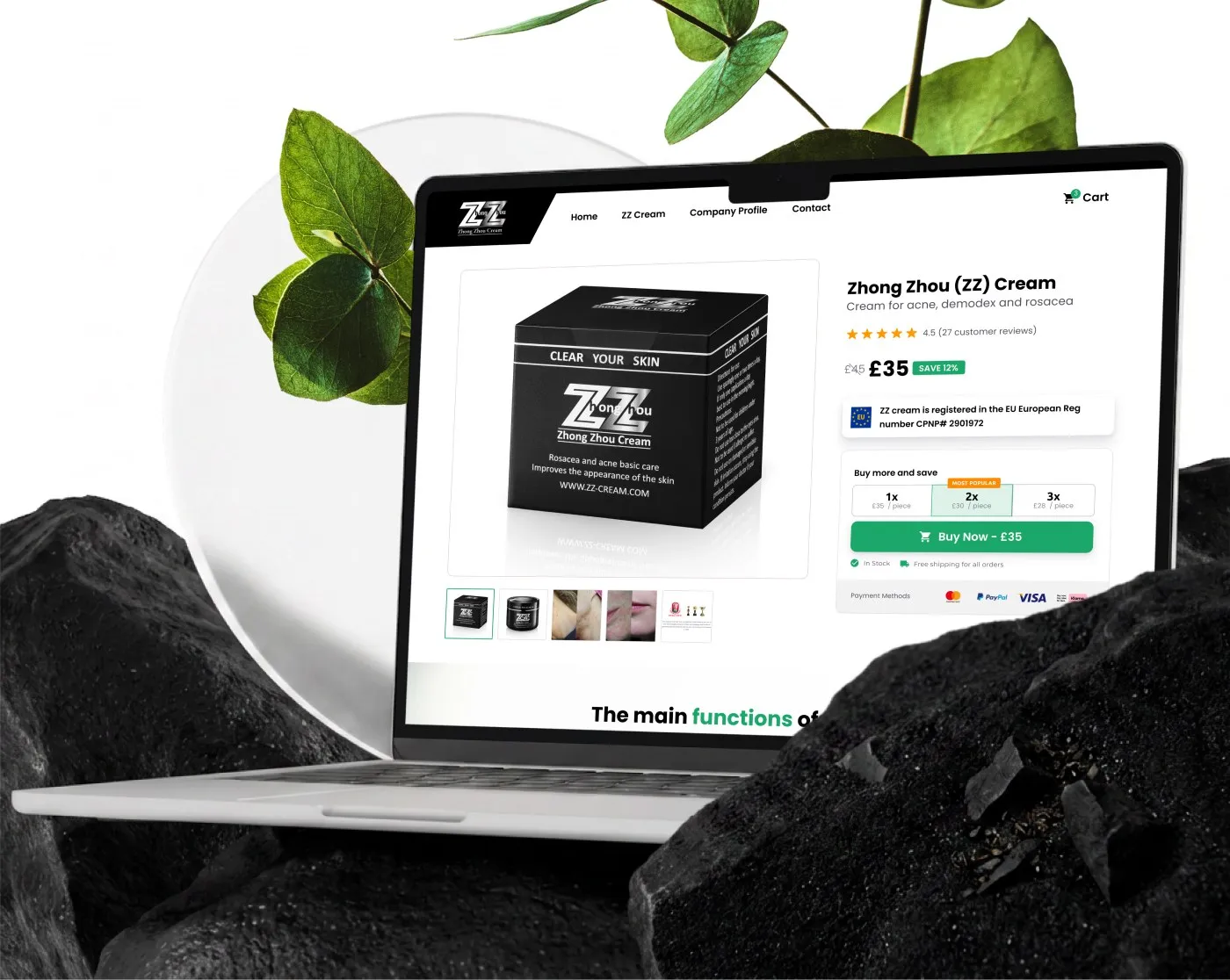
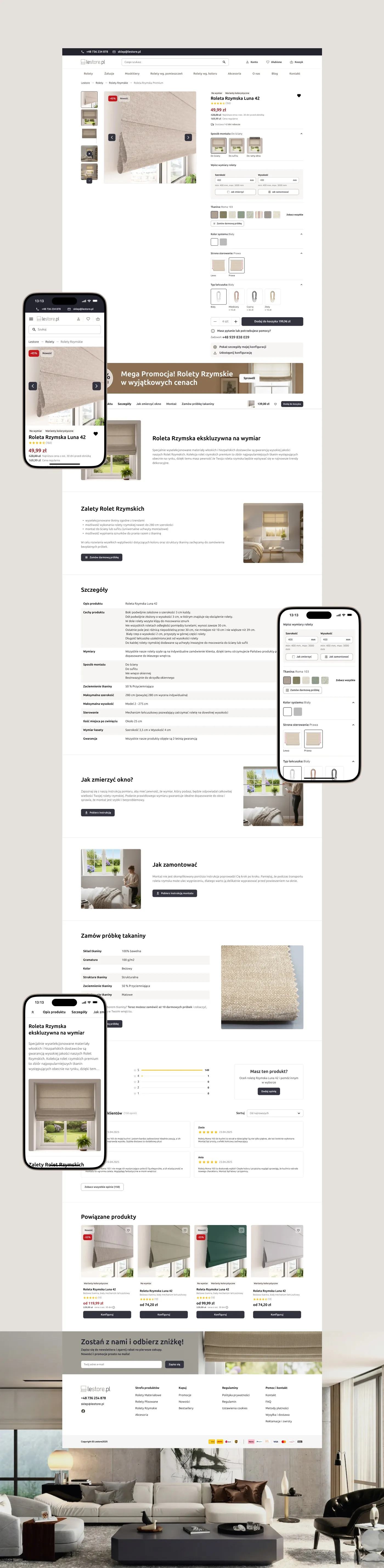
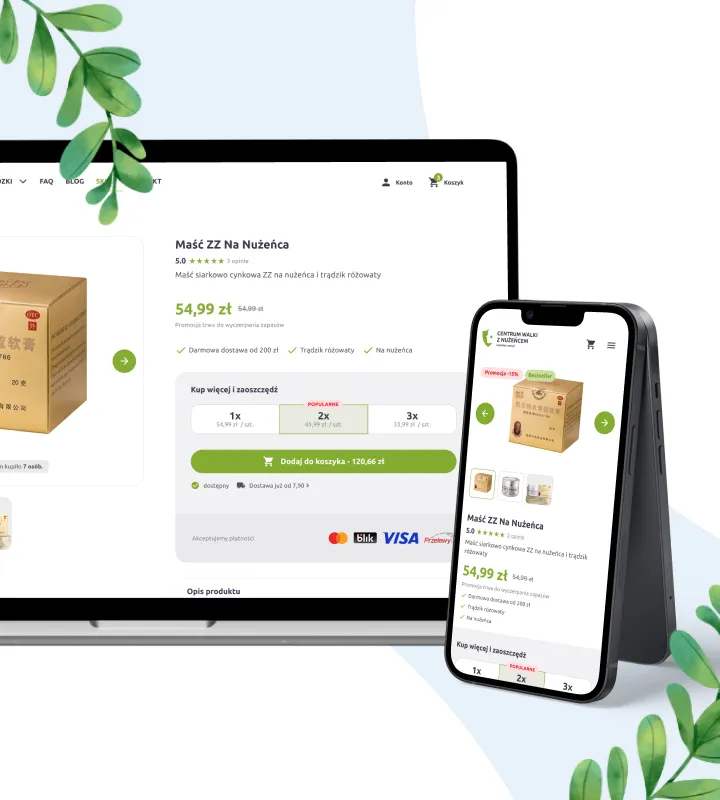
On a store platform the customer shops, while the e-commerce team runs the catalogue, promotions and orders in its admin panel all day. We modernised the CWZN cosmetics store after ten years in operation, from the information architecture to the mobile version, and in the ZhongZhou store the bundle discounts sit right on the product page as a choice of 1x, 2x or 3x. We hand the page modules over to the team as a library from which they assemble the next campaign in the admin, without a new project.
Shopping and loyalty apps
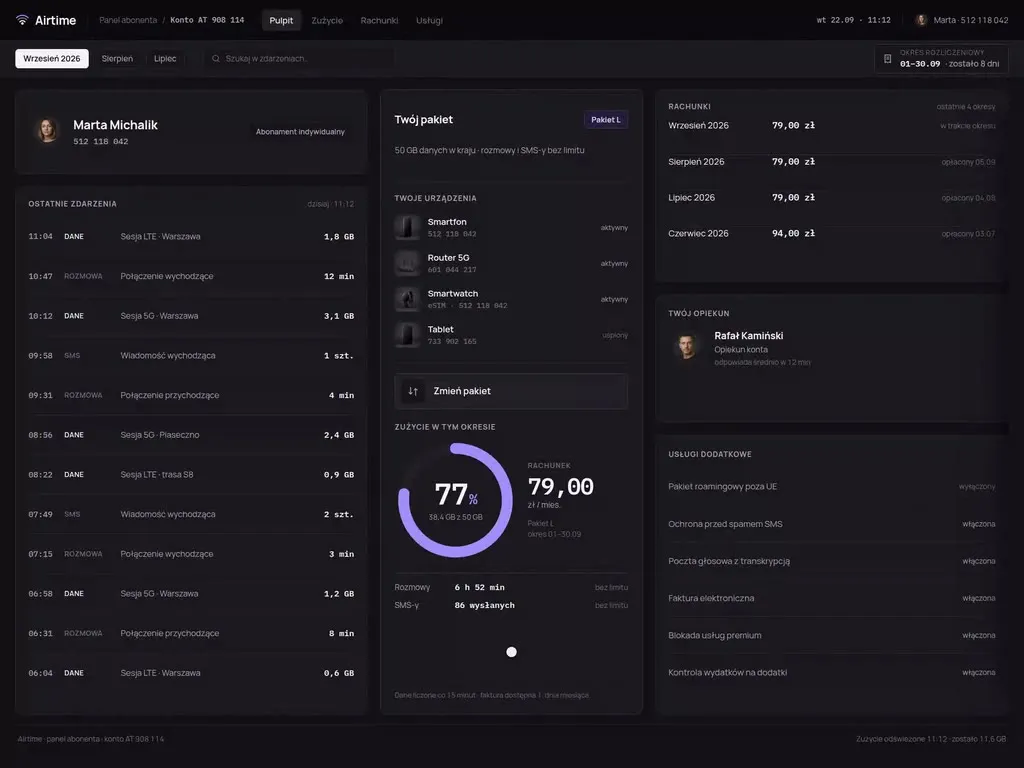
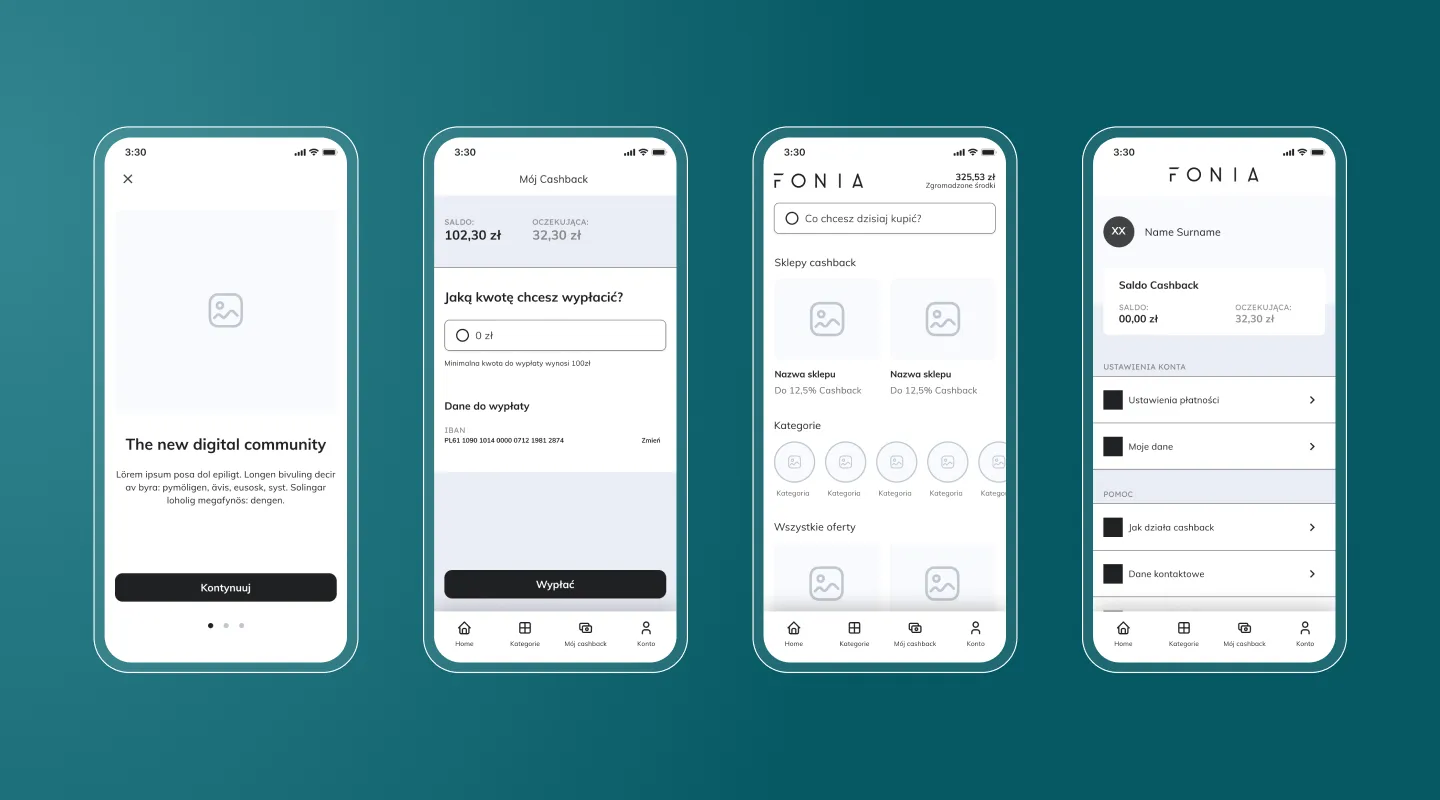
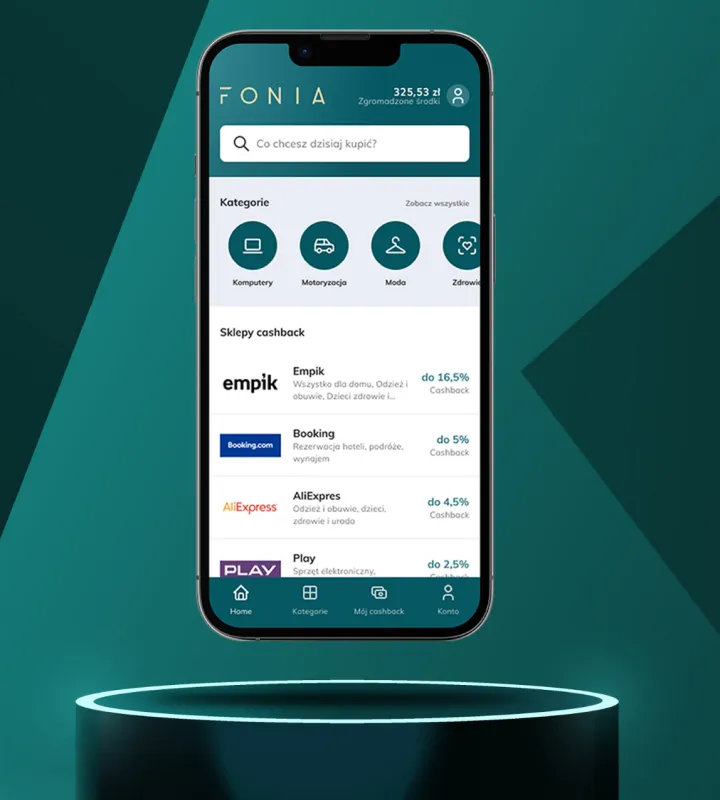
A regular customer opens a shopping app after a promotion notification, or to check how much they have earned back on their purchases. That is how Fonia works, a cashback app whose MVP we designed in four weeks, from the store search to the account panel. We put the most care into the screens customers return to every week, namely the balance and payouts.
B2B platforms for wholesalers and distributors
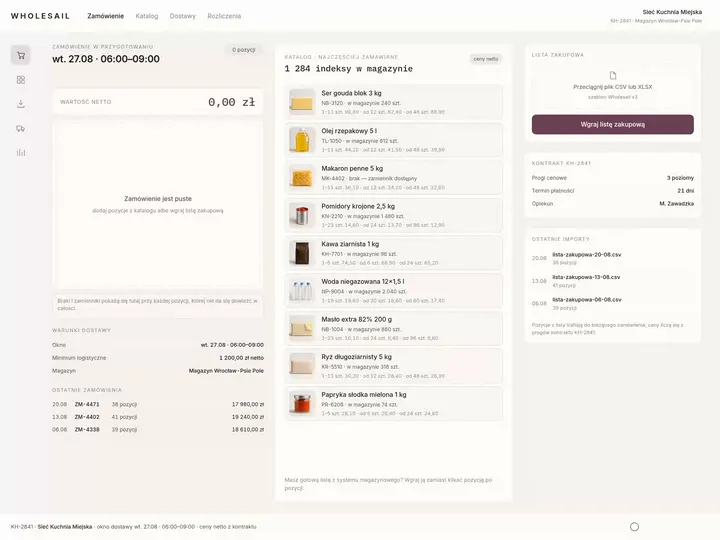
Wholesalers, distributors and manufacturers move customers who reorder regularly from their own shopping list onto a B2B platform. We design it for two people at once, the buyer and the sales rep: individual prices, credit limits and availability come from the ERP, and the order goes back to the ERP with no retyping.
PIM and product data
Companies selling hundreds of products in their store, on marketplaces and in wholesale catalogues keep descriptions, attributes and photos in a PIM, where the content manager and copywriter spend the whole day. We arrange the product record in the PIM around who signs it off: the copywriter sees gaps in the description, the designer gaps in the photos, and the product manager gets a single button to publish to every channel.
Order handling and marketplaces (OMS)
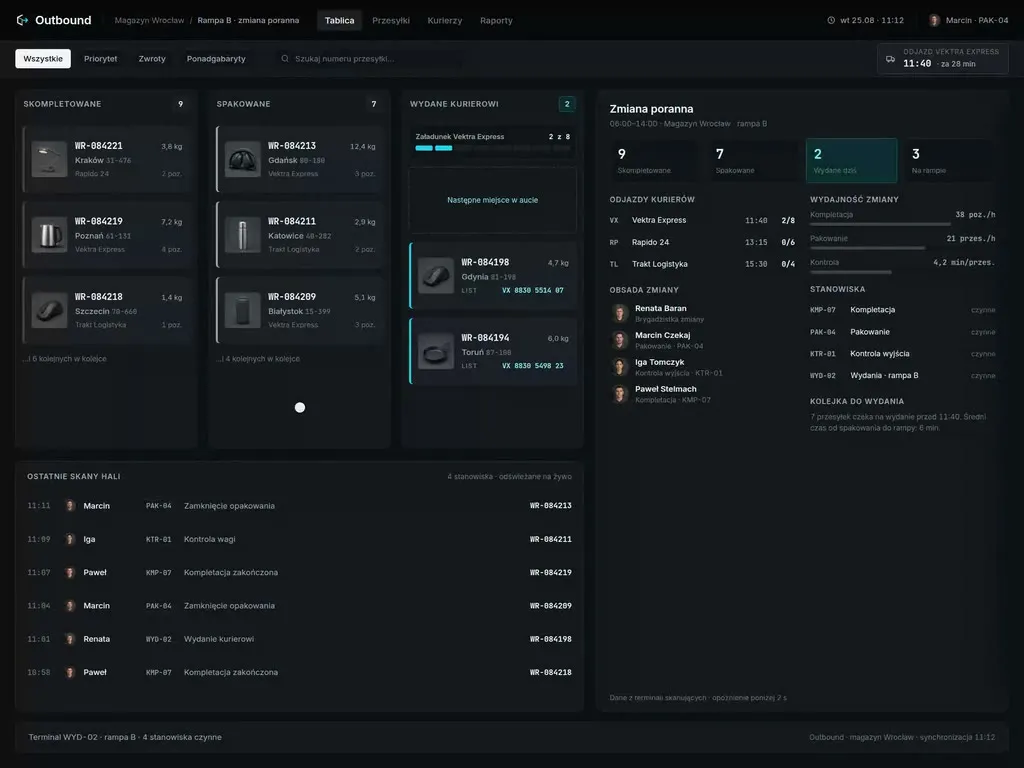
Stores selling on their own site, on Allegro and on Amazon at the same time gather orders in an OMS or in Base.com, and the order handling team changes statuses, prints labels and accepts returns there. We centre that panel on the orders the rules did not let through: out of stock, with a pickup point that does not match, a return without an order number.

Why us?
Why choose our UX agency?
-
New products on sale sooner
A new product reaches the store, Allegro and the ad feed after a single sign-off in the PIM, instead of three separate entries. A seasonal collection goes on sale in every channel on the same day.
-
Faster answers about orders
Staff settle a customer's question about a parcel, an invoice or a return within one call, with no calling back after checking three programs. In peak season the same people handle more requests.
-
Wholesale orders after hours too
The B2B platform takes orders in the evening and at weekends, when the sales rep is not answering the phone. The sales rep can then spend that time on customers who are only starting to buy from you.
-
A senior team
A team of senior UX designers who have been designing interfaces for nine years, today for large organisations, SaaS companies and software houses, and in e-commerce the Lestore and ZhongZhou stores and the Fonia app, among others.
-
Proven client trust
We have designed for 115 brands, and most of them come back to us with their next project.
-
Higher quality with AI
A designer with AI tools checks more variants of a PIM product record or an order list than they could draw by hand and picks the one that works. What reaches you is a tested version, not the first one that came out.
Process
How will we design your e-commerce system, step by step?
-
A conversation with your team

We set the goals and map the systems your sales run through
We sit down with the people responsible for the store, the marketplaces, customer service and the warehouse. We list your sales channels and the systems an order passes through, pick the process to change and agree how you will know the project has worked.
Key steps
- Conversations with the e-commerce manager, customer service and the warehouse
- A review of channels: store, Allegro, Amazon, B2B customers
- A list of systems: store platform, PIM, OMS, ERP
- Agreeing the measures: order handling time, returns, gaps in product data
Deliverables
- Project brief
- Map of channels and systems
- List of measures
- Scope of the first stage
-
Discovery at the e-commerce team's desks
We study the work where orders and products pass through people's hands
We sit next to the person handling orders at the busiest time of day, next to the content manager adding a new collection and next to the sales rep who takes orders by email. We look for workarounds: a stock spreadsheet open beside the panel, a note with discount codes, an email retyped into the ERP.
Key steps
- Observing order handling at the busiest time of day
- A session with the content manager adding products
- Interviews with sales reps and wholesale customers
- A review of customer requests and reasons for returns
- Following an order's path through the systems
Deliverables
- Research report
- Map of the order and product data path, showing where people work around the system
- Prioritised list of problems
-
Interactive system design
A design your team clicks through with their own products and orders
The screens are built on your data: products, prices and orders from recent weeks. We test the prototype with the people who will work in it and with the customers on the other side before it reaches the developers.
Key steps
- Screen architecture by role: order handling, content manager, sales rep, customer
- Interactive design on data from your catalogue
- Exception states: out of stock, a listing rejected by a marketplace, a return without an order number
- Prototype tests with the team and customers
Deliverables
- Interactive design of every screen
- Component library
- Description of behaviour in exceptions
- Prototype test report
-
Build or design hand-off
The new screens reach your systems together with the integrations
Our team builds the design, or we hand it over to your developers or your platform vendor. Either way, we spell out which field comes from the ERP, what the PIM sends, how orders from Allegro and Amazon enter the OMS and where the store gets the shipment status, so that launch does not stop sales.
Key steps
- Screen and field specification for developers
- Integration map: ERP, PIM, OMS or Base.com, marketplaces, carriers
- Support for the implementation team
- A test order from every channel before launch
Deliverables
- A working system or a package ready to build
- Integration specification
- Pre-launch test report
-
Measuring after launch
We check against sales and service data whether the change worked
After launch we compare order handling time, returns caused by product descriptions and orders that could not be fulfilled with the measurement taken before the change. That comparison tells us which screen to improve next.
Key steps
- Measuring order handling time
- A review of returns and their reasons
- Conversations with the team after launch
- Plan for the next improvements
Deliverables
- Measurement report
- Prioritised list of improvements
- System development plan
Methods and technologies
Systems, marketplaces and regulations we work with in e-commerce
-
ERP
An ERP, such as Subiekt, Comarch ERP Optima or enova365, holds stock, prices and documents, and the store, PIM and OMS take them from there through an integration. When connecting them we assign every field to one system, because stock entered in two places sooner or later stops adding up.
-
Base.com (BaseLinker)
When you sell through Base.com, formerly BaseLinker, orders from the store and the marketplaces land in its Order Manager. We then work out what the ready-made tool does not cover, most often B2B customers' prices and limits, and spell out what goes through the API and what stays on the Base side.
-
Allegro
An Allegro listing is matched to a page in the product catalogue by its GTIN, so a wrong code, or one already taken by someone else, blocks the listing. When you sell on Allegro, we place the code and the attributes the category requires in the PIM or the store admin before publishing, not after the listing is rejected.
-
InPost
In a store that ships with InPost, the tracking number, label and parcel status reach the order from the ShipX API. We lay out the order screen so staff see the chosen parcel locker and the latest status side by side and answer the customer without logging into the carrier's system.
-
Omnibus Directive
The Omnibus Directive requires every price reduction to show the lowest price from the 30 days before it, in advertising outside the store too. In the promotions module we make that price a field calculated from the price history, so nobody on the team retypes it for the next campaign.
-
Polish Accessibility Act
Since 28 June 2025 the Polish Accessibility Act has covered selling through websites and apps, with the Minister of Digital Affairs supervising e-commerce. We check new screens against WCAG 2.2 AA before the build and assess a live store in a WCAG audit.
Selected work
E-commerce projects we have delivered
These are projects for clients: online stores for brands from several industries, one of them after a redesign, and a cashback shopping app.
-
E-commerce
Fonia
Read case studyWe built a cashback app that gives users a convenient space for online shopping where they can save money.
-
E-commerce
CWZN
Read case studyWe modernised a store with a 10-year history, resolving every long-standing problem with conversion, responsiveness and information architecture.
-
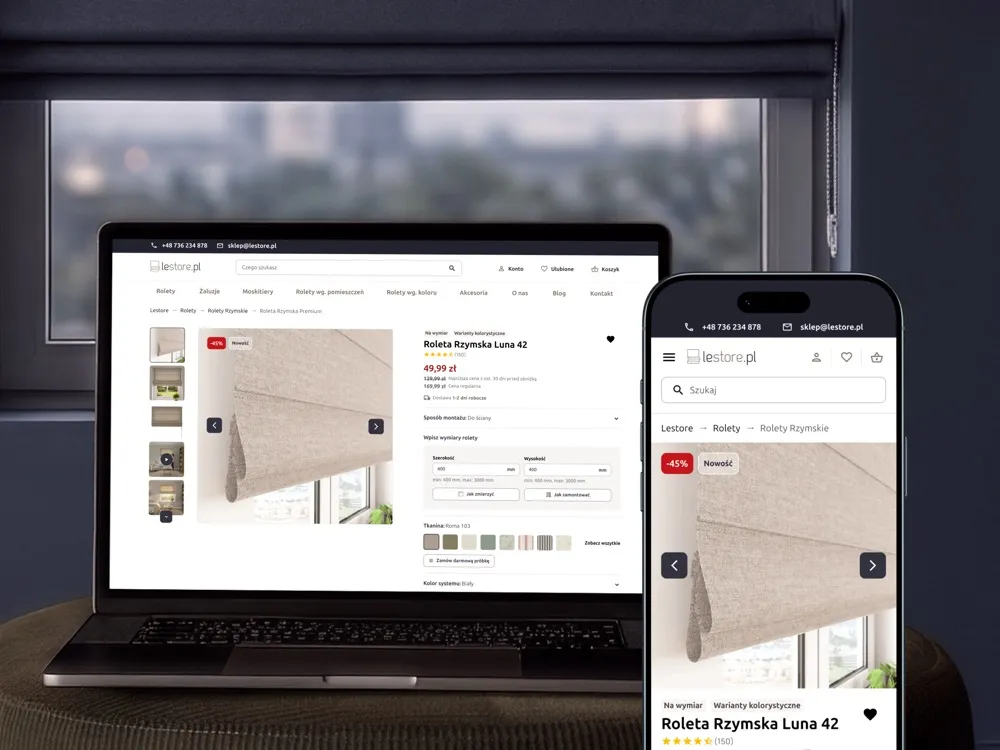
Lestore
Online store for blinds and shades
-
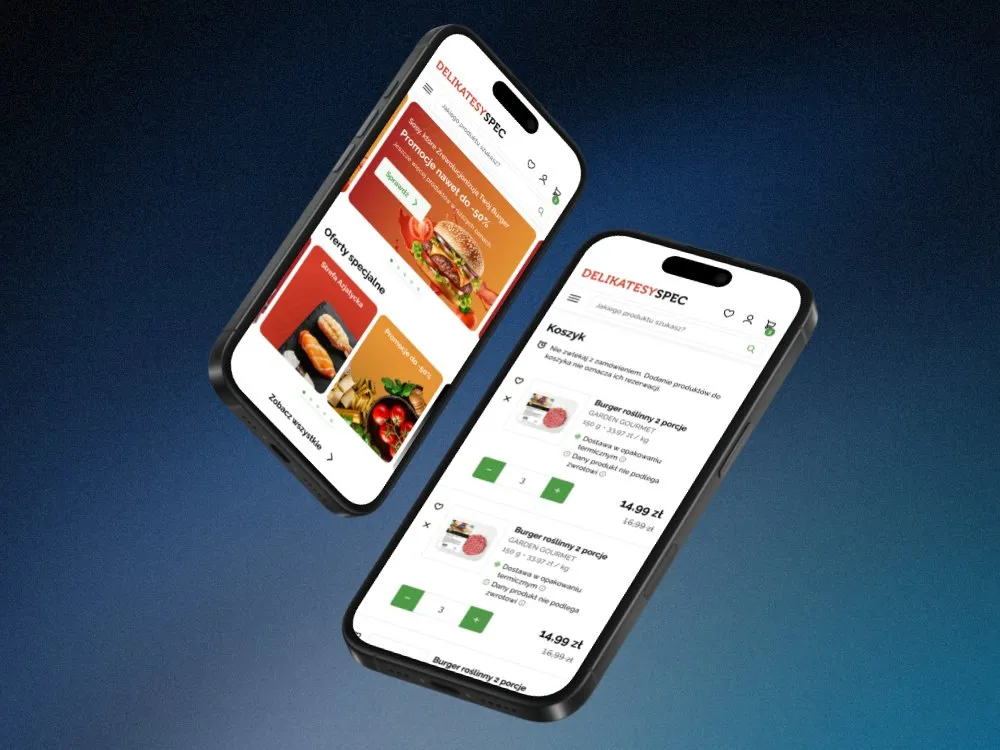
SPEC Food
Online store for a food delicatessen
-
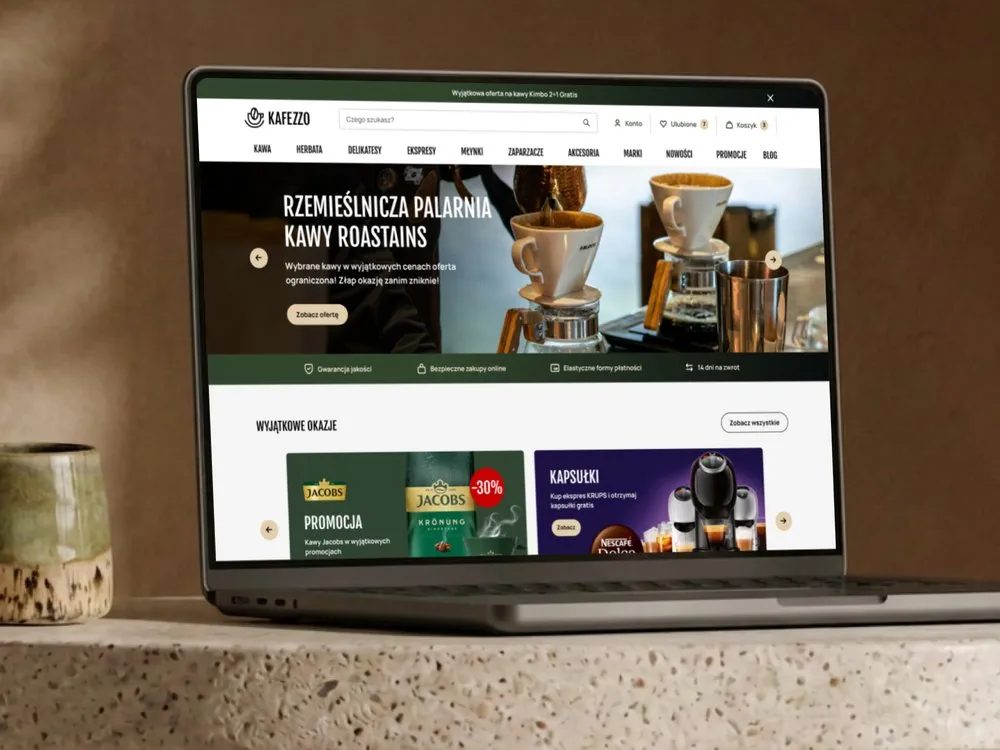
Kafezzo
Online store for coffee and tea
-
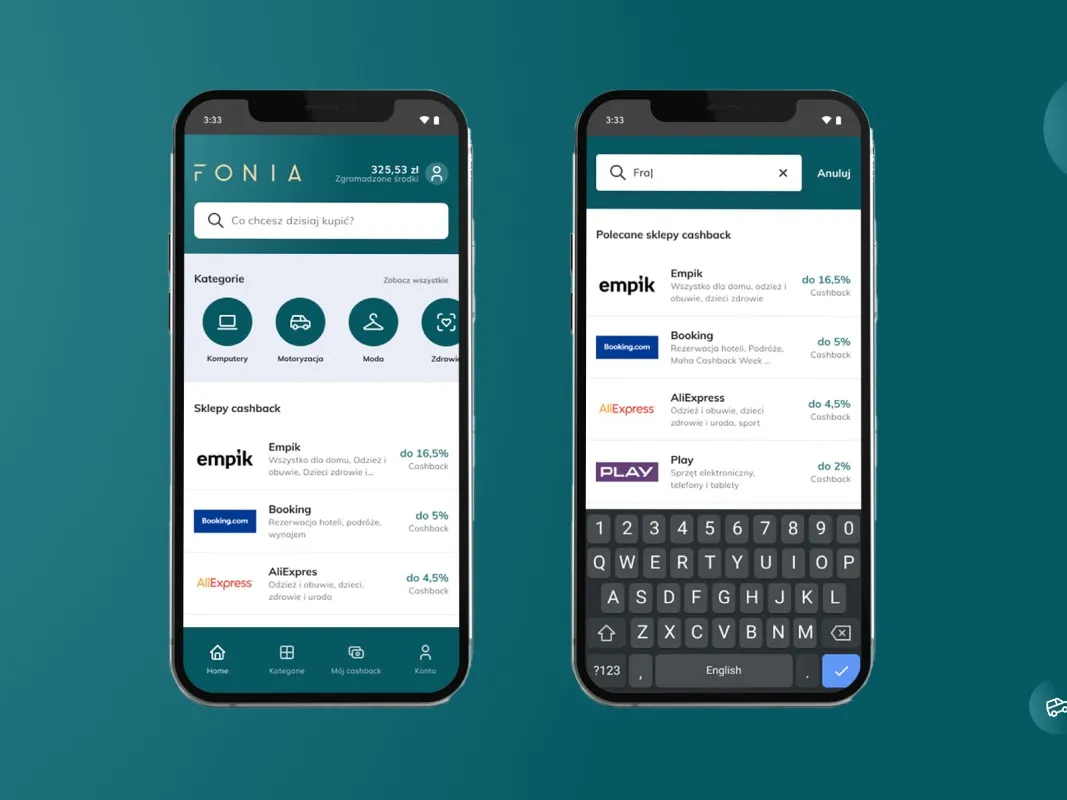
Fonia
A cashback app for online shoppers
-
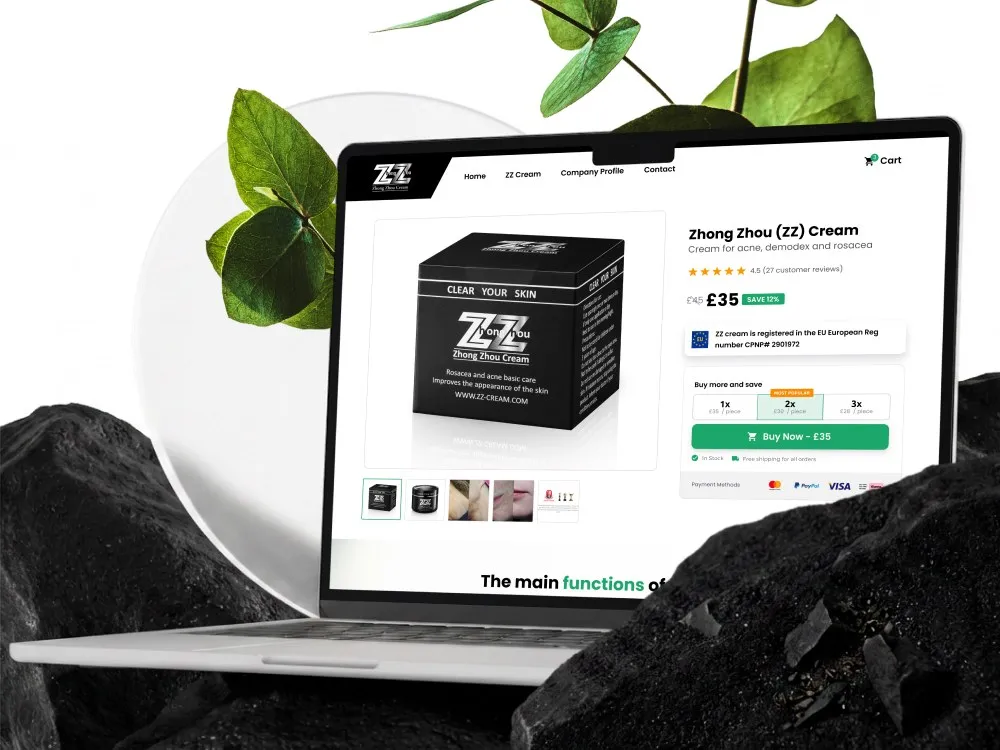
ZhongZhou
Online store for an acne, demodex and rosacea cream
-
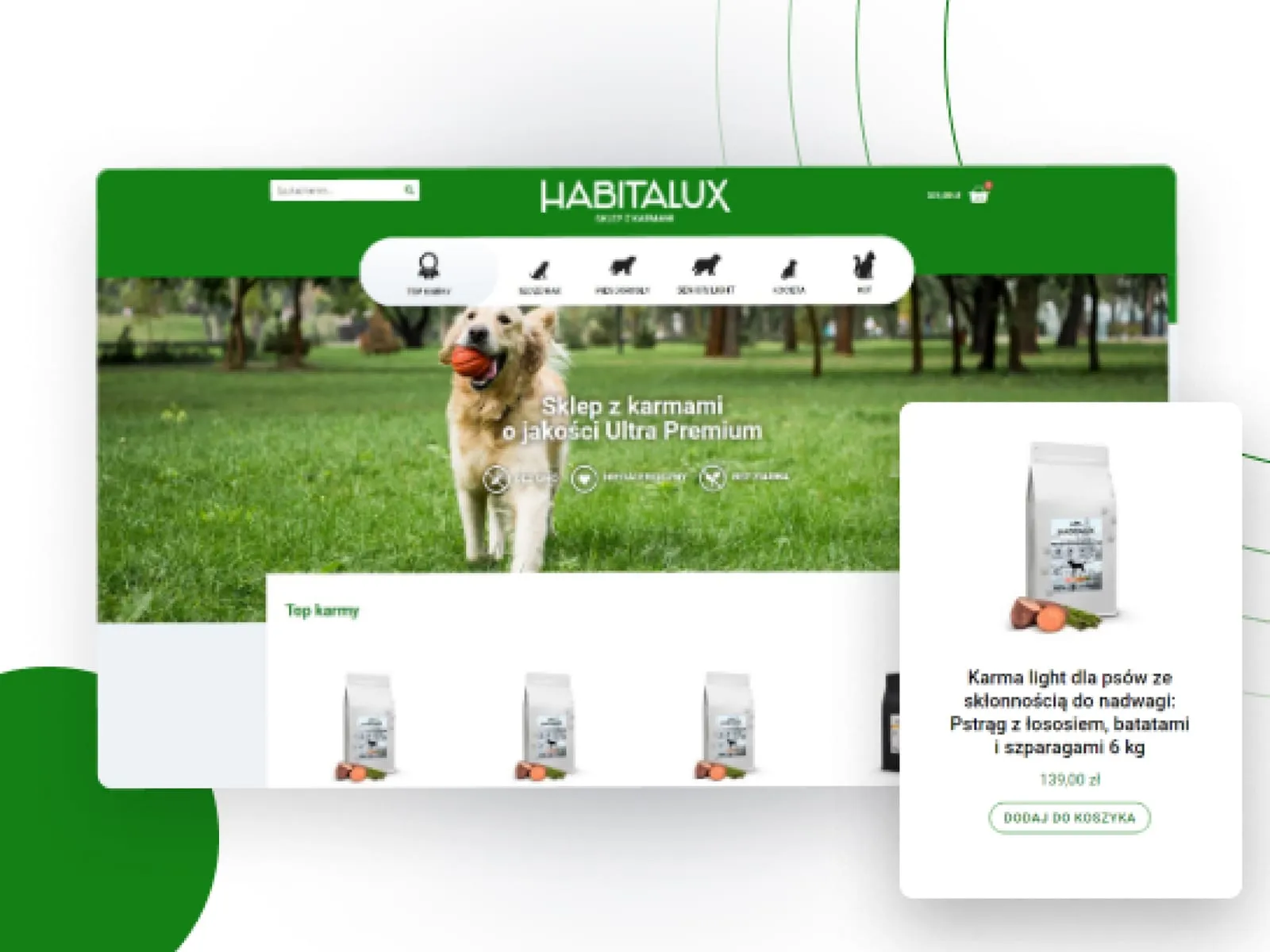
Habitalux
Online store and branding for pet food
- See what else we build Projects
Start your e-commerce software project
Order panel, PIM, B2B platform and shopping app from one team, from the first research to the build.
Client voices
What our clients say
 Marcin Ostrzycki Chief Operating Officer, Selectivv

“We're glad we chose to work with Wzór UX Agency. The time it took to deliver the project, and their commitment, went beyond our expectations. They did solid work for us, which is why we recommend them at every turn.”
“We were pleasantly surprised by how quickly the Wzór team responded to our comments and questions. They have very good ideas and on top of that they work fast and solidly. They always keep to the agreed dates, and the end result met our expectations.”
 Maja Wieloch-Silecka Operations Director, Bosfor Group

“Working with the Wzór team was a genuinely great experience! They always answered our questions quickly and were flexible about our comments. They have no shortage of creative ideas and are at the same time thoroughly reliable and on time. The end result fully met our expectations; we recommend them to anyone looking for professionals who care.”





























The team
Who will design your e-commerce system?
-

Aleksandra Bondar
Senior UX/UI Designer
View profileHow can I help you?
“I will design the PIM product record and the order list so the content manager and store staff finish a task without looking for data in a second window.”
-

Katarzyna Adamczuk
Prezes, Analityk Biznesowy
View profileHow can I help you?
“I will map out with you where stock, prices and descriptions come from and how a purchase travels from the store and Allegro into the ERP, so every field has a single source.”
-
Patryk Korycki
CEO, Analityk Biznesowy
View profileHow can I help you?
“I will agree the scope and budget with you, and during the build I will make sure the integrations with the ERP, PIM and marketplaces go live without a break in sales.”
-

Tadek Wadas
Senior UX/UI Designer
View profileHow can I help you?
“I will test the prototype with order handling staff on a live shift and with a customer placing a wholesale purchase, and turn the results into a list of fixes.”
FAQ
Frequently asked questions about e-commerce software
What systems does e-commerce need?
The systems e-commerce needs are above all a store on an e-commerce platform and an ERP that holds stock, prices and sales documents. Once marketplaces come in, orders are gathered by an OMS or a multichannel sales manager, with hundreds of products in several channels the descriptions move into a PIM, and wholesale gets a B2B platform. At the first meeting we sketch with you which of these systems an order passes through today and where someone retypes data.
What is a PIM system?
A PIM (Product Information Management) system is a central database of product information: descriptions, attributes, photos and variants, from which the data goes to the store, the marketplaces and the ad feeds. The content manager, the copywriter and the person who signs off the product page before publishing work in it. We start a PIM design with the data model, meaning which attributes a product family has and which of them each channel requires.
What is the difference between a PIM and an ERP?
A PIM runs the product content, meaning descriptions, attributes and photos, while an ERP runs the processes around the product: stock, purchase prices, orders and finance. The two systems exchange data, so the ERP supplies stock and price and the PIM the description and attributes. Trouble starts when one attribute, weight for instance, is kept in both at once, which is why we give every field a single owner.
What is an OMS?
An OMS (Order Management System) gathers orders from the online store and from marketplaces such as Allegro or Amazon and runs them through one process: from payment through packing and labelling to returns. Customer service sees every order in one place. We set up rules like "if paid, create the label" together with the team that does this by hand today.
Is BaseLinker an ERP?
BaseLinker, now Base.com, is not an ERP but a multichannel sales manager: it gathers orders from many channels, creates labels and syncs stock. Finance and warehouse documents stay in the ERP, which Base.com connects to through an integration. Before any work begins we agree which system holds the true stock level.
What is a B2B platform?
A B2B platform is a store for the business customers of a wholesaler, distributor or manufacturer, where a logged-in customer sees their own prices, discounts, credit limit and stock availability and places an order at any time. The platform pulls prices and stock from the ERP and sends the finished order back there. For customers who order from their own list we plan a file import, so forty lines do not have to be clicked in one by one.
What is the difference between an e-commerce platform and an online store?
An e-commerce platform is the software an online store runs on: the admin panel for the catalogue, prices, promotions and orders, together with payments and integrations. The online store is the part the customer sees. We look at any store change from both sides, since a new module on the front usually means new work in the admin panel.
How do you connect an online store to Allegro?
An online store connects to Allegro through a plugin of its store platform or through a sales manager such as Base.com, which pulls orders from Allegro and syncs stock. The listings also have to be matched to products in the Allegro catalogue, usually by GTIN (EAN). The project settles one place where listings are created, so that one product does not end up with two listings.
What is m-commerce?
M-commerce is shopping on mobile devices: on the mobile version of a store, in a store's app or straight from social media. In Poland the smartphone is now the main device for shopping online. We suggest an app when the customer has a reason to come back every week, like a points or cashback balance; without that reason, a good mobile version of the store is enough.
Related services
Services related to e-commerce software
You know orders or product data get stuck somewhere between systems.
First we will find, with your team, where the work spills outside the system.
You are choosing a PIM, an OMS or a B2B platform, or want to build your own system.
We will write down what the people who will use it daily need, so you can compare vendors against the same list.
You have a live store and want it to sell more.
We test the buying path against data before you change anything for good.