

Crypto & Blockchain
At Wzór UX agency you receive an interactive design of your crypto and blockchain software, be it an exchange app, a wallet or KYC onboarding, and either our team or your own developers can then build it.







Challenges
What challenges do we help solve in crypto and blockchain?
Our approach
In the onboarding we design, the customer knows before the first photo which document is needed and how long verification will take. After a rejection we tell them what to fix: glare on the photo, a cropped edge of the document, an unreadable date. Data the procedure does not require at the start is collected only when it is needed.
Scope of services
Our approach
In the withdrawal forms we design, the network is a separate, described choice rather than a default entry in a list of technical abbreviations. Before confirming, the customer sees the amount, the address and the network in one sentence, and for an address used for the first time we ask them to take a second look.
Scope of services
Our approach
On the analyst screens we design, an alert from transaction monitoring sits next to the customer's verification data and withdrawal history, and the decision is saved together with its reasoning. Meanwhile, whoever is waiting for the withdrawal can follow its status in the app and knows whether to send anything.
Scope of services
Who it is for
Which crypto and blockchain companies do we design software for?
Exchanges and crypto trading apps
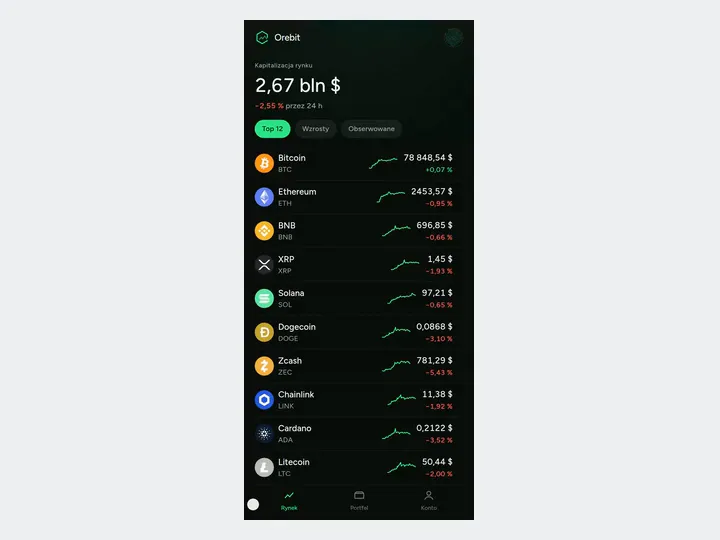
Exchanges, brokers and fintechs where an experienced trader places limit orders at the order book and a beginner buys their first cryptocurrency with one button on their phone. We design both paths in one app: the simple purchase shows the rate and the fee before confirmation, and the order book waits in its own view for those who need it.
Crypto wallets
Wallet providers and exchanges that hold customers' funds, and makers of non-custodial wallets where the customer keeps the recovery phrase themselves. We make writing down that phrase a separate step with a check question, and a reminder about it comes back before the first larger deposit.
Crypto exchange offices and buying crypto for złoty
Online crypto exchange offices and banks adding crypto purchases to their app serve customers who pay with BLIK, the Polish mobile payment, or by card, often on the first such purchase of their life. The step these customers know from no other purchase is the wallet address for the funds, so we show where to copy it from and check its format before the customer pays.
Onboarding with KYC verification
Exchanges, exchange offices and wallet providers verify every new customer: personal details, a photo of an ID document and a selfie, and cases rejected by the automated check are decided by someone in the compliance team. We work on both sides of that procedure: the screen that guides a new user through the photos, and the reviewer's view with the whole case in one place, the photos, the automated result and the history of attempts.
Transaction monitoring and AML compliance panels
Compliance teams at crypto-asset service providers review alerts from transaction monitoring all day and look after the sender and recipient details that, since 30 December 2024, have had to accompany crypto-asset transfers handled by providers. We lay out the analyst panel following how the work runs: first the alerts where someone is waiting for a withdrawal, then the rest of the queue.

Why us?
Why choose our UX agency?
-
More customers past the first purchase
An exchange or on-ramp app in which a new customer understands the rate, the fee and the next step takes them from sign-up to the first transaction without a consultant's help. The budget spent on acquiring a customer less often ends in an empty account.
-
Fewer questions about deposits and withdrawals
A customer who can see in the transaction history what stage their deposit or withdrawal has reached does not write to support asking where the funds are. The same support team then handles more customers without extra headcount.
-
New regulations without rebuilding screens
We design customer messages and the data fields for transfers as parts that can be changed without touching the rest of the app. Moving to a MiCA authorisation or new data required for transfers then means new content, not a new design.
-
A senior team
A team of senior UX designers who have been designing interfaces for nine years, today for large organisations, SaaS companies and software houses. Seniors will take on your exchange app or compliance panel, from discovery in support tickets to sign-off.
-
Proven client trust
We have designed for 115 brands, and most of them come back to us with their next project.
-
Higher quality with AI
A designer with AI tools checks more variants of a withdrawal form or an alert queue than they could draw by hand and picks the one that works. What reaches you is a tested version, not the first one that came out.
Process
How will we design your crypto and blockchain software, step by step?
-
A conversation with your team

We set the goals and list the systems and regulations that affect the screens
We sit down with the people responsible for the product, customer support and compliance. Together we pick the journey to change, list the systems and vendors the project has to work with and agree how you will know it has worked.
Key steps
- Conversations with the product owner, support and the compliance team
- A review of the systems: matching engine, wallets, KYC provider, transaction monitoring
- Choosing the journey we start with
- Agreeing the measures: verifications completed first time, withdrawal tickets, alert review time
Deliverables
- Project brief
- Map of systems and vendors
- List of measures
- Scope of the first stage
-
Discovery in support tickets and the compliance team
We watch support and analysts at work, not just the documentation
We read support tickets about verification and withdrawals, sit with an analyst working through the alert queue and go through a first verification with people who have never bought crypto. We note the workarounds: a spreadsheet of customer addresses kept open beside the system, a message in a chat app instead of a case status, a source-of-funds question sent by ordinary email.
Key steps
- A review of support tickets
- Observing work on the alert queue
- First verification with new customers
- Interviews with traders and exchange office customers
- A review of rejected verifications
Deliverables
- Research report
- Journey map with workarounds
- Prioritised list of problems
-
Interactive system design
A design that customers, support agents and analysts click through
The screens are designed straight for the target devices: the customer's phone, the trader's browser, the analyst's desk. We test the prototype on test balances and exception scenarios and make the changes before it goes to the developers.
Key steps
- Screen architecture by role: new customer, trader, support agent, AML analyst
- Interactive design for the target devices
- Exception states: rejected verification, withheld withdrawal, wrong network, missing recipient details
- Prototype tests with users
Deliverables
- Interactive design of every screen
- Component library
- Description of behaviour in exceptions
- Prototype test report
-
Build or design hand-off
The new screens reach your systems together with the integrations
Our team builds the design, or we hand it over to your developers or to your platform vendor. Either way, we spell out where each screen takes its data from: the matching engine, the wallets, the verification provider or the transaction monitoring tool, so that the rollout does not stop withdrawals.
Key steps
- Screen and field specification for developers
- Integration map: matching engine, wallets, KYC provider, transaction monitoring, travel rule data, payments
- Support for the implementation team
- Tests on test balances before launch
Deliverables
- A working system or a package ready to build
- Integration specification
- Pre-launch test report
-
Measuring after launch
We check against support and compliance data whether the change worked
After launch we compare the share of verifications completed first time, withdrawal tickets and alert review time with the measurement taken before the change. On that basis we set the order of the next improvements.
Key steps
- Measuring verifications completed first time
- A review of deposit and withdrawal tickets
- Conversations with support agents and analysts after launch
- Plan for the next improvements
Deliverables
- Measurement report
- Prioritised list of improvements
- System development plan
Methods and technologies
Regulations, systems and standards we work with in crypto and blockchain
-
MiCA
MiCA lists the crypto-asset services it regulates, from exchanging crypto-assets for funds to holding them in custody for customers, and sets out who may provide them. In Poland, the transitional period for existing providers ended on 1 July 2026. When customers move to a provider with a MiCA authorisation, we lay out the screens where they learn what changes for them and what they need to do.
-
Travel rule
The travel rule in Regulation (EU) 2023/1113 requires the provider serving the sender to attach the recipient's details, including their name, to a crypto-asset transfer. When someone pays out again to a wallet they have used before, we suggest the recipient details from last time instead of asking for them again.
-
Identity verification (KYC)
When identity verification (KYC) is run by an external provider, its screens and messages land in the middle of your sign-up. The steps before and after them are designed so that nobody hits a different style and a different tone of voice halfway through sign-up.
-
Transaction monitoring (KYT)
Transaction monitoring (KYT) tools score the risk of a transaction on their own scale, which neither the customer nor the support agent knows. We translate that score into a case status the support agent understands without training on the tool.
-
Networks and token standards
The same token circulates on several blockchain networks, for example under the ERC-20 and BEP-20 standards, and funds sent on a network the recipient does not support usually do not come back by themselves. On the deposit screen we show which networks you accept a given token on before the address is copied.
-
Test balances
Test balances, meaning fictitious accounts with real rates and fees, are what we use to test the app and the withdrawal form. Test participants go through a purchase and a withdrawal as they would for real, without risking their own funds or keys.
Selected work
Our work in banking and finance
These are projects in banking and finance, the sector closest to crypto: the NeoBank banking app, a cashback app and an online loan service.
-
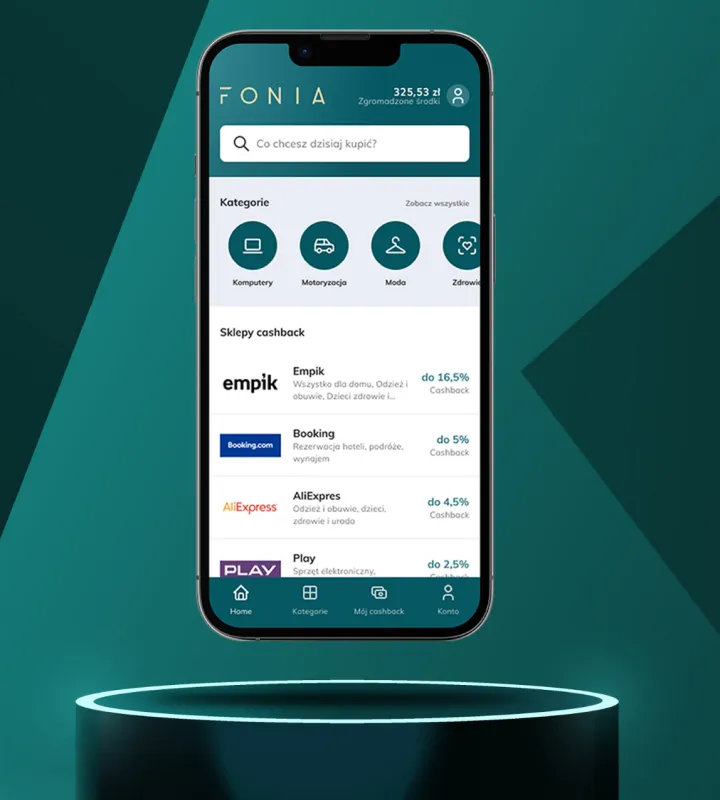
E-commerce
Fonia
Read case studyWe built a cashback app that gives users a convenient space for online shopping where they can save money.
-
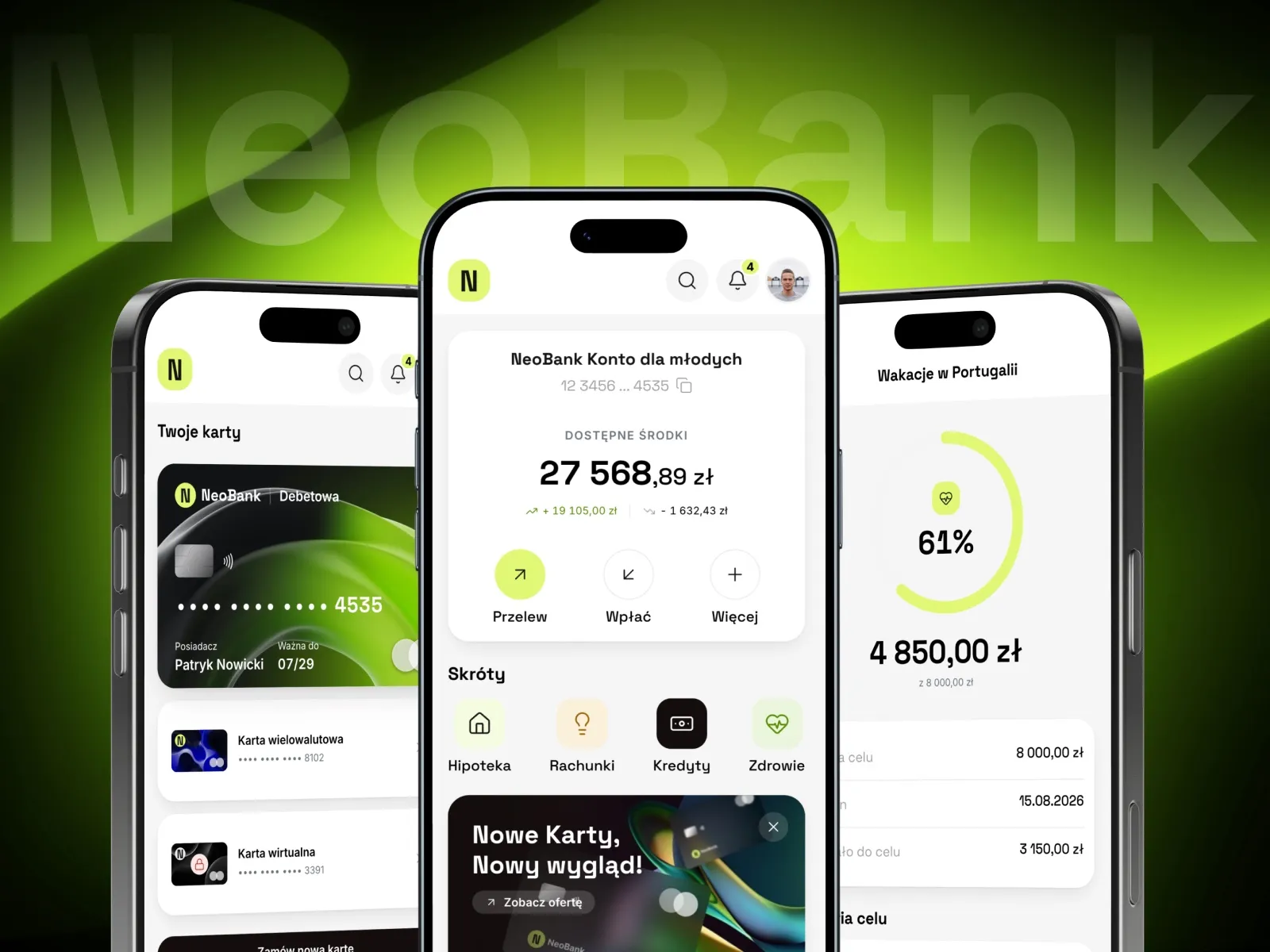
Banking & Finance
NeoBank
View projectThe NeoBank banking app: a dashboard with the balance and shortcuts, payment cards, transfers, a currency exchange, a loan repayment schedule and savings goals with progress bars. Mobile and desktop.
-
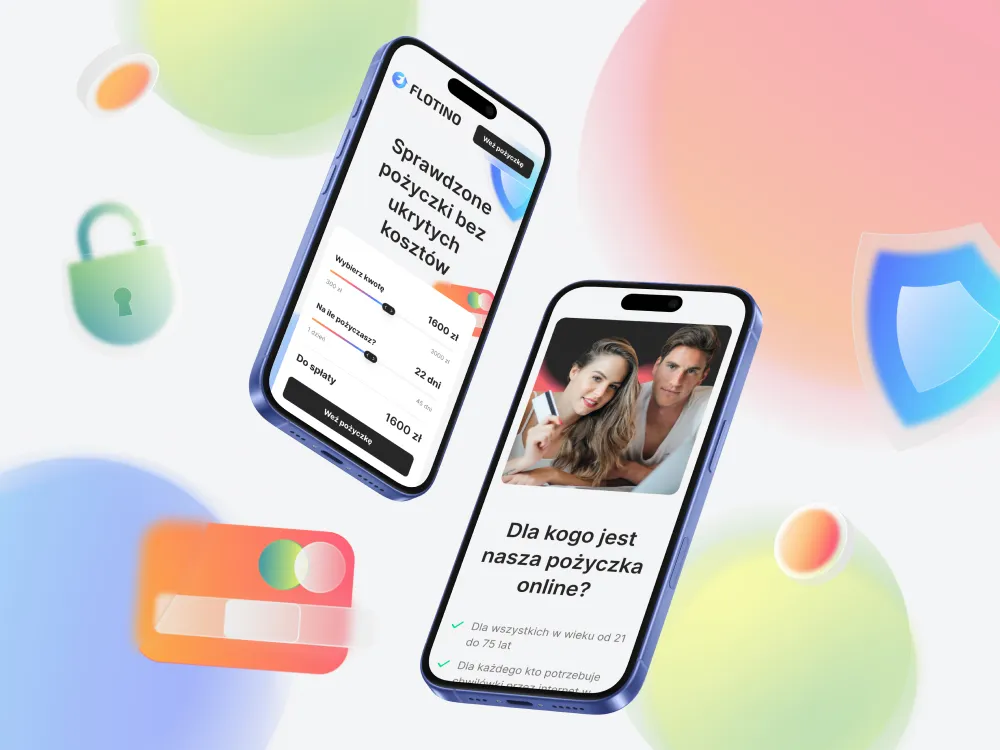
Flotino
Online cash loan service
- See what else we build Projects
Start your crypto and blockchain software project
From KYC onboarding to the AML analyst panel, in one team that stays with you until the build is done.

Client voices
What our clients say
 Maja Wieloch-Silecka Operations Director, Bosfor Group

“Working with the Wzór team was a genuinely great experience! They always answered our questions quickly and were flexible about our comments. They have no shortage of creative ideas and are at the same time thoroughly reliable and on time. The end result fully met our expectations; we recommend them to anyone looking for professionals who care.”
 Piotr Alberski Chief Operating Officer, Agencja XO Media

“Our clients expect us to act fast and effectively across a very wide scope - from building a brand, through a website with a store, to running an effective sales campaign. Not an easy task, but doable when you have a tight-knit team and partners who take on challenges on the fly. For us, quality, accountability and commitment are key, and working with UX Agency Wzór gives us that 100%.”
 Mateusz Swół Chief Operating Officer, Sellace

“Our cooperation with UX Agency Wzór started with our own website. We really liked the way they work, so we decided to subcontract projects for our clients to them on a White Label basis. We loved their workflow, the way they hand projects over to our team, their documentation and their work on the design system. Now we can take on bigger risks.”



























The team
Who will design your crypto and blockchain software?
-

Aleksandra Bondar
Senior UX/UI Designer
View profileHow can I help you?
“I will design the app from opening an account to the first purchase and check with people who have never bought crypto that they get to the end without help.”
-

Katarzyna Adamczuk
Prezes, Analityk Biznesowy
View profileHow can I help you?
“I will work out which data your KYC procedure and the travel rule require, and at which moment, so that the screens ask only for what is needed.”
-
Patryk Korycki
CEO, Analityk Biznesowy
View profileHow can I help you?
“I will agree the scope and order of work with your management and make sure the build connects the app to the verification provider, transaction monitoring and wallets without a break in withdrawals.”
-

Tadek Wadas
Senior UX/UI Designer
View profileHow can I help you?
“I will test the withdrawal form with your customers, and the analyst screen with your compliance team on a sample alert queue.”
FAQ
Frequently asked questions about crypto and blockchain software
How does a crypto exchange work?
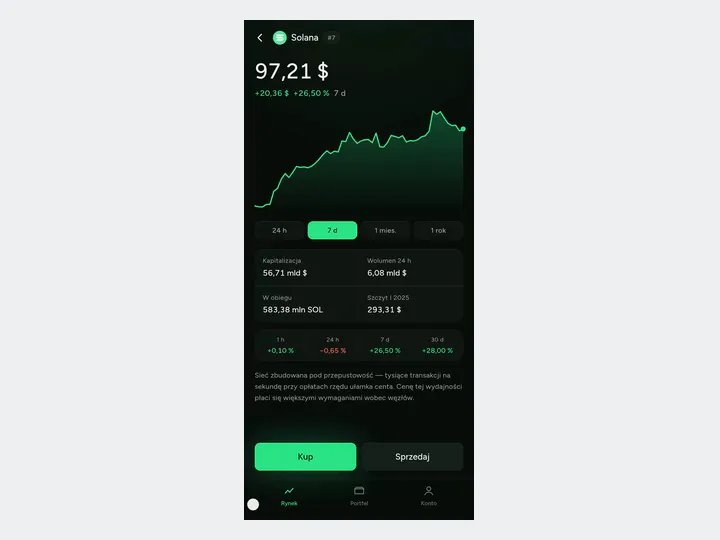
A crypto exchange matches its customers' buy and sell orders: a limit order waits in the order book for the price the customer has set, and a market order is executed straight away at the best available price. In the European Union, operating a trading platform for crypto-assets is one of the services regulated by MiCA. In an exchange app we separate two paths: an order book for traders and a simple purchase for first-time buyers.
What is a crypto wallet?
A crypto wallet is an app or a device that stores the keys to your crypto and lets you send and receive it. In a custodial wallet the keys are held by a provider, such as an exchange, and in a non-custodial wallet by the user. We start work on a wallet by settling who holds the keys, because that decides how access to the funds is protected.
What is a seed phrase?
A seed phrase, also called a recovery phrase, is a series of words generated by a crypto wallet that gives access to the funds in that wallet and lets you restore it on another device. Whoever knows the phrase has access to the funds, and losing it in a non-custodial wallet usually means losing access. We lay out the phrase step so that it ends up on paper rather than in a screenshot in the phone's gallery.
What is a wallet address?
A wallet address is a unique string of letters and numbers that crypto is sent to, assigned to a specific cryptocurrency. A transfer sent to the wrong address cannot be reversed with one button the way a bank transfer can. We make the address pasteable or scannable from a QR code, so nobody types it by hand.
What does KYC verification on a crypto exchange involve?
KYC (know your customer) verification on a crypto exchange means confirming a new customer's identity: entering personal details, photographing an ID document and taking a selfie. In Poland, businesses that exchange virtual currencies are obliged institutions under the Act on counteracting money laundering and terrorist financing. Our onboarding work starts from the list of data your procedure requires and the moment each item is needed.
What is MiCA?
MiCA is Regulation (EU) 2023/1114 of the European Parliament and of the Council on markets in crypto-assets. It applies in principle from 30 December 2024, and its rules on asset-referenced tokens and e-money tokens from 30 June 2024. After 1 July 2026, crypto-asset services in the EU may be provided only by entities holding an authorisation granted under MiCA, listed publicly by ESMA, and by banks and certain other financial institutions after notifying their supervisor. Your lawyers interpret the rules, and our part is the screens through which their conclusions reach users.
What is the Polish register of virtual currency businesses?
The register of virtual currency businesses is a Polish register for which the competent authority is the Director of the Tax Administration Chamber in Katowice. Since 2 July 2026, an entry in it does not entitle anyone to carry out virtual currency business in Poland or abroad. A business in the register that has not obtained a MiCA authorisation should let its customers transfer their assets and give them information about the next steps.
What is the travel rule?
The travel rule is the principle that crypto-asset transfers handled by a provider are accompanied by sender and recipient details; in the European Union it is introduced by Regulation (EU) 2023/1113, applied since 30 December 2024. The provider serving the sender makes sure the transfer carries, among other things, the name of both parties and, where the transfer is recorded on a distributed ledger, their addresses on that ledger. Next to the recipient details field in the withdrawal form we put one sentence explaining what it is for.
How does a crypto exchange office work?
An online crypto exchange office sells crypto for złoty or another currency: the customer enters the amount, chooses the cryptocurrency, gives their wallet address and pays by card or with BLIK, a Polish mobile payment method. For larger amounts exchange offices ask for identity verification. In the exchange offices we design, the customer sees how much crypto they will receive before they pay.
Related services
Services related to crypto and blockchain software
You know customers open an account and never reach their first purchase.
Let us start by finding the step where they drop out.
You are moving customers to a provider with a MiCA authorisation or changing your verification provider.
We will work out what has to be shown and asked for at each stage of the change before the build starts.
You have an onboarding or withdrawal design and want to test it with users first.
We will go through it with you screen by screen or prepare a prototype for a test with the people who will use it.