

Transport & Travel
At Wzór UX agency you receive an interactive design of your transport and travel software, be it a booking system for a travel agency or a charter company, ticket sales for a carrier or a passenger app, and either our team or your own developers can then build it. For a charter company we designed the Bosfor Charter yacht rental platform, and for a company selling mountain tours the EzzyGuide app, which connects licensed guides with people looking for tours.







Challenges
What challenges do we help solve in transport and travel?
Our approach
We design the cancellation of a service in a ticketing system so that a list of tickets for that service is created at once, and every passenger on the list gets a message with two buttons: a refund or a ticket for another service. Staff see next to each ticket what the passenger chose and call only those who have chosen nothing.
Scope of services
Our approach
When designing tour booking, we base it on a single calendar of guides that both your website and the portals selling your tours read from. A date sold in one place disappears from all of them before the next tourist reaches payment, and every date shows which guide will lead it.
Scope of services
Our approach
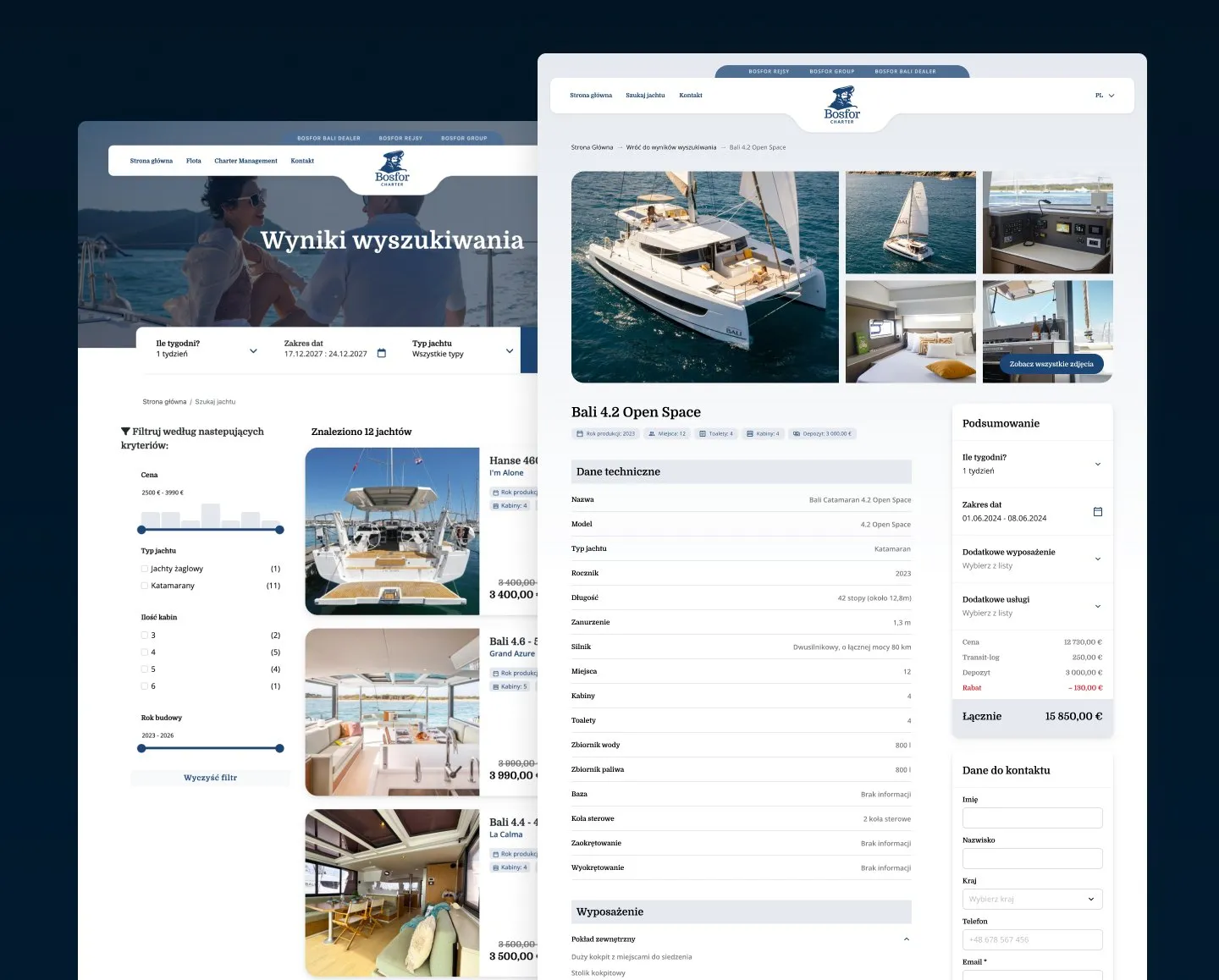
When designing the yacht page of a charter booking system, we lay it out so that next to the price for the chosen week sit the extra services, such as final cleaning, and the deposit paid when the yacht is handed over, each on a line of its own. Customers see what they pay before the voyage and what they pay in the marina before they write their first email.
Scope of services
Who it is for
Which transport and travel companies do we design software for?
Yacht charter and rental platforms
Charter companies and agencies that rent out yachts by the week and run their fleet and bookings in a single system. In Bosfor Charter, a yacht rental platform, we designed a search that asks how many weeks the customer wants to sail, for which dates and on which type of yacht, and narrows the results by cost, cabins and year of build.
Tour and guide apps
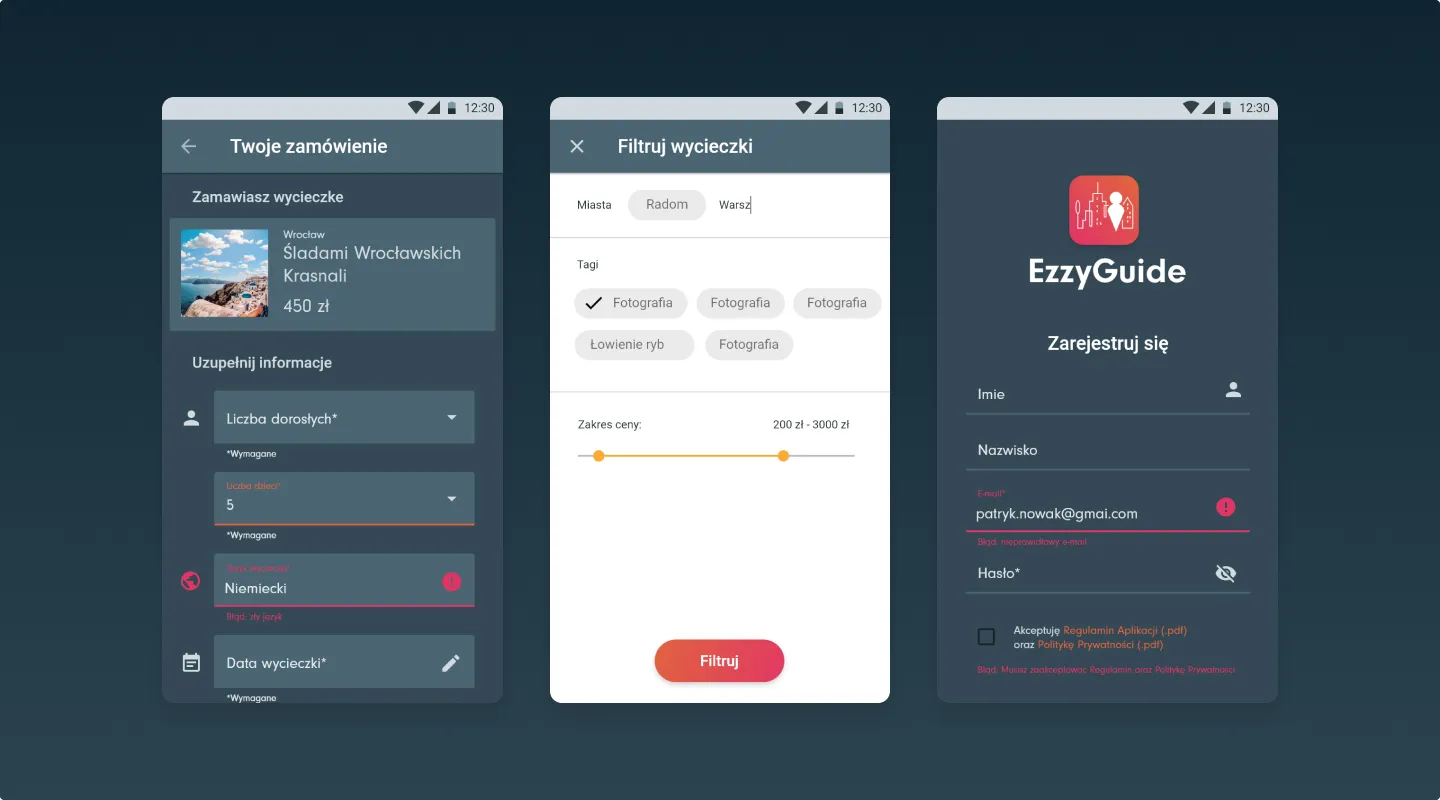
Tour organisers and guides who sell tour dates in an app, where tourists pick them from a catalogue on their phones. In the EzzyGuide app we laid out a catalogue filtered by city, tags and cost range, and an order form with the number of adults and children, the tour language and the day.
Travel agency and tour operator systems
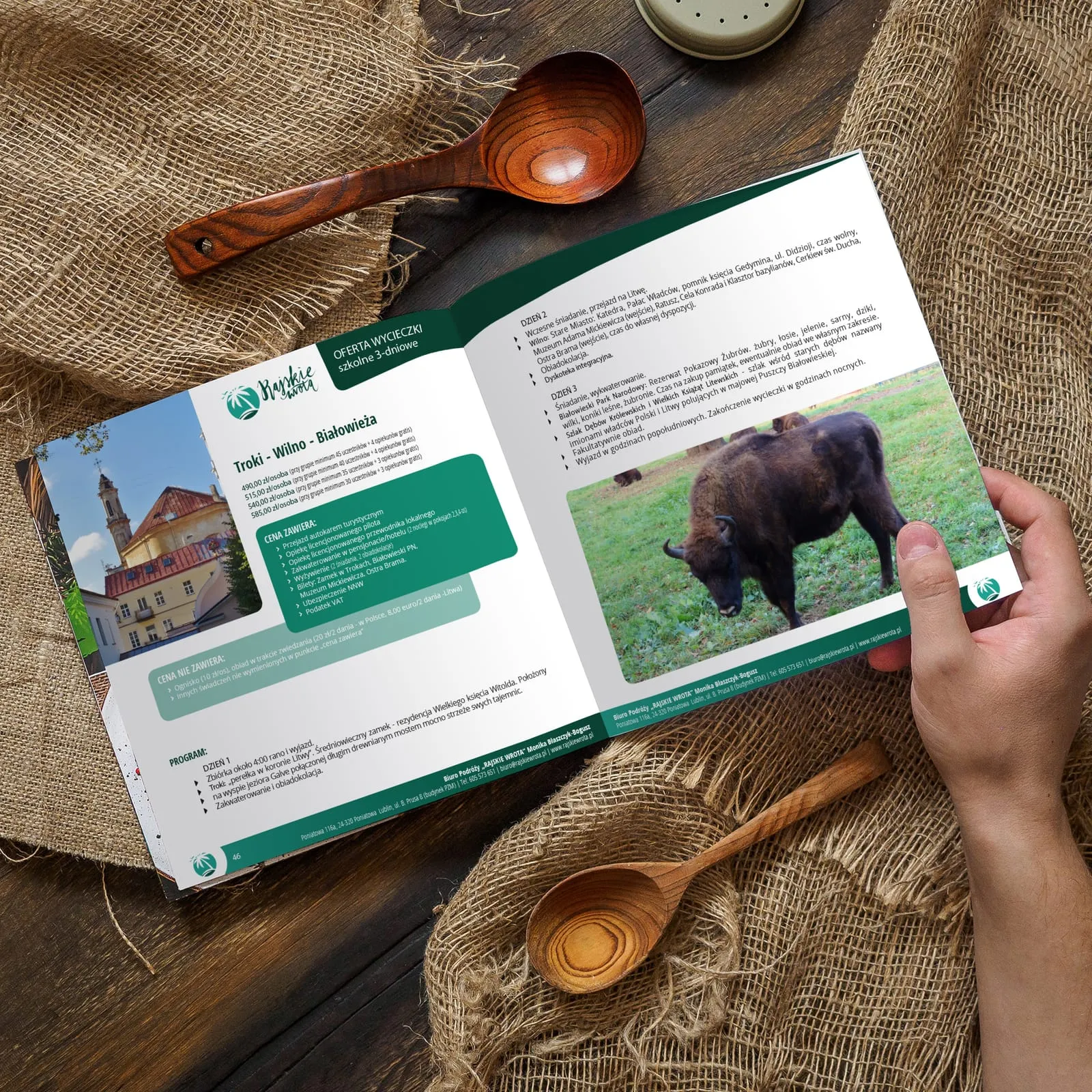
Travel agencies and tour operators whose customers book a trip online or at a consultant's desk, and whose school clients order trips for whole classes. We designed the Rajskie Wrota travel agency's school trip catalogue in print, with a day-by-day programme for each destination, a price per person that depends on the size of the group, and what the price includes and what it does not. When designing school trip booking, we work out the per-pupil amount straight from the count of participants and chaperones the teacher enters.
Carrier ticket sales
Rail, bus and ferry operators where the cashier, the conductor and the passenger in the app sell or buy tickets under the same fares and concessions. In designing ticket sales, we offer the concession choice separately for each passenger. We place luggage and dog tickets before payment, not on the summary.
Passenger apps
Carriers and transport organisers whose passengers keep the timetable, the ticket and information about their journey on their phones. When we design a passenger app, we make sure the ticket opens without an internet connection too. The carriage and seat numbers go on the ticket itself, not into the purchase confirmation.

Why us?
Why choose our UX agency?
-
More bookings without commission
A booking that the customer completes on your own website does not go through a portal that would charge a commission on it. A search in which customers find the date and the price themselves keeps those bookings with you.
-
The conductor has time to check tickets
The more tickets the app sells before departure, the less often the conductor issues a ticket on board. That leaves more time for checking tickets along the whole train.
-
Fewer emails before the voyage
The customer fills in the crew list and makes the balance payment before the charter in their own account instead of sending forms back by email. Before the season the charter office sees which bookings are still missing a list or a payment.
-
A senior team
A team of senior UX designers who have been designing interfaces for nine years, today for large organisations, SaaS companies and software houses.
-
Proven client trust
We have designed for 115 brands, and most of them come back to us with their next project.
-
Higher quality with AI
A designer with AI tools checks more variants of a connection search or a yacht page than they could draw by hand and picks the one that works. What reaches you is a tested version, not the first one that came out.
Process
How will we design your transport and travel system, step by step?
-
A conversation with your team

We set the goals and note down the systems a booking passes through
We sit down with the management, the person responsible for sales and the head of customer or passenger service. We note down the systems a booking passes through from searching for a date to the trip itself, pick the process to change and agree how you will know the project has worked.
Key steps
- Conversations with management, sales and customer service
- A review of systems: booking system, ticket sales, payment gateway, portals selling your offer
- Choosing the process to change
- Agreeing the measures: abandoned bookings, emails and calls before departure, time to handle a refund
Deliverables
- Project brief
- Map of a booking's path from search to departure
- List of measures
- Scope of the first stage
-
Discovery at the agency, in the marina and on the journey
We study the work where customers book, take over a yacht or board a train
We sit at a travel agency consultant's desk, stand in the marina while yachts are handed over and ride one service with the conductor. We test booking on the website with customers on their own phones. We look for workarounds: a spreadsheet of guides' dates, a notebook of crew lists, a screenshot of the ticket instead of the ticket in the app.
Key steps
- Observing a consultant's work at a travel agency
- A shift in the marina during yacht handovers
- Riding one service with the conductor
- Interviews and tests with customers on their phones
- A review of emails and calls to customer service
Deliverables
- Research report
- Map of the staff's work, showing where people work around the system
- Prioritised list of problems
-
Interactive system design

A design that consultants, conductors and customers test in their own work
Agency consultants test the prototype at their desks on customer enquiries from the past week, and conductors try the ticket check screen on a trial run. Feedback reaches the design before the developers take it over.
Key steps
- Screen architecture by role: consultant, customer, cashier, conductor, charter office
- Interactive design on your offer, fares and timetable
- Exception states: a cancelled service, a change of dates after the down payment, a child with a birthday during the trip
- Prototype tests with staff and customers
Deliverables
- Interactive design of every screen
- Component library
- Description of behaviour in exceptions
- Prototype test report
-
Build or design hand-off
The new screens reach sales together with the integrations
Our team builds the design, or we hand it over to your developers. Either way, we spell out how bookings move between your website, your booking system and the resellers' portals, so the new version does not go live on the day the timetable changes or at the height of the season.
Key steps
- Screen and field specification for developers
- Integration map: booking system (for example Booking Manager or Bókun), tour operator offer search, payment gateway, timetable data in GTFS, conductor terminals
- Support for the implementation team
- A test booking and a test refund in a staging environment before launch
Deliverables
- A working system or a package ready to build
- Integration specification
- Pre-launch test report
-
Measuring after launch
We check against booking and sales data whether the change worked
After launch we compare abandoned bookings, emails before departure and the time taken to handle a refund with the measurement taken before the change. We go through the results with your sales and customer service, and then together we choose the screen to improve before the next season.
Key steps
- Measuring abandoned bookings in the search
- A review of emails and calls before departure
- Time from a cancelled service to the refund, from system data
- Plan for the next improvements
Deliverables
- Measurement report
- Prioritised list of improvements
- System development plan
Methods and technologies
Systems and standards we work with in transport and travel
-
Booking Manager
When designing the website of a charter company that sells through Booking Manager, instead of its embeddable search we put in one of our own that takes free dates and rates from it and shows the fleet in the brand's look. Booking Manager connects charter fleets with agencies that book yachts in it in real time, and a charter company can also embed Booking Manager's search in its site.
-
Bókun
In a panel we design for a tour operator selling through Bókun, we put the rates for all channels side by side in one table, so that a change made on the operator's own website does not diverge from what the resellers charge. Bókun lets a tour operator sell tours on its own website and through reseller portals, with different rates for each channel.
-
MerlinX
When we design the website or panel of an agency selling through MerlinX, we show next to each offer when its availability and price were last checked. MerlinX is a search and comparison tool for tour operators' offers, in which a travel agency consultant gathers offers in a basket and checks whether they are still available and whether their price has changed.
-
GTFS and GTFS Realtime
In designing a passenger app on GTFS and GTFS Realtime data, we tell the timetable time apart from the live time, so the passenger knows which one to trust. GTFS is an open standard in which public transport agencies publish their timetable as files with stops, routes and trips, and GTFS Realtime adds delays, cancellations and vehicle positions to it.
-
Poland's act on package travel
Poland's act on package travel and linked travel arrangements requires the organiser, and the travel agent when a package is sold through them, to give the traveller the standard information on the relevant form before the traveller is bound by a package travel contract or a corresponding offer. A trader facilitating linked travel arrangements gives the traveller that information on the relevant standard form before the traveller is bound by a contract leading to a linked travel arrangement. A traveller does not bear additional fees, charges or other costs they were not informed of before the package travel contract was concluded. When designing the booking path, we place the form and all such fees before payment, not behind a footer link.
-
Poland's act on accessibility of products and services
Poland's act implementing the European Accessibility Act covers, in air, bus, rail and waterborne passenger transport services for consumers, websites, mobile device-based services including apps, electronic tickets and electronic ticketing services, and the delivery of transport service information including real-time travel information, which on information screens is limited to interactive screens in the EU. It also covers interactive self-service terminals in the EU, other than those built into vehicles. It does not apply to services provided by microenterprises, nor, on websites and apps, to some maps, some content published before it came into force or content the business neither funds, develops nor controls, and for urban, suburban and regional transport services it covers only those terminals. When we design seat selection, we add a list of seats that a screen reader can handle beside the graphical plan of a carriage or a bus.
Selected work
Our work in transport and travel
Alongside the yacht charter platform and the tour app, this section shows websites for a sailing group and a catamaran dealer, a catalogue of school trips, a guest guide for a holiday resort and the identity of a hiking and yoga programme. The brochure for taxi partitions comes from the automotive industry, with taxis linking it to transport.
-
Transport & Travel
Bosfor Group
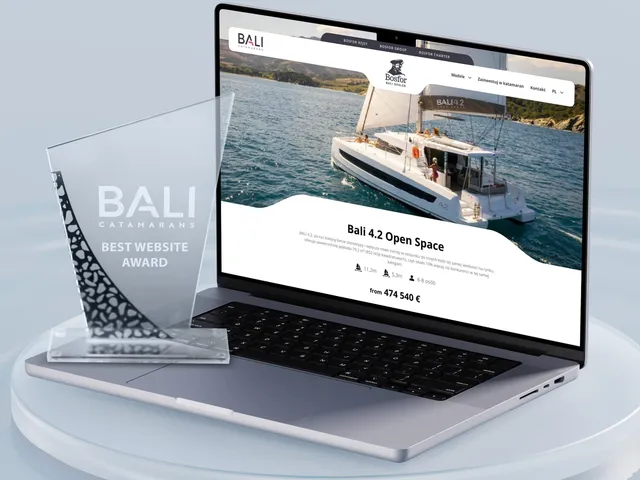
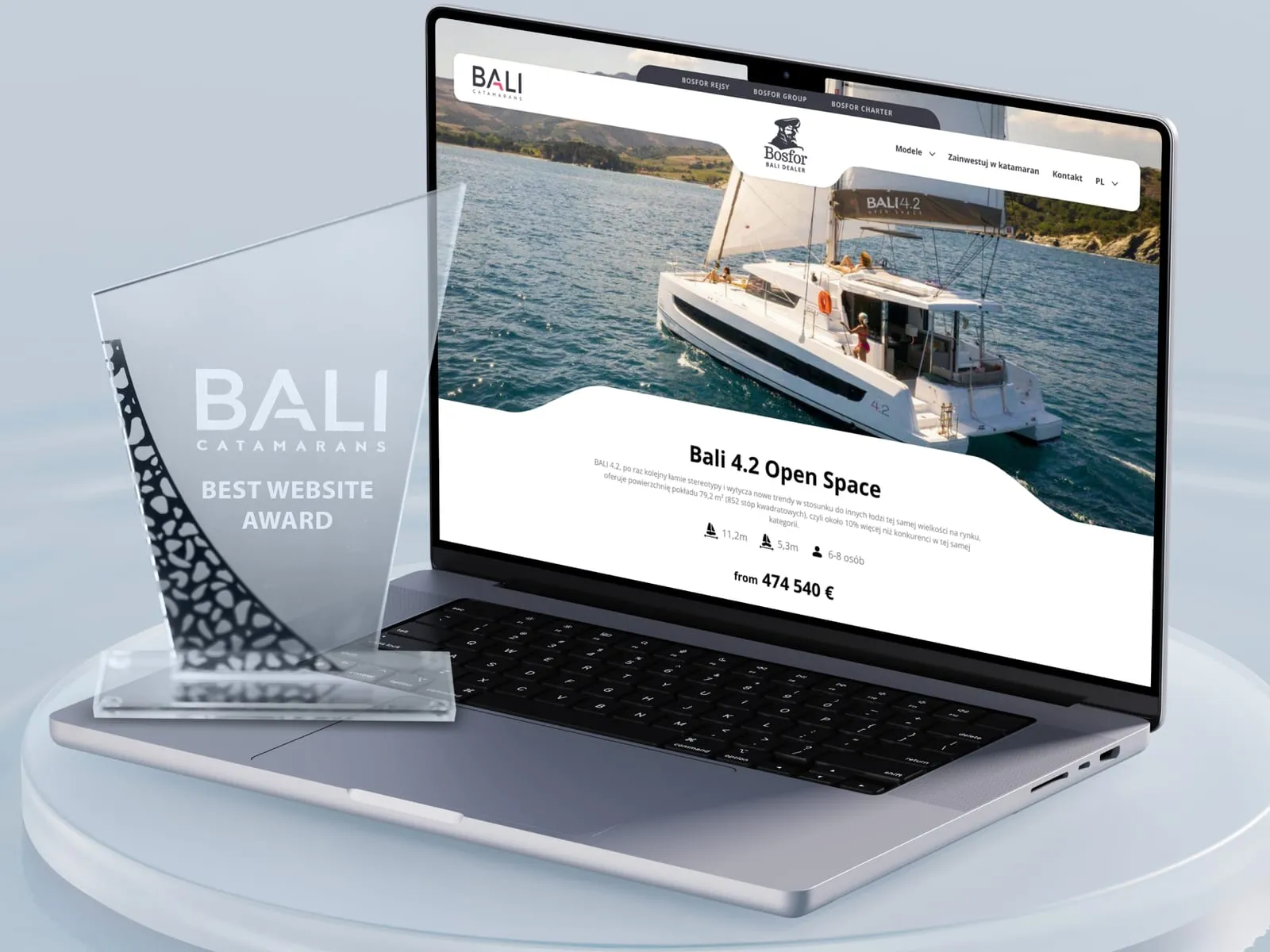
Read case studyWe merged Bosfor Group's four separate sites - the group hub, yacht charter, cruises and the BALI catamaran dealer - into one coherent brand system, with yacht booking and a catalogue built on technical data.
-
Transport & Travel
EzzyGuide
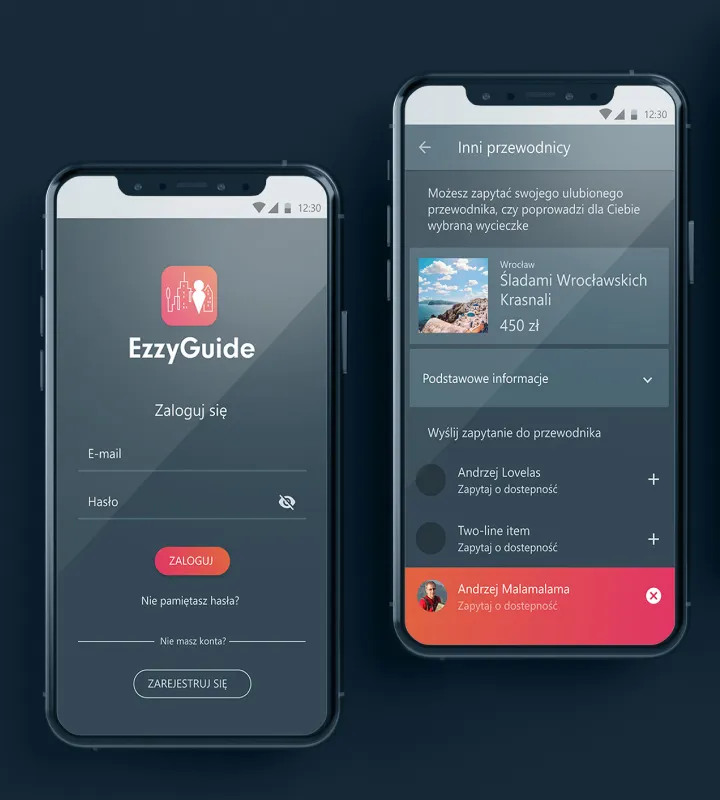
Read case studyBuilding on an existing specification, we designed the UX of a tours app together with its user interface (UI).
-
EzzyGuide
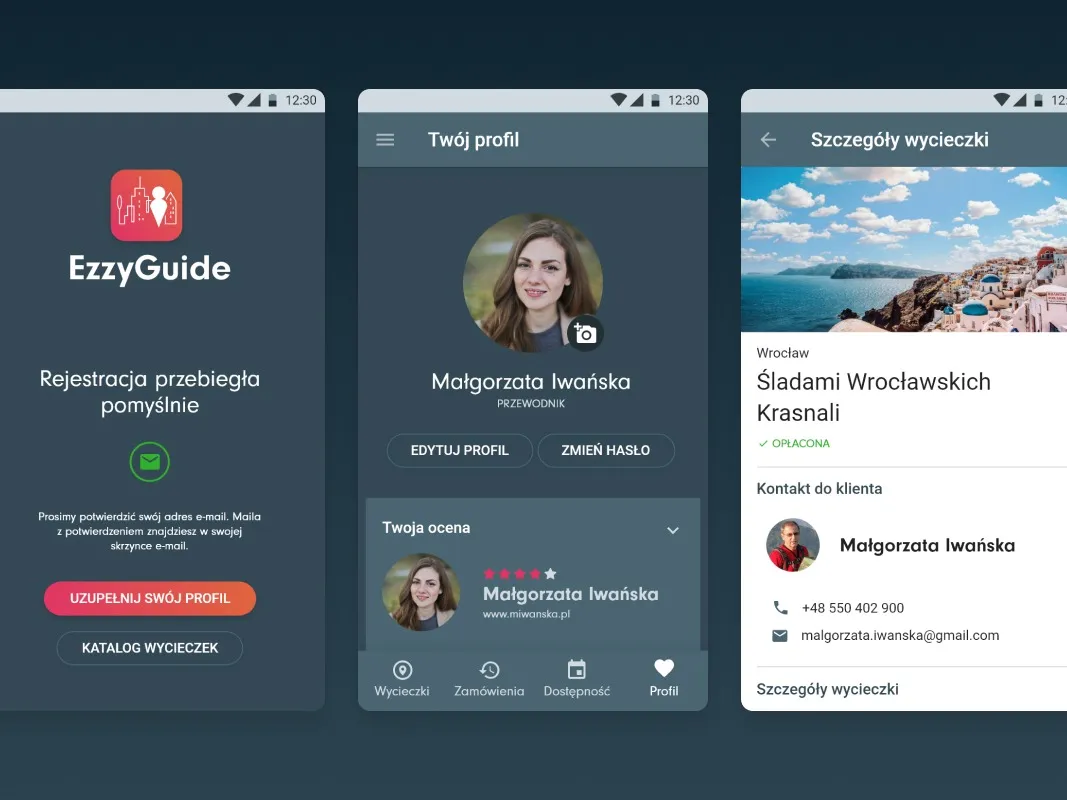
A tours app connecting guides with travellers
-
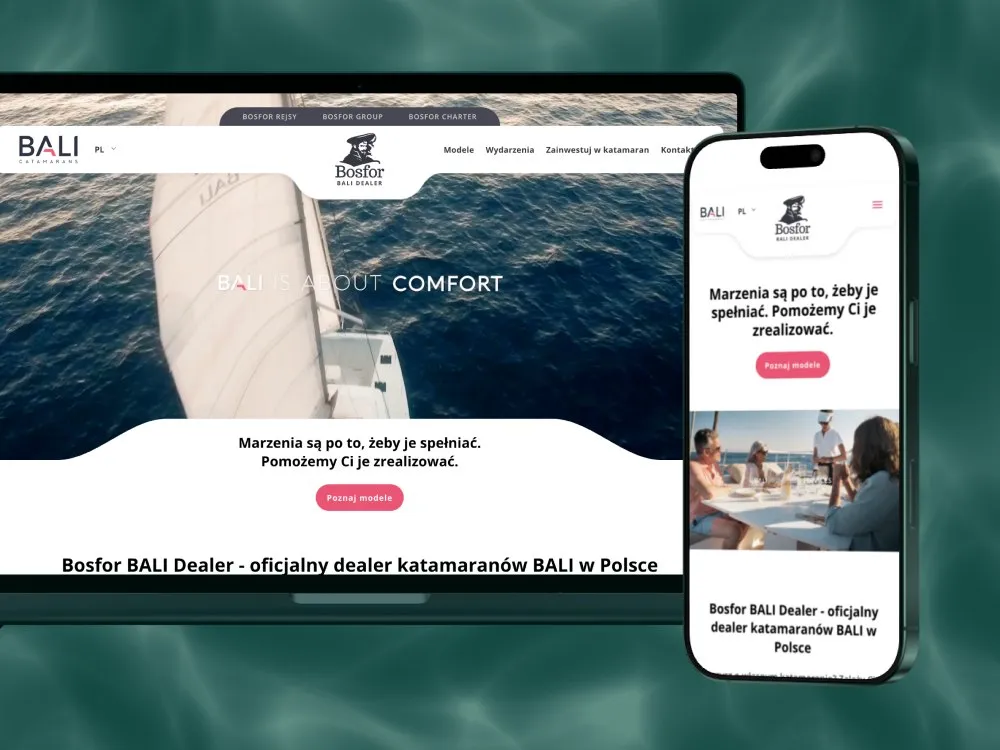
Bosfor BALI Dealer
Website for a BALI catamaran dealer
-
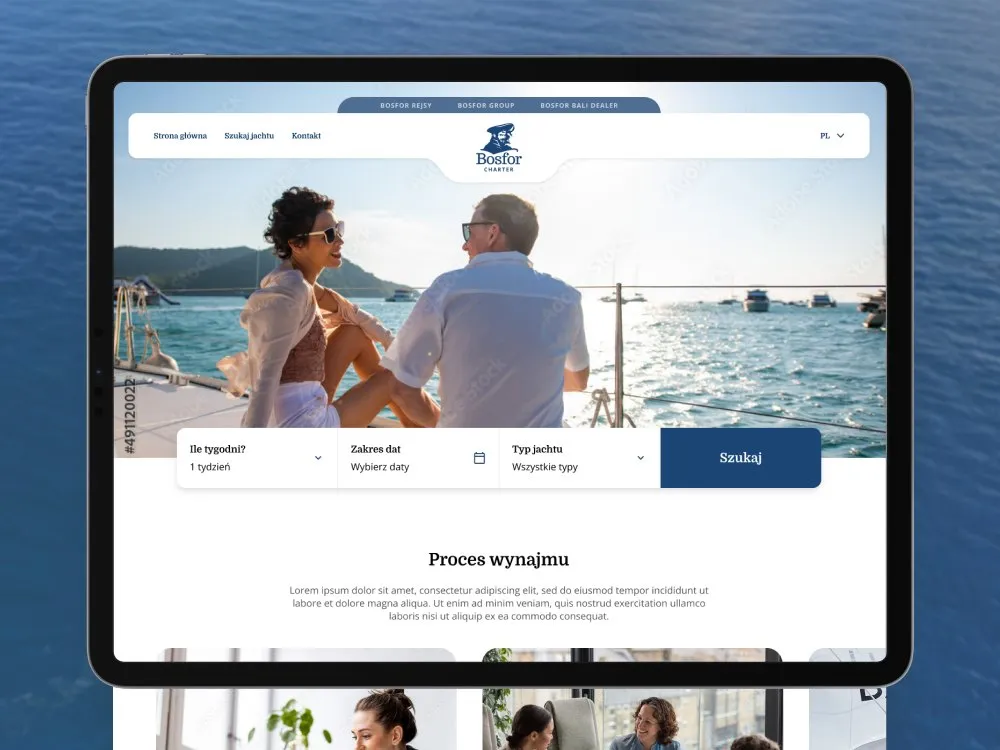
Bosfor Charter
Yacht charter platform with booking
-
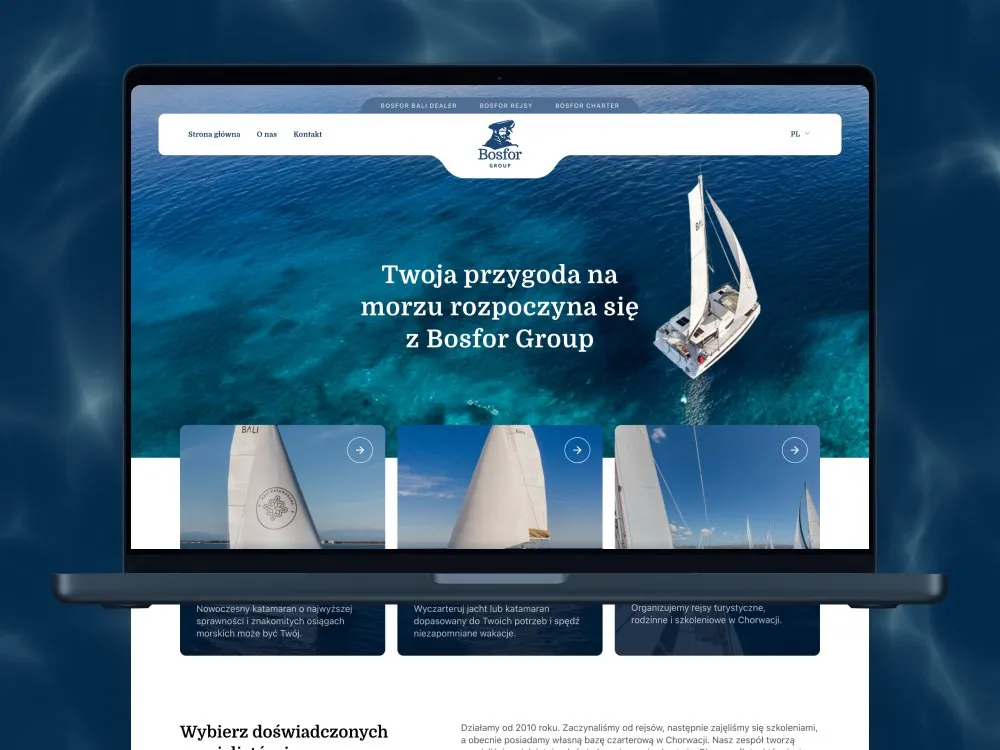
Bosfor Group
Website for the Bosfor sailing group
-

Joga Na Szlaku
Logo and promotional materials
-

Faro Resort
Guest guidebook for a family resort
-

Piwek
Promotional folder for the "Taxi Shield" screens
- See what else we build Projects
Start your transport and travel software project
One team designs your charter and trip booking, ticket sales and passenger app, from research with customers to the build.

Client voices
What our clients say
 Maja Wieloch-Silecka Operations Director, Bosfor Group
“Working with the Wzór team was a genuinely great experience! They always answered our questions quickly and were flexible about our comments. They have no shortage of creative ideas and are at the same time thoroughly reliable and on time. The end result fully met our expectations; we recommend them to anyone looking for professionals who care.”
 Piotr Alberski Chief Operating Officer, Agencja XO Media

“Our clients expect us to act fast and effectively across a very wide scope - from building a brand, through a website with a store, to running an effective sales campaign. Not an easy task, but doable when you have a tight-knit team and partners who take on challenges on the fly. For us, quality, accountability and commitment are key, and working with UX Agency Wzór gives us that 100%.”
 Mateusz Swół Chief Operating Officer, Sellace

“Our cooperation with UX Agency Wzór started with our own website. We really liked the way they work, so we decided to subcontract projects for our clients to them on a White Label basis. We loved their workflow, the way they hand projects over to our team, their documentation and their work on the design system. Now we can take on bigger risks.”





























The team
Who will design your transport and travel system?
-

Aleksandra Bondar
Senior UX/UI Designer
View profileHow can I help you?
“I will design the connection search so that a passenger with a change sees both departures and the time between them on one screen.”
-

Katarzyna Adamczuk
Prezes, Analityk Biznesowy
View profileHow can I help you?
“I will map out with you which trip data comes from the tour operator, which the agency enters and which the customer, so everyone knows where to correct it.”
-
Patryk Korycki
CEO, Analityk Biznesowy
View profileHow can I help you?
“I will set the scope and budget, and plan the schedule around your sales calendar so that the first change is live before bookings open for the next season.”
-

Tadek Wadas
Senior UX/UI Designer
View profileHow can I help you?
“I will interview customers who book a trip by phone with the agency and those who book it themselves in the app.”
FAQ
Frequently asked questions about transport and travel software
What is a booking engine?
A booking engine is software that takes a customer's search request, for example a route and a date, and returns matching results from an inventory of available seats, rooms or yachts. When designing a booking engine, we start with the search form, because its fields decide which results appear at all. A hotel embeds the engine as a booking module on its website, and a railway operator can also send its inventory data to portals and agents.
What is a package holiday under Polish law?
A package, called an 'impreza turystyczna' in the Polish package travel act, is a combination of at least two different types of travel services for the purpose of the same trip or holiday, for example carriage of passengers and accommodation. The law lists the conditions under which such a combination makes a package, for example when one trader combines the services before a single contract on all of them is concluded, or when they are sold at an inclusive or total price. A combination of services of only one of three types, carriage of passengers, accommodation not for residential purposes or rental of cars or other motor vehicles, with one or more other services for travellers that are not intrinsically part of any of those three services, such as a guided tour, is not a package if the other services account for less than 25% of the combined value and are neither advertised as nor otherwise an essential feature of the combination, or if the other services are selected and purchased only after the carriage, accommodation or rental has started. Among other exclusions, the law does not apply to packages lasting less than 24 hours unless overnight accommodation is included.
What is the difference between a tour organiser and a travel agent?
Under the Polish package travel act, an organiser is a trader who combines packages and sells or offers them for sale, directly, through another trader or together with another trader, or who transmits the traveller's data to another trader in linked online booking processes. In designing a travel agency's sales system, we show next to every offer the name of the organiser that put it together. A travel agent, called a retailer in the EU directive, is a trader other than the organiser who sells or offers for sale packages combined by an organiser, under an agency agreement as the Polish act puts it.
What are linked travel arrangements?
Linked travel arrangements are at least two different types of travel services bought for the same trip or holiday under separate contracts with the individual providers, where they do not make up a package. The law describes two ways in which a trader facilitates them; one is facilitating, in a targeted manner, the purchase of at least one additional travel service from another trader, where the contract with that trader is concluded at the latest 24 hours after the booking of the first service is confirmed. A linked travel arrangement does not arise from combining a service of one type, carriage of passengers, accommodation not for residential purposes or rental of cars or other motor vehicles, with one or more other services for travellers that are not intrinsically part of it, such as a guided tour, if those services account for less than 25% of the combined value and are neither advertised as nor otherwise an essential feature of the combination. When we design a website that recommends another company's service after a journey or a stay has been bought, we make it clear, before the next step, that this service is bought separately, straight from that company.
Can you cancel a package holiday booked with a travel agency before it starts?
A traveller may terminate a package travel contract at any time before the package starts, but may be required to pay the organiser an appropriate and justifiable termination fee. No termination fee is due in the event of unavoidable and extraordinary circumstances at the destination or in its immediate vicinity that significantly affect the performance of the package or the carriage of passengers to the destination, and the traveller is then entitled to a full refund of payments, but not to additional compensation. In a customer account we design, we make cancellation a button that shows the fee and the refund before anything is confirmed. Polish law, using an option that the directive leaves to member states, also lets a consumer who concluded such a contract off-premises withdraw within 14 days without giving a reason and without costs, unless the oral negotiations were based on the consumer's earlier order.
How does a yacht charter booking work?
A yacht charter booking usually starts with a provisional booking called an option, which holds the chosen yacht for a few days and, if not confirmed, is cancelled at no cost to the customer. When designing a charter booking system, we place the option's expiry date beside the yacht's name, both in the office panel and in the client's reservation view. Once the down payment is made, the option becomes a firm booking, and at the start of the charter the customer takes over the yacht in the marina at the handover known as check-in.
What is a bareboat charter?
A bareboat charter is renting a yacht without a skipper, as opposed to a skippered charter, in which the customer rents the yacht together with a skipper. In designing a charter search, we offer the choice of skipper together with the yacht, not in a separate email. The choice between bareboat and skippered is usually made as early as the enquiry, alongside the type of boat, the number of people and cabins, and the dates.
What is an electronic ticket?
An electronic ticket, as defined in the European Accessibility Act, which Poland's accessibility act implements, is any system in which an entitlement to travel, in the form of single or multiple travel tickets, travel subscriptions or travel credit, is stored electronically on a physical transport pass or other device instead of being printed on a paper ticket. When designing a passenger app, we put the last day of validity of a season ticket on the first screen, with no need to open the details.
How do you buy a ticket from the conductor?
On PKP Intercity trains, a passenger who could not buy a ticket at the ticket office, a ticket machine, in the app or online buys it from the conductor, and reports the missing ticket to the conductor before boarding or, on some trains, right after boarding. For issuing a ticket on board the operator charges PLN 20 per person, unless an exemption applies. When we design conductor terminals, we set the exemptions out as questions before the ticket is issued. The list of exemptions includes people who have turned 70 and show a document confirming their age, and passengers starting from a station with no ticket office or with a closed one.
Related services
Services related to transport and travel software
Traffic on your website is growing, but bookings are not.
We will go through your analytics and session recordings in the search before proposing any fix.
You are considering a passenger app or selling tours in an app, and you do not know whether customers will use it.
We will settle what the first version should do and what it adds to the channels you already have.
You want to rebuild an old date search that is still earning.
We will split the rebuild into successive releases so customers can keep booking while it changes.