


Online store implementation
We launch your store on a platform that already exists instead of writing an engine from scratch - configuration, catalogue transfer, integrations with the systems you already run, and a go-live with a complete redirect map. We come in with a finished design or with one we prepare beforehand.
We have worked with leading companies and startups









Challenges
Three situations where an existing platform beats writing an engine
Not sure your case fits an off-the-shelf platform? Book a consultation - we will say plainly when you need your own engine instead of an implementation, even if we would be the ones building it.
-
„A brand moving into direct sales”
The product sells through distributors or a marketplace and there is no own channel yet. The first store has to go live in season, so the launch date matters, as does orders reaching the person who packs them straight away.
-
„The current store runs on an unsupported version”
The engine no longer receives security updates, plugins clash with every change, and adding a simple feature takes a developer who knows this particular fork. A migration sorts that out once instead of patching it every quarter.
-
„The store design is finished and nobody can launch it”
The mockups are signed off, the catalogue described, and the development team is busy with the product that earns money today. We take the implementation over in full, including the technical decisions the design does not settle.
Who it is for
Who we launch stores for
-
Manufacturers starting their own sales channel
Goods have gone to distributors so far and the sales team has never served an end customer. The implementation has to settle things the design says nothing about - who packs, where stock levels come from, and what the customer sees when a product has just run out.
-
Stores moving off a platform that stopped being enough
The engine gets no updates, or the monthly cost of keeping it running has outgrown what it gives back. We move the catalogue, the customers and the URLs, and along the way leave behind the plugins added over the years for a single campaign each.
-
Companies selling wholesale alongside retail
The same buyers have individual price lists, credit limits and repeat orders, and today the sales desk retypes them by hand from emails. The store gets a second path for trade customers, wired into the same warehouse and the same sales documents.
-
Marketing teams without developers of their own
Campaigns launch weekly, and every change to a banner, a seasonal category or a discount code ends up as a ticket to an outside contractor. We configure the store so those things can be done from the admin panel, and teach the team where to find them.
Our difference
What makes our implementation different
-
We start from the data, not from the theme
The first document is a review of the catalogue and the state of the data - products with no description, variants kept in a text field, two prices for the same item code. That is when it becomes clear how much work the migration really holds, before anyone assembles a single page.
-
We justify the platform by what you will not be able to do on it
The recommendation includes the limits of the chosen solution and the point at which they start to hurt - the number of variants, the way discounts are calculated, access to order data. It is easier to decide knowing the ceiling than from a list of advantages alone.
-
The test order travels the whole route
Before launch we place a real order and follow it to the end - payment, sales document, carrier label, an entry in the warehouse system, and finally a return with its correction. Integration errors then surface with us rather than with your first customer.
-
We hand the store over with a manual, not with an admin password
The documentation covers the routine jobs - adding a product with variants, setting up a promotion, handling a return, correcting stock - split by role in the team. After the training, a change in the store is a job for your people, not a ticket to us.
Process
From platform choice to the first order in 4–10 weeks
- Week 1
Platform choice and data inventory
A review of the assortment, variants, price lists and integrations the store has to handle. Out of it comes a platform recommendation together with what we will not do on it - and a list of the data to migrate, with an assessment of its condition.
- Week 1–3
Configuration and theme
Installation, a staging environment, a theme built on the design, category and filter structure, tax rules, delivery methods, returns and legal pages. The store starts to look like a store before the full catalogue goes in.
- Week 3–5
Migrating the catalogue, customers and URLs
Importing products with variants, attributes and images, transferring accounts and order history, and alongside that a mapping of old URLs to new ones with a 301 redirect for every address that changes. We verify the data on a sample before releasing the whole set.
- Week 4–7
Integrations and test orders
Connecting payments, carriers, the ERP and invoicing, configuring e-commerce events in analytics. It closes with a test order that travels the full route - cart, payment, sales document, shipment, return.
- Week 7–10
Launch and hand-off
Domain switch, certificate, watching the first orders and indexing, training for the people running the store, admin documentation. For thirty days after launch we answer tickets and fix what only shows up under real traffic.
Deliverables
Three things that stay after the implementation
-
A store configured and ready to sell
A theme built on your design, a catalogue with variants and attributes, delivery methods, payment options, tax rules, order statuses and customer email templates. A staging environment sits next to production, so changes get checked before they are published.
-
Connections to the systems already running at your company
Payments, carriers and pickup points, an ERP or warehouse system, invoicing, PIM, newsletter and marketing automation. Plus e-commerce events in analytics, so that after launch you see a funnel rather than a single sales figure.
-
An operating manual and a team that can run the store
Admin documentation split by role, training sessions for order handling and for the people adding products, a redirect map from the old site, and thirty days of support after launch, when the first edge cases show up.
Toolkit
What we apply
Rules that hold the store together on our side and yours - from a complete redirect map during migration to a test order that travels the full route before launch.

- Shopify, WooCommerce, PrestaShop, Magento
- A staging environment separated from production
- 301 redirects for every changed URL
- E-commerce events in analytics, from product page to purchase
- WCAG 2.2 AA across the buying path
- Core Web Vitals - LCP under 2.5 s
- An end-to-end test order before launch

Next step
Let us talk about your project
Tell us what you have to do. We will come back with scope and a quote.
Selected work
Work from the areas we implement
A selection of projects from the product types we implement most often - online stores and company websites. Some implementations run under the client's brand, and those we show during a consultation.
-
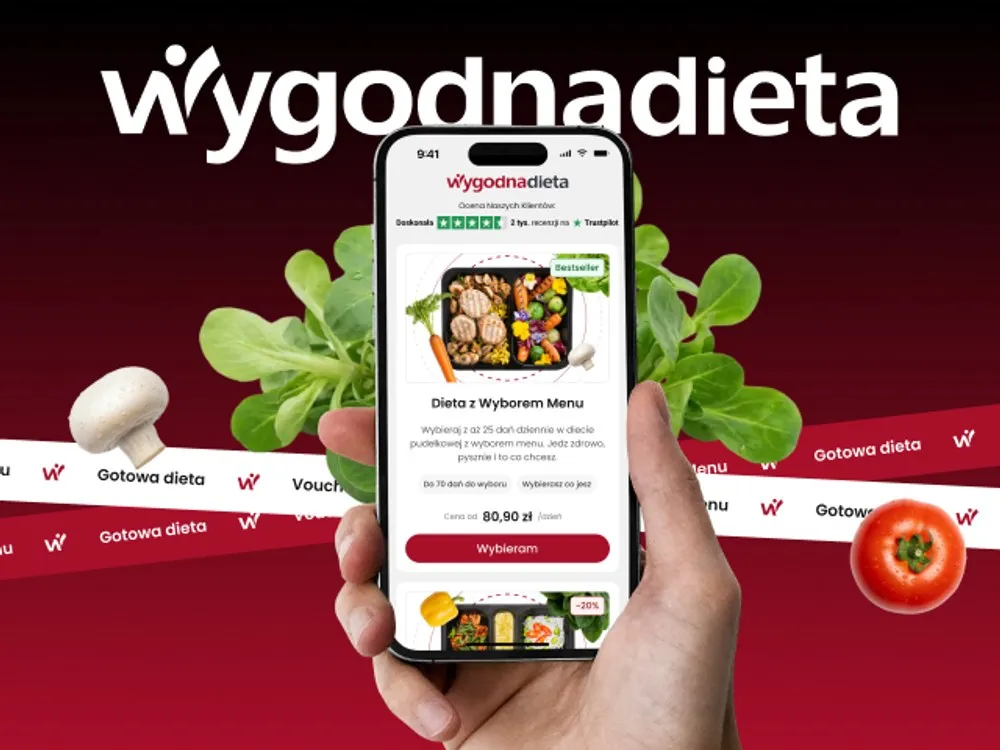
WygodnaDieta - App and online store for a meal-box diet service
-
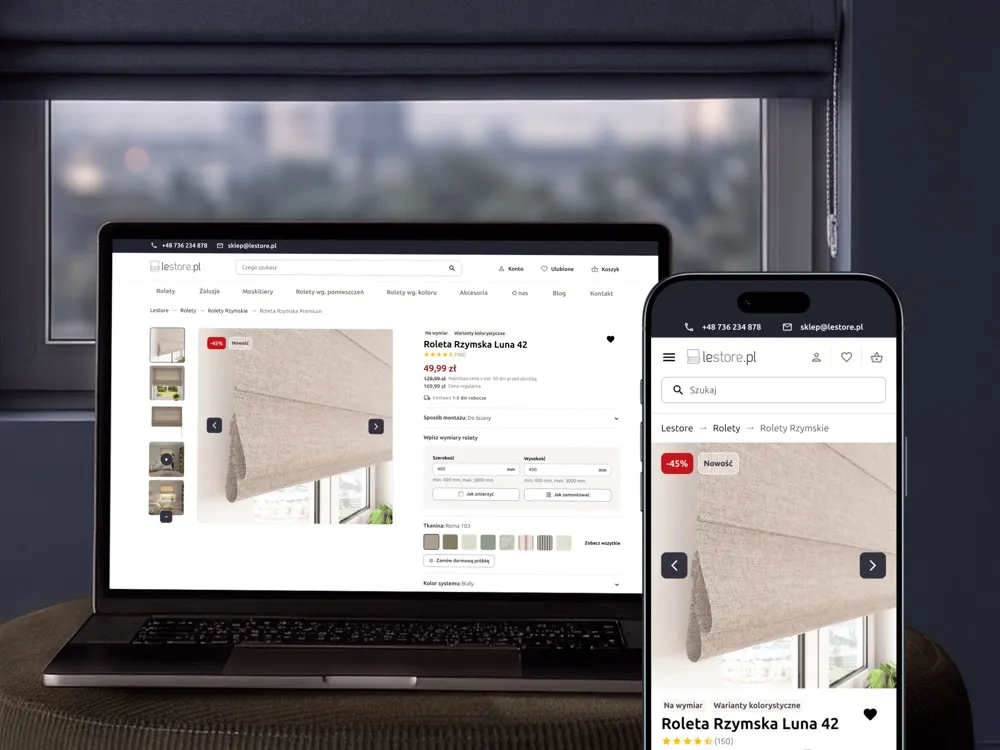
Lestore - Online store for blinds and shades
-
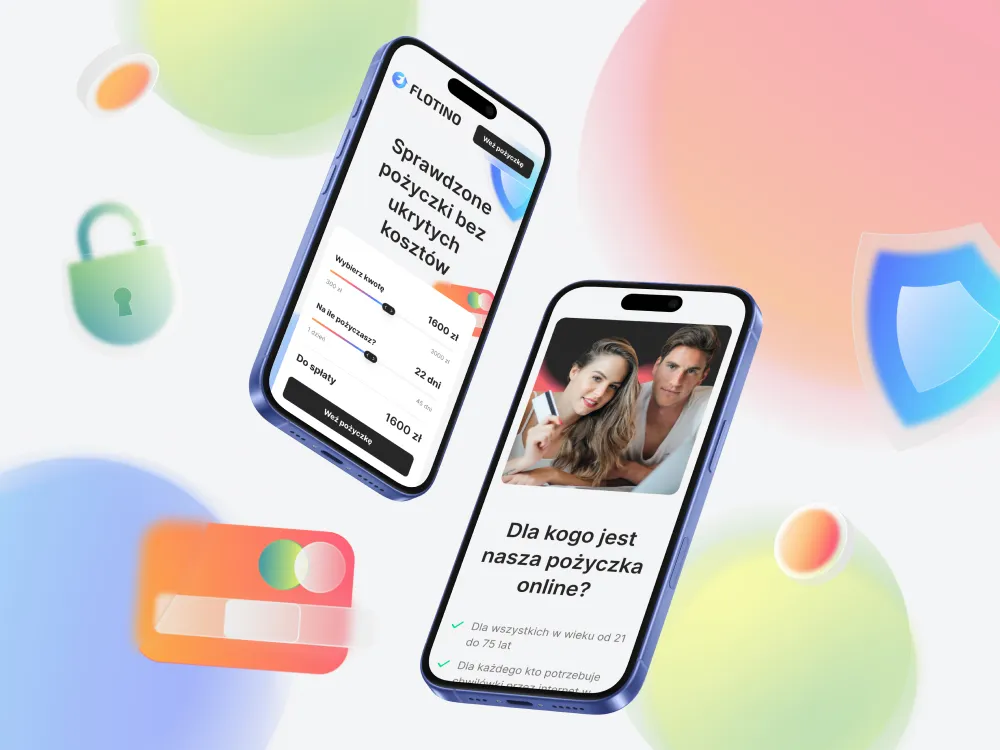
Flotino - Online cash loan service
-

PWS Konstanta - Website for an insurance broker
-
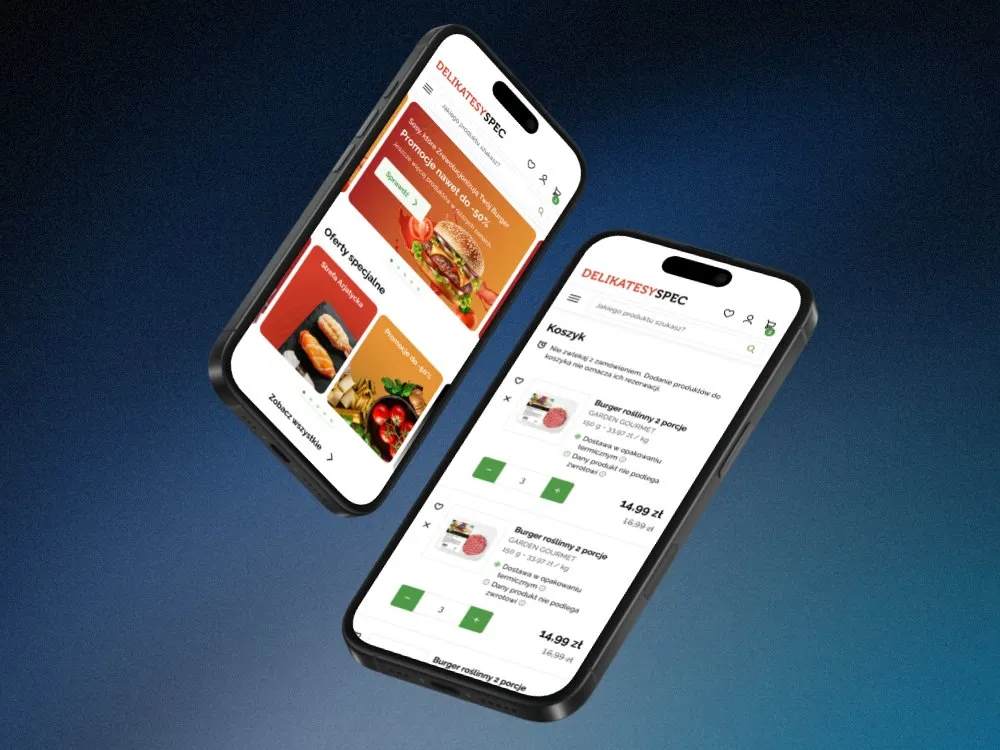
SPEC Food - Online store for a food delicatessen
-
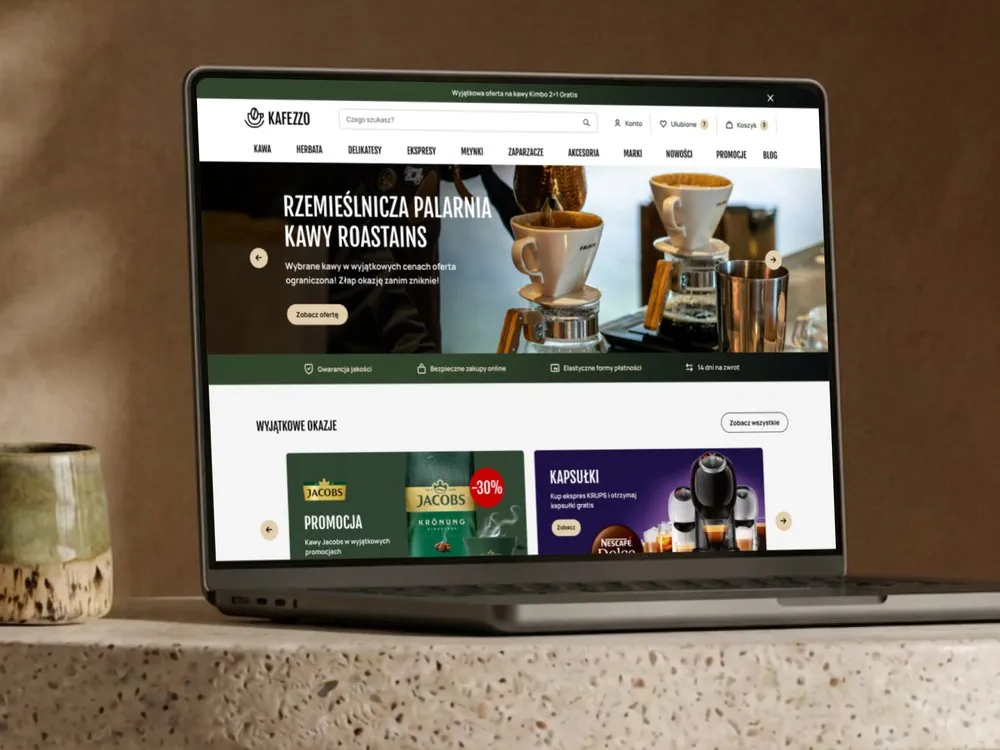
Kafezzo - Online store for coffee and tea
-
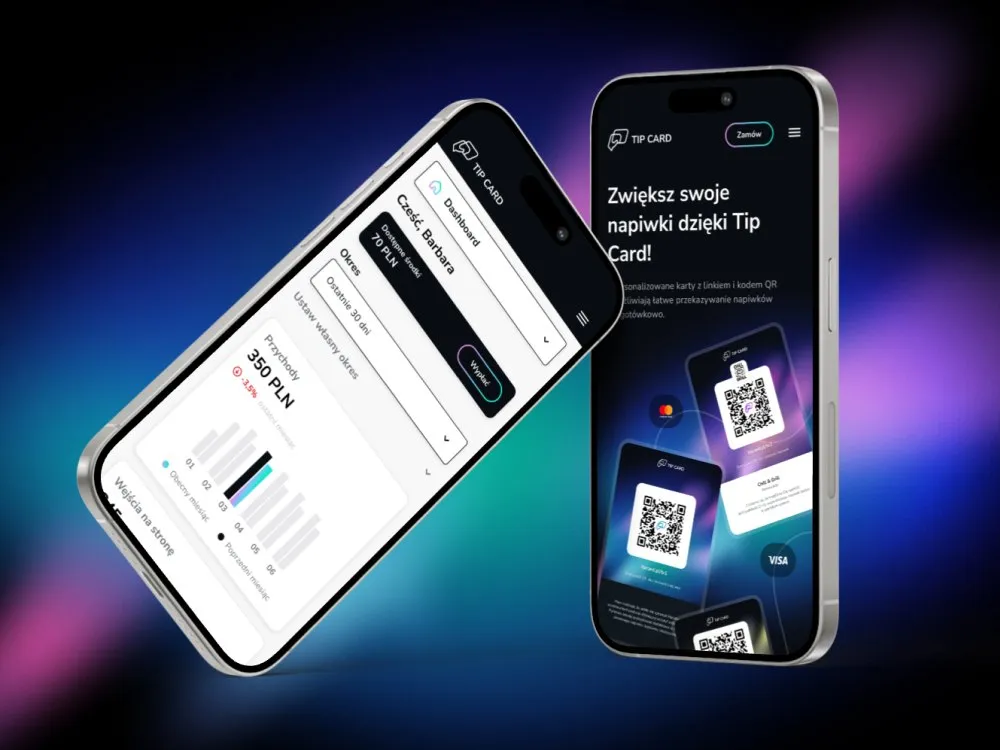
Tip Card - Cashless tipping platform
-
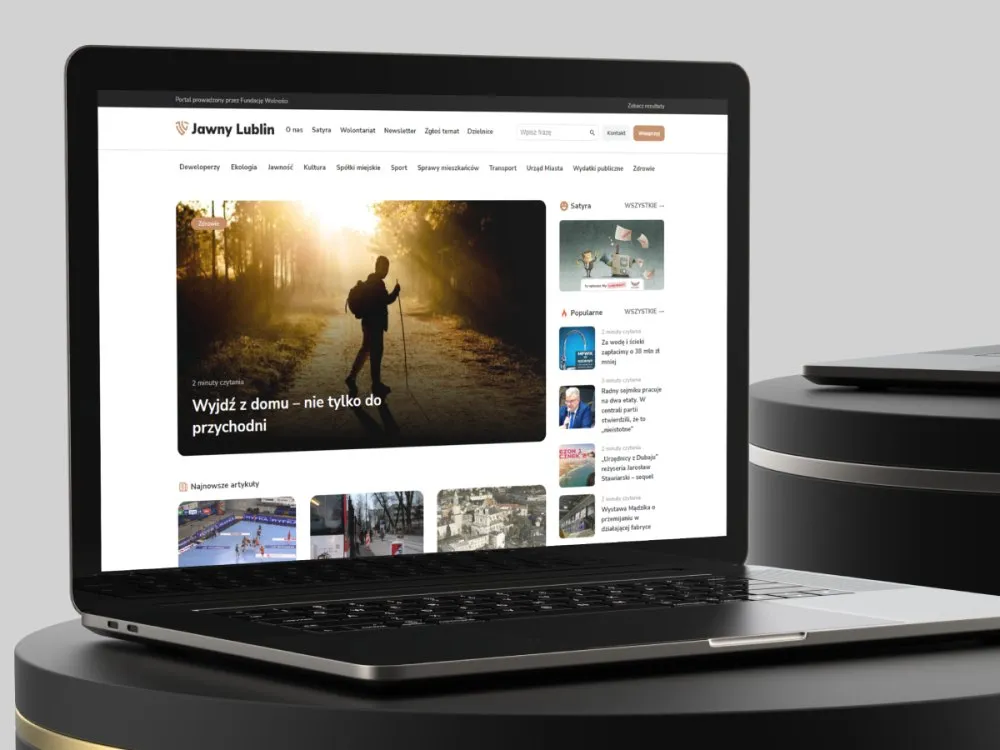
Jawny Lublin - A watchdog portal on city transparency
-
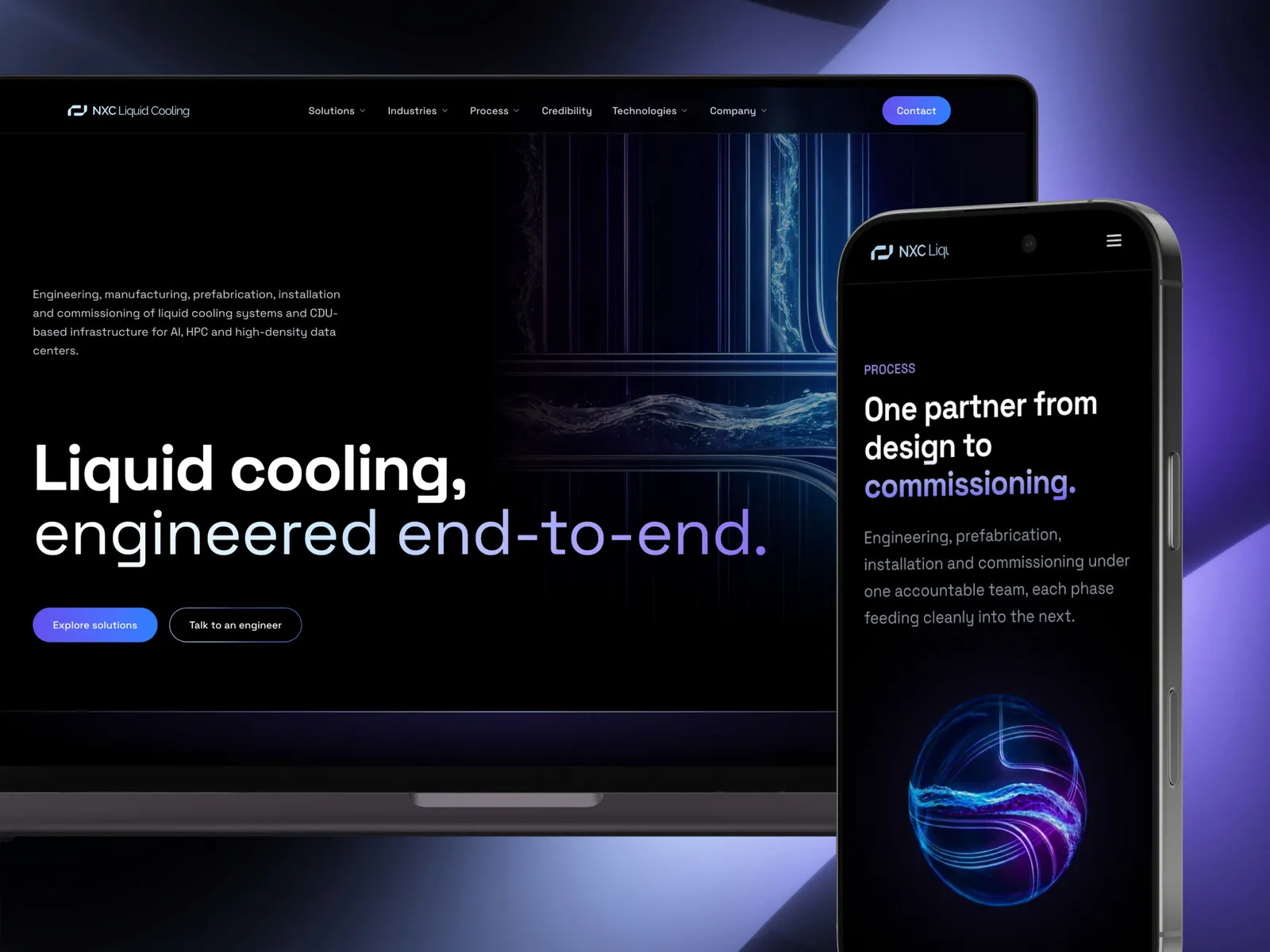
NXC Liquid Cooling - A liquid cooling systems website
-
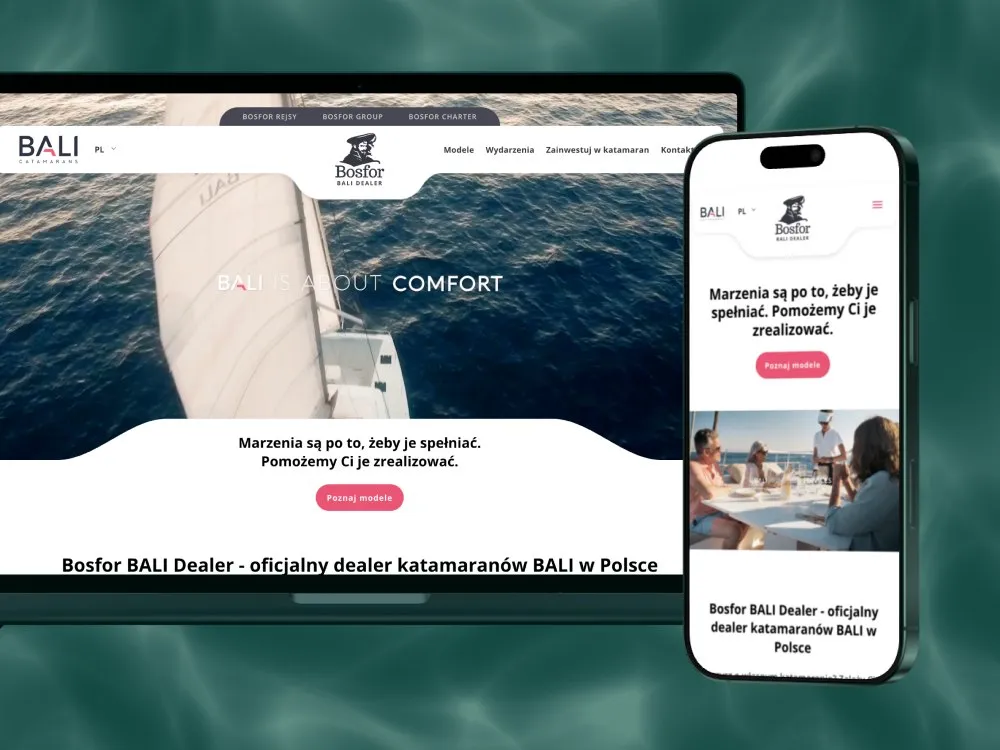
Bosfor BALI Dealer - Website for a BALI catamaran dealer
-
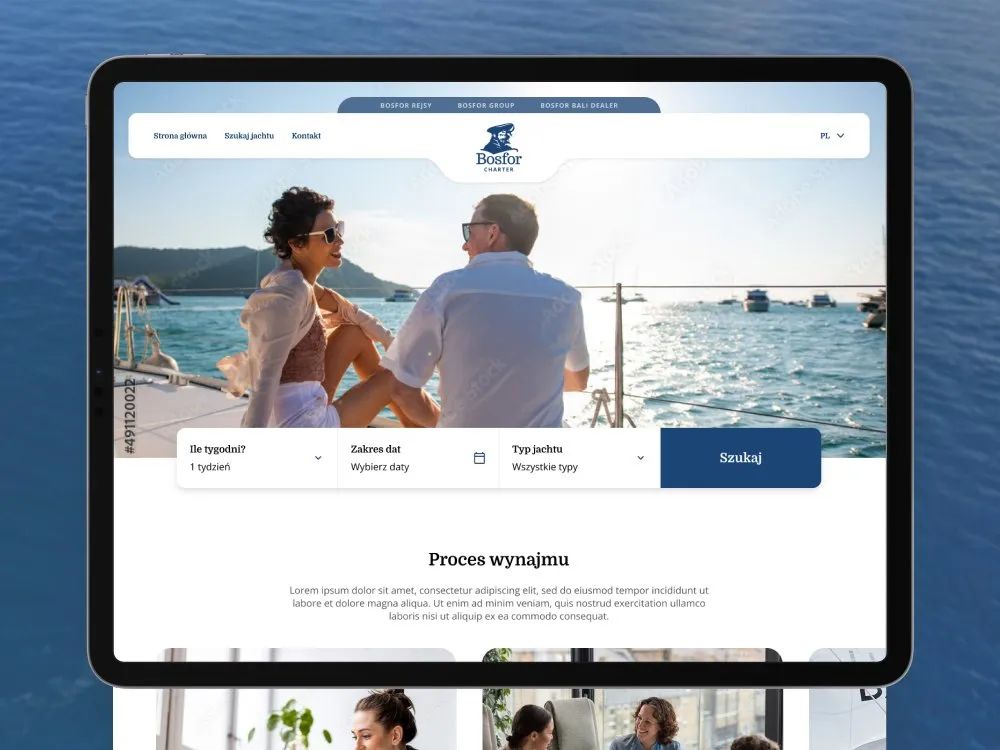
Bosfor Charter - Yacht charter platform with booking
-
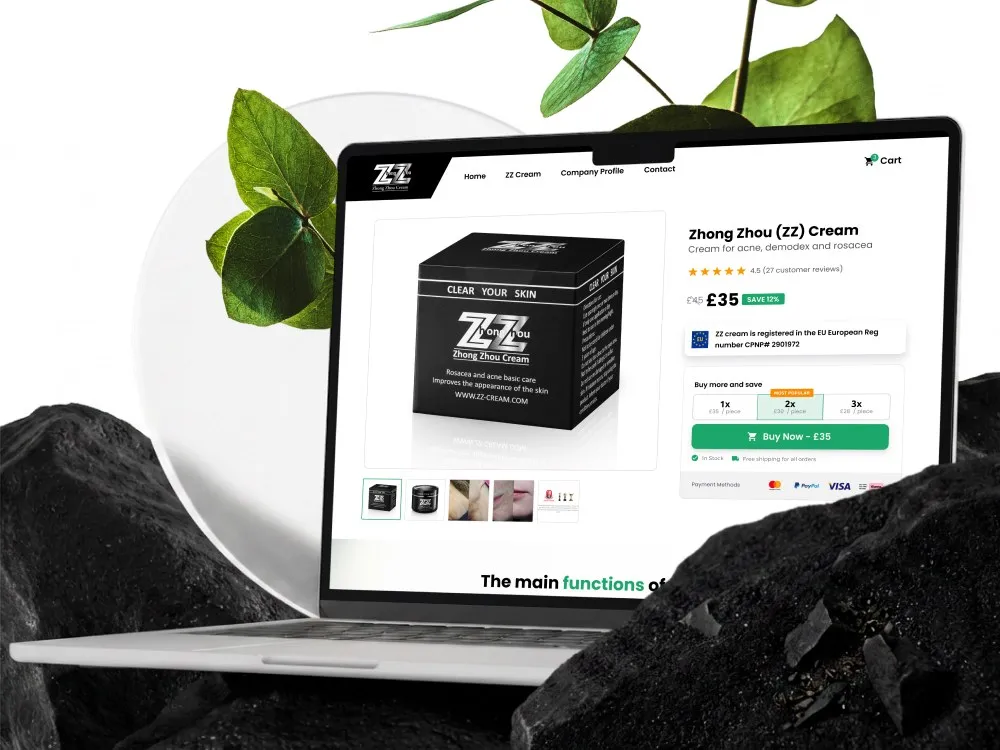
ZhongZhou - Online store for an acne, demodex and rosacea cream
-
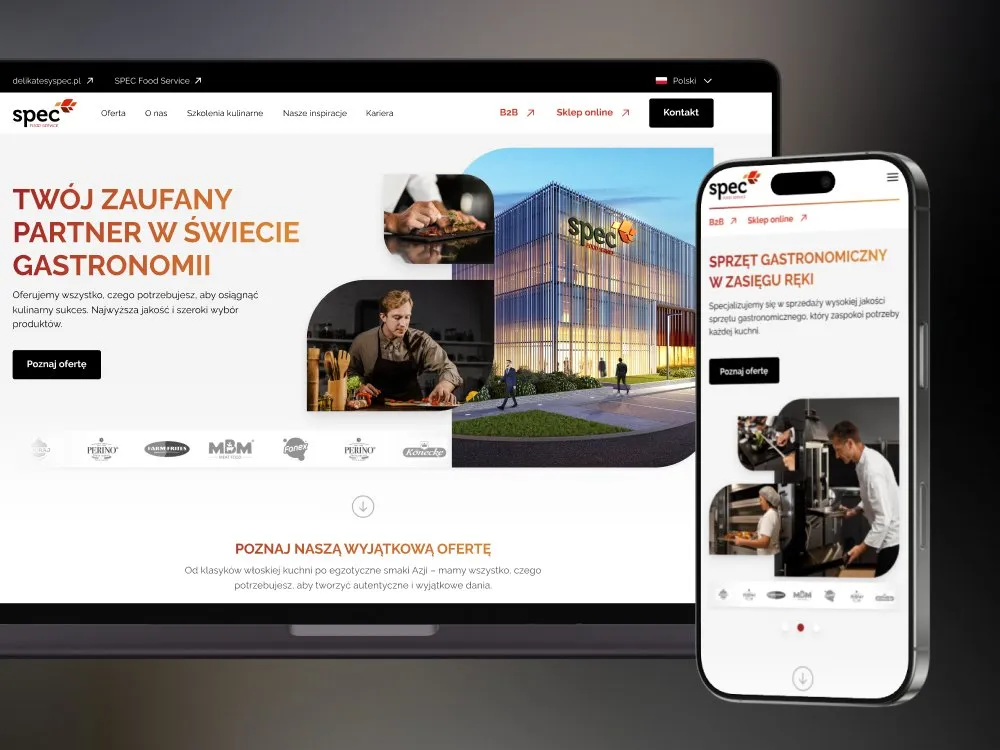
SPEC Food - Website for gastronomy - SPEC Food Service
-
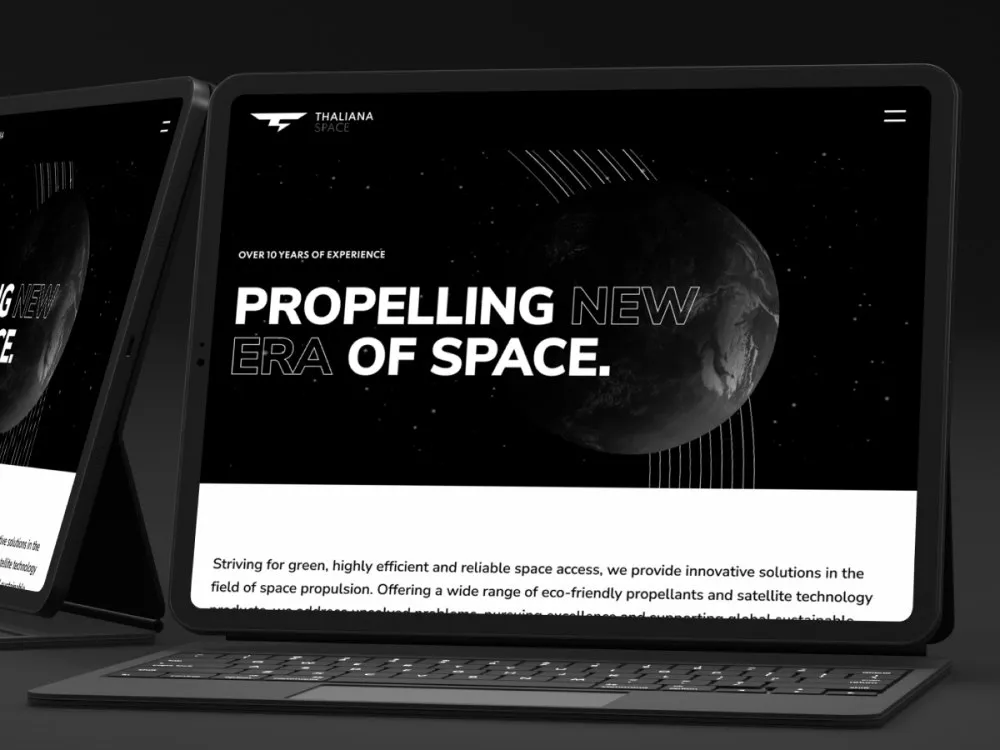
Thaliana Space - Website for a space-propulsion company
-
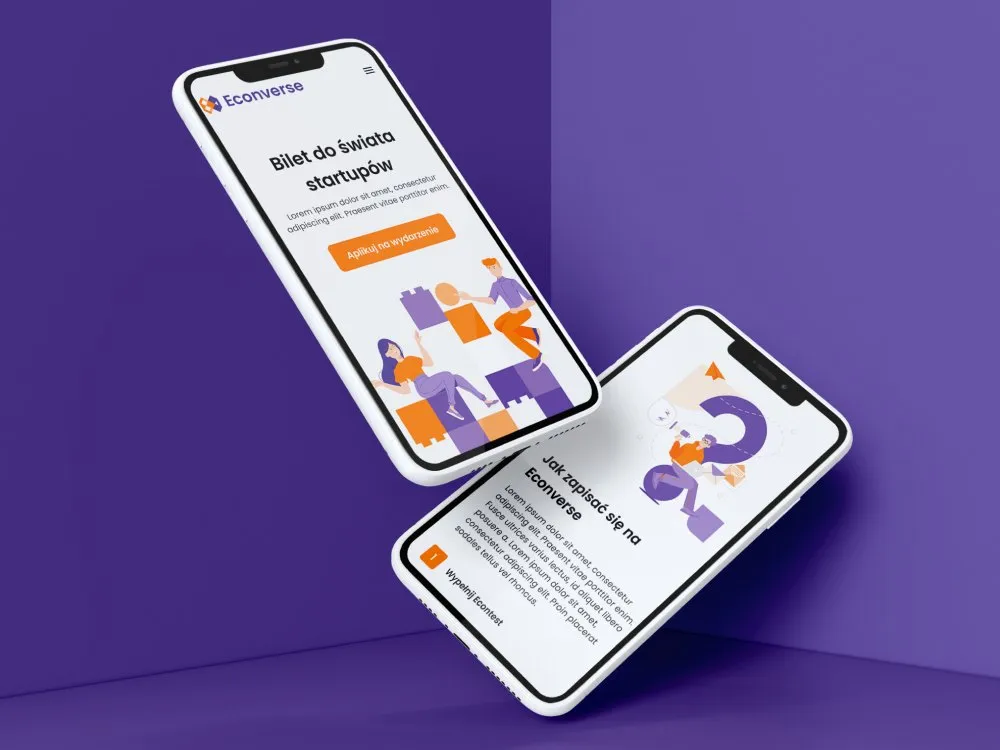
Econverse - Website for a start-up event
-
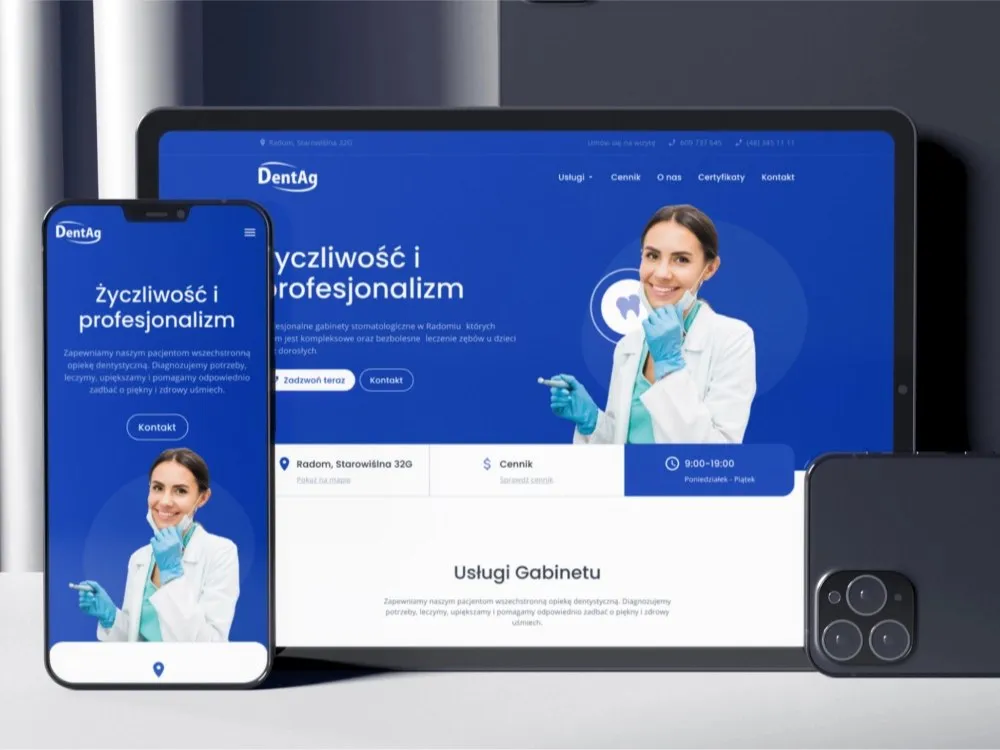
DentAg - Website for a dental clinic in Radom
-
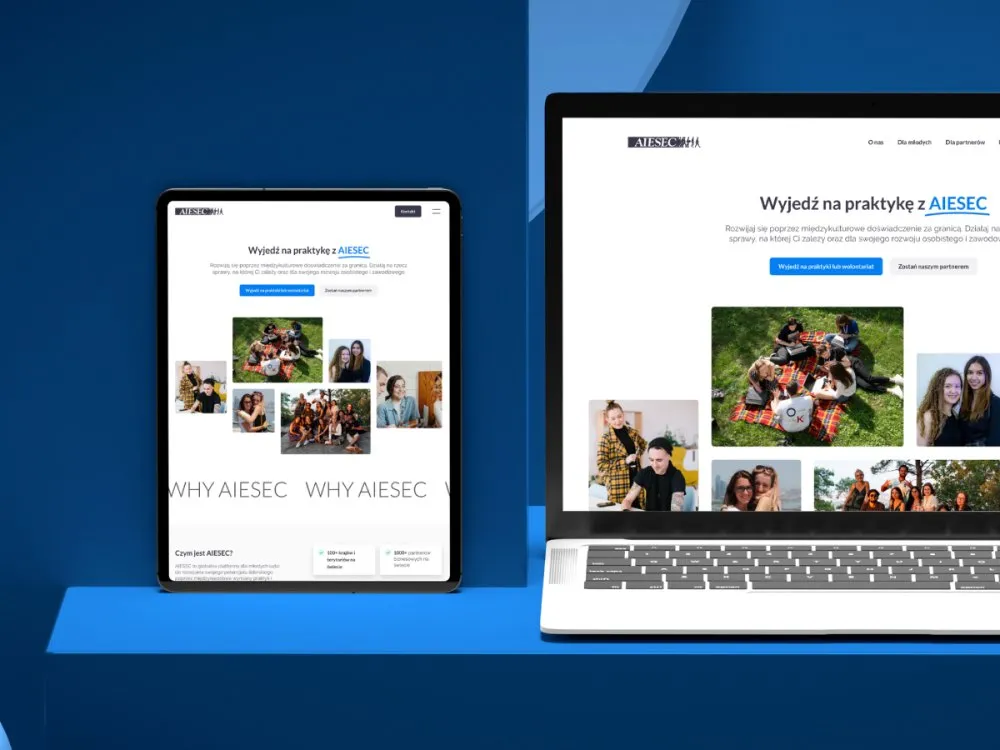
AIESEC - Website for internships and volunteering abroad
-
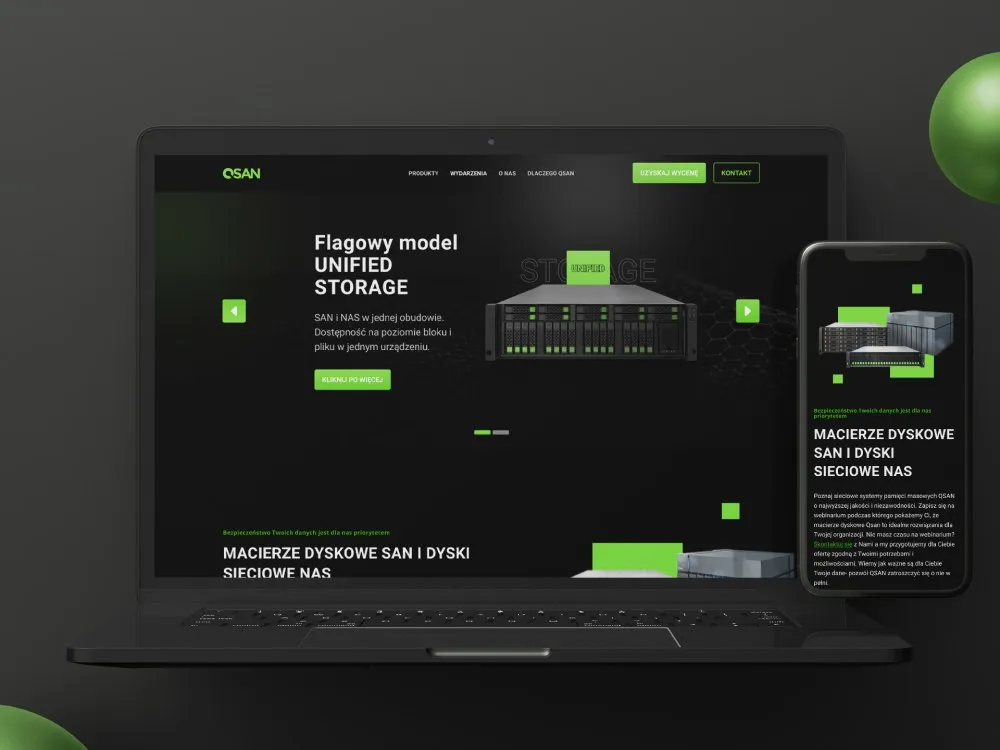
DAGMA - Product page for disk arrays and storage systems
-
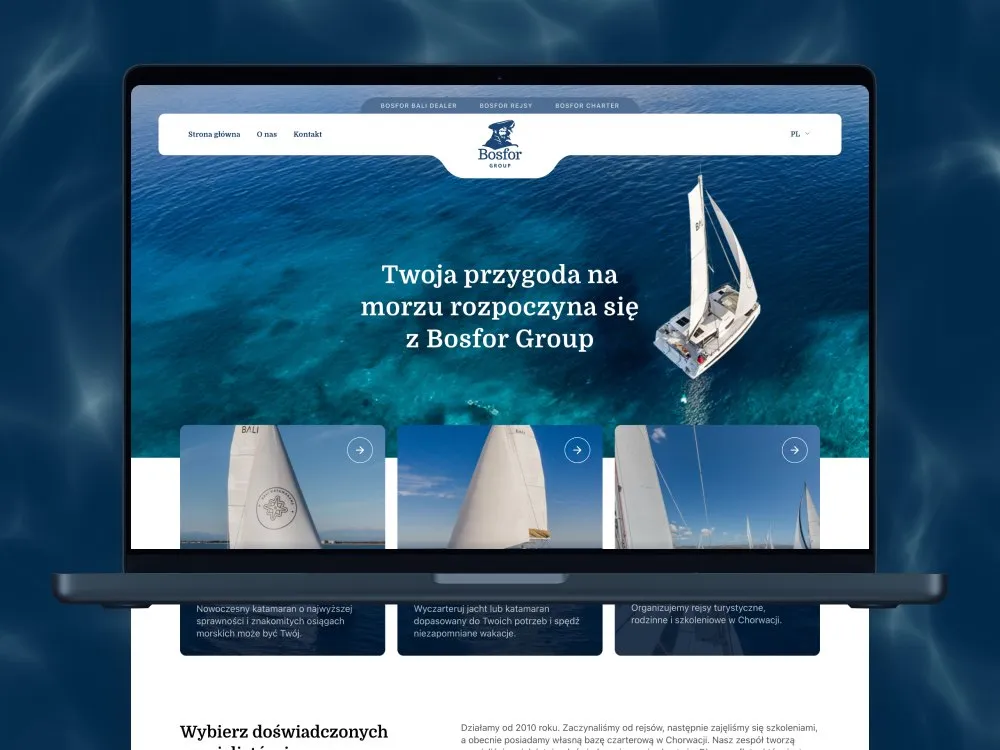
Bosfor Group - Website for the Bosfor sailing group
-
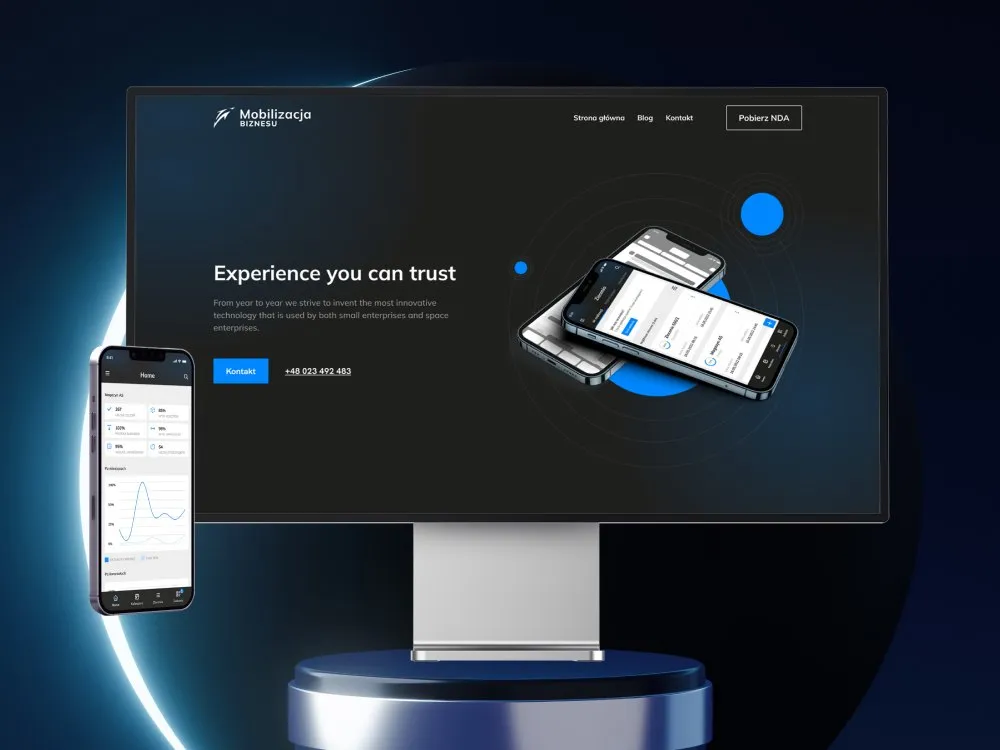
Mobilizacja Biznesu - Website for a mobile-tools firm
-

Pro Sensum - Website for a psychology practice
-
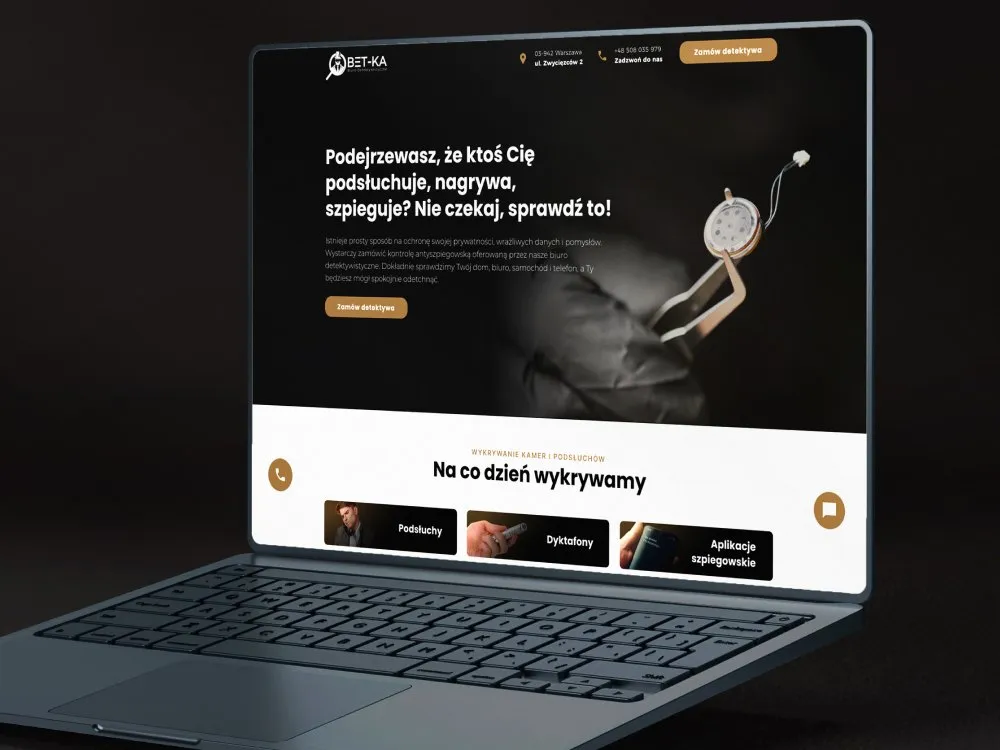
Biuro Detektywistyczne BET-KA - Detective agency website
-
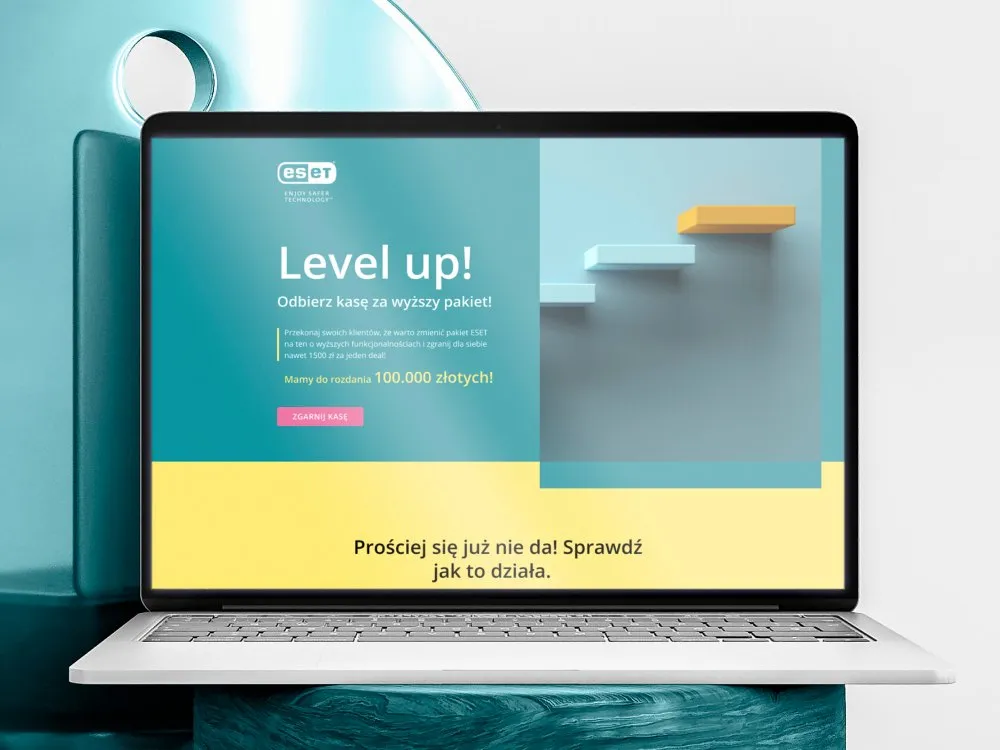
ESET - Landing page for a partner promotion campaign
-
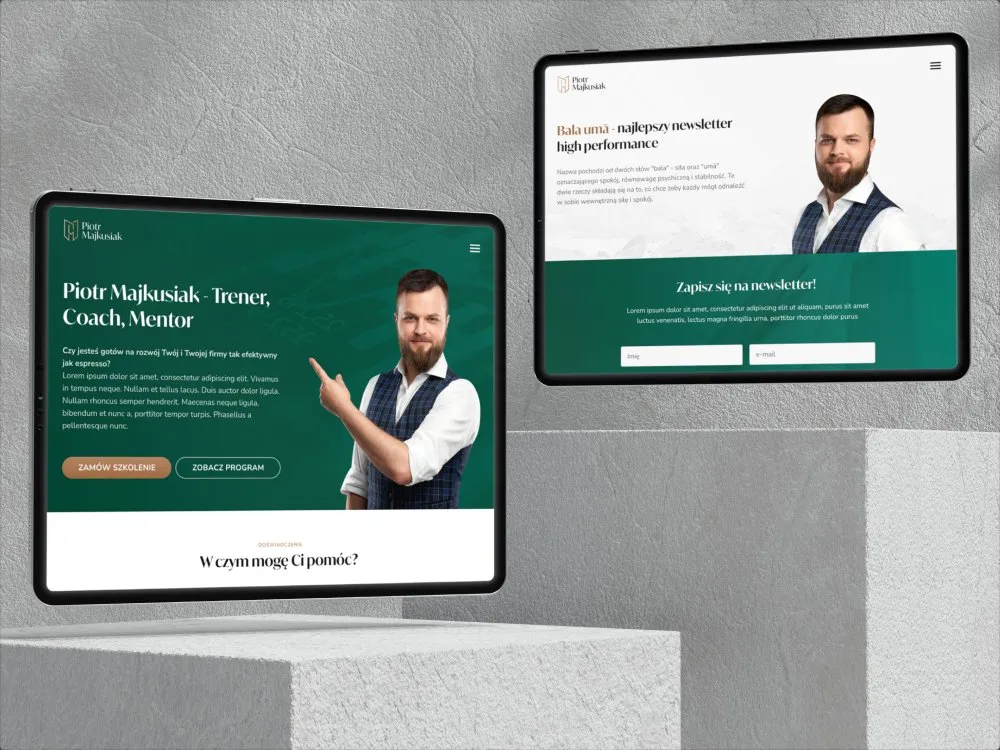
Piotr Majkusiak - Personal site for a business trainer
Outcomes
What you get, on what timeline, and how you can check it
-
4–10 wks
From platform choice to the first order - four weeks for a store with a single delivery method, ten for a migration with integrations on the ERP side
-
301
A redirect set for every URL that changes during the migration, so search traffic and other people's links land where the product actually sits
-
2025
The year the European Accessibility Act requirements began covering e-commerce - we hand over the buying path checked against WCAG 2.2 AA
-
30 days
The support window after launch, when edge cases invisible in testing appear - an unusual return, a payment declined by the bank, an order with a split shipment
Timings and scope come from the schedule described above on this page, WCAG 2.2 is a public W3C standard, and the reach of the European Accessibility Act follows EU law. We do not quote average sales increases after implementation - they depend on assortment, traffic and marketing, so we discuss the results of specific stores by name during a consultation.
Client voices
What our clients say
-
„Working with the Wzór team was a genuinely great experience! They always answered our questions quickly and were flexible about our comments. They have no shortage of creative ideas and are at the same time thoroughly reliable and on time. The end result fully met our expectations; we recommend them to anyone looking for professionals who care.”
 Maja Wieloch-Silecka Operations Director, Bosfor Group
 -
„Our clients expect us to act fast and effectively across a very wide scope - from building a brand, through a website with a store, to running an effective sales campaign. Not an easy task, but doable when you have a tight-knit team and partners who take on challenges on the fly. For us, quality, accountability and commitment are key, and working with UX Agency Wzór gives us that 100%.”
 Piotr Alberski Chief Operating Officer, Agencja XO Media
 -
„Our cooperation with UX Agency Wzór started with our own website. We really liked the way they work, so we decided to subcontract projects for our clients to them on a White Label basis. We loved their workflow, the way they hand projects over to our team, their documentation and their work on the design system. Now we can take on bigger risks.”
 Mateusz Swół Chief Operating Officer, Sellace



Time and scope
How long it takes and what drives the quote
4–10 weeks
Four weeks is a store with one market, a few hundred products and standard delivery, launched on a finished design. Ten weeks is a migration from an existing platform together with order history, an ERP integration and a second path for B2B trade customers.
-
The size of the catalogue and the number of variants and attributes
-
The scope of the migration - the catalogue alone, or customers and order history too
-
The number of integrations and whether they have ready plugins or need API work
-
Retail sales, wholesale, or both models in one store
-
Markets, language versions and currencies
-
The starting point - a finished store design or designing from scratch
FAQ
Questions that come up most often
How much does an online store implementation cost?
We quote each project individually, because several things drive the effort at once: the size of the catalogue and the number of variants, the scope of the migration (the assortment alone, or customers and order history too), the number of integrations and whether they have ready plugins or need API work, a B2B path alongside retail, the number of markets and currencies, and whether we start from a finished store design or design it from scratch. After a short call and a look at your current data we send a proposal within 2 business days. We list separately the costs that do not go to us - the platform subscription, hosting, paid plugins and payment provider fees - so the budget covers the whole picture, not just the implementation.
Which platform should we choose - Shopify, WooCommerce, PrestaShop or Magento?
That gets settled in the first week, after a review of the assortment and the integrations. Shopify wins when time to launch matters and you want minimal upkeep on your side. WooCommerce makes sense when the store lives next to an existing content site and you want full control over hosting. PrestaShop is often the natural choice when migrating from an older version of the same engine. Magento stays for large catalogues, complex pricing logic and wholesale. We hand over the recommendation together with the limits of the chosen solution - it is easier to decide knowing the ceiling.
Do you design the store, or only implement it?
We do both, but they are two different services. This page is about launching a store on an existing platform - configuration, data migration, integrations and go-live. Designing the buying path, the catalogue architecture, the product page and the checkout is described separately, on the store design page. We implement both our own designs and those prepared by another agency or your team - in the second case we start by reviewing the mockups against what the chosen platform can actually do.
What happens to our data and Google rankings during a migration?
Before the move we map every URL of the current store onto the new ones and set a 301 redirect for each address that changes - categories, products, filters and content pages. The catalogue, customer accounts and order history go in on a sample first, so gaps in the data surface before the full set is released. We do not promise that rankings will not move - after a platform change the search engine needs time to recrawl the site. We do promise that no URL disappears without a redirect and that we watch indexing with you after launch.
Will the store connect to our ERP and warehouse system?
Usually yes, and it is one of the first things we check when choosing the platform. Some systems have ready plugins, some expose an API, and some need an intermediate layer. As standard we sync stock levels, product records, price lists (including individual ones for trade customers), orders and sales documents. The scope and direction of each sync is agreed at the start, because it decides where the source of truth about a product sits - in the ERP or in the store.
Who runs the store after launch?
Your team - that is what the training and the role-based admin documentation are for. Adding a product with variants, setting up a promotion, handling a return or correcting stock are jobs you do yourselves after the hand-off, without raising a ticket with the contractor. For thirty days after launch we answer questions and fix the edge cases that only appear under real traffic. After that we can stay on in ongoing care - updates, monitoring and further features - but that is a separate decision, not a condition of the implementation.
Do you implement under an agency's brand, as a subcontractor?
Yes, it is one of our working models. We run the implementation under your brand, inside your client communication, and you keep the full relationship and margin. The details are on our white label page.
Related services