


Table of contents
Every $1 invested in usability returns on average $100 in revenue - that’s the finding of Forrester Research. And 88% of users who once hit a poor interface never return to that site. These two figures explain why mature companies no longer start a digital project with “a brief to an agency” - but with a UX consultation.
A UX consultation isn’t a workshop about icons or a conversation about colours. It’s a strategic advisory session in which an expert helps you minimise business risk before you spend money on development. In this guide I show how consultations differ from an audit, when they’re essential, what they really cost, what the process looks like and what outcomes you can get from them.
What UX consultations are and how they differ from a UX audit
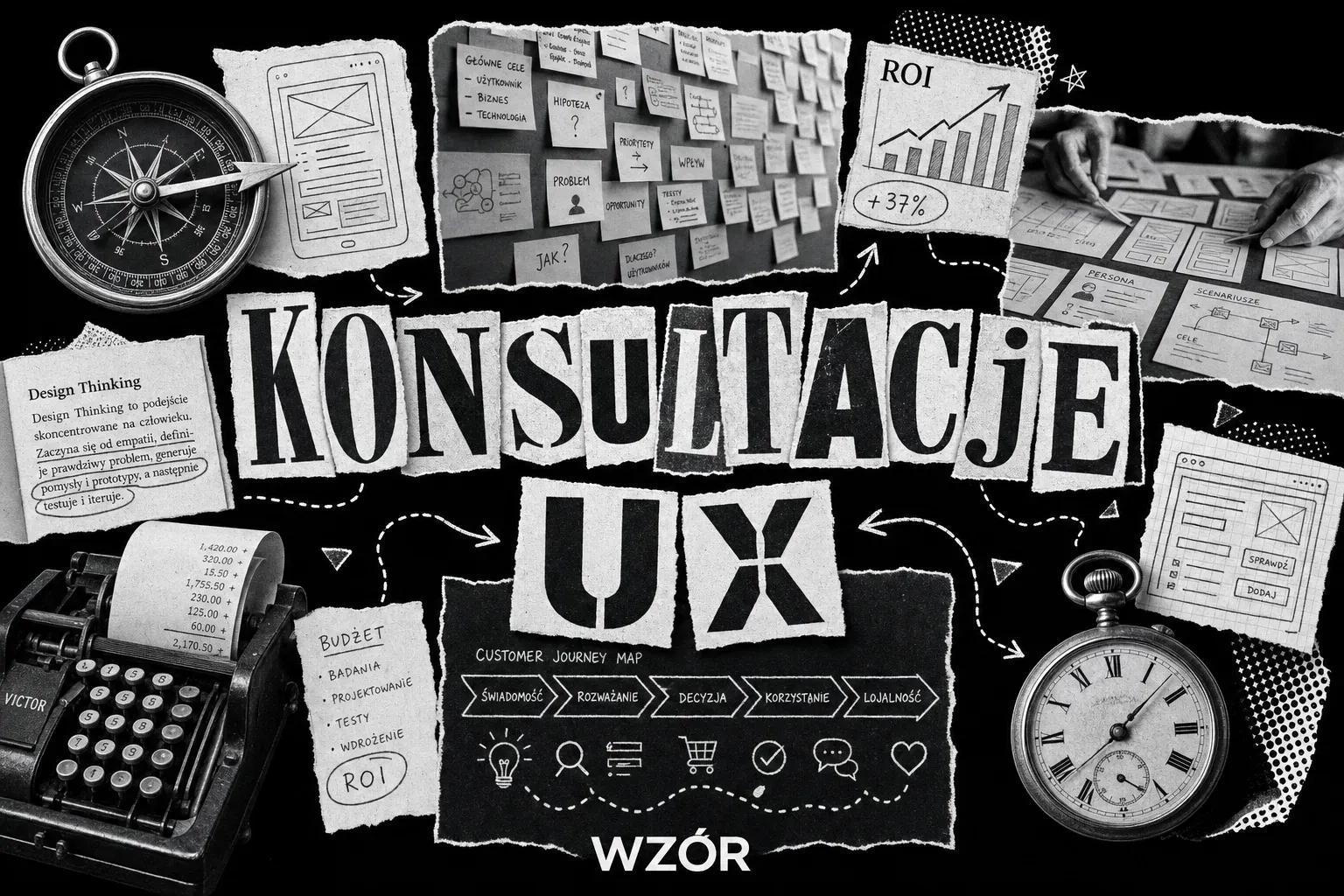
UX consultations are strategic advisory at the intersection of business, technology and user needs. The consultant doesn’t shut themselves inside a graphics tool and doesn’t produce an 80-page report - they help you make a decision: which direction to take, what not to do, how to design a process that actually sells.
This is a very practical difference from a UX audit, though the two terms are often used interchangeably:
| Feature | UX audit | UX consultations |
|---|---|---|
| Nature | Diagnostic, formalised | Advisory, strategic |
| When | When the product already exists | At any stage, most often before rollout |
| Method | Heuristic analysis (Nielsen), cognitive walkthrough | Workshops, Discovery Sprint, Design Thinking, discussion |
| Outcome | A report with a list of flaws + priorities + recommendations | A direction for growth, technology decisions, idea validation |
| Who decides | The auditor flags what to fix | The client - the consultant shows the options |
| The question it answers | “What’s broken and how do we fix it?” | “Which direction are we heading and does this idea make sense?” |
In practice: a UX audit checks an existing store and says the checkout form has 14 critical flaws. UX consultations start a step earlier - they help decide whether to build a new e-commerce platform at all, in what technology (SaaS, WooCommerce, a custom CMS) and whether the MVP shouldn’t first go through market validation. These two services complement each other but solve different problems.
6 signs your company needs a UX consultation
The best moment for a consultation isn’t “when there’s time” - it’s when you notice a specific symptom. Here are six of them:
1. The numbers don’t add up despite the marketing spend. You pump budget into Google Ads and social, traffic grows, but conversion stands still or drops. Users abandon carts at the last step. That’s a sign the problem isn’t in acquiring traffic - it’s in the interface, which blocks sales.
2. Customer support is drowning in questions about the obvious. Customers call with questions like “how do I make a return”, “how do I reset my password”, “where’s my invoice”. Every such call is proof that self-service isn’t working - and an operational cost that shouldn’t be there.
3. You’re facing a big technology decision. A site redesign, a platform migration, a choice between SaaS, WordPress and a custom CMS. Each of these scenarios involves a budget in the hundreds of thousands of zlotys - and without a consultation it’s easy to pick a solution that will cost twice as much to maintain.
4. Mobile generates traffic but not sales. Most users come in from a smartphone, but a negligible percentage convert. This is almost always the effect of a poor fit of the interface to the device, slow loading or a form that’s impossible to fill in on mobile.
5. You have a product idea but don’t know whether it’ll catch on. The classic situation before building an MVP. According to research, 70% of online businesses fail due to poor usability - most often because the product solves a problem users don’t actually have.
6. Working with the developer is chaos. The requirements keep changing, the software house keeps sending you rising estimates, and rollouts drag on. This is almost always a symptom of missing, well-thought-out wireframes and a prototype - not a lack of developer competence.
If you recognise at least two of these signs, UX consultations will pay for themselves in the first month.
What exactly do you get from a UX consultation? (Scopes and deliverables)
Consultations are a flexible service - their scope adapts to the problem. In practice, four main types stand out on the Polish market:
Product consultation (Product Discovery). Validating a digital product idea before it reaches the developers. It covers a workshop on business needs, ecosystem mapping, definition of the target group, and an initial MVP scope. The classic format is a two-week Discovery Sprint ending with a “go / no-go / pivot” recommendation.
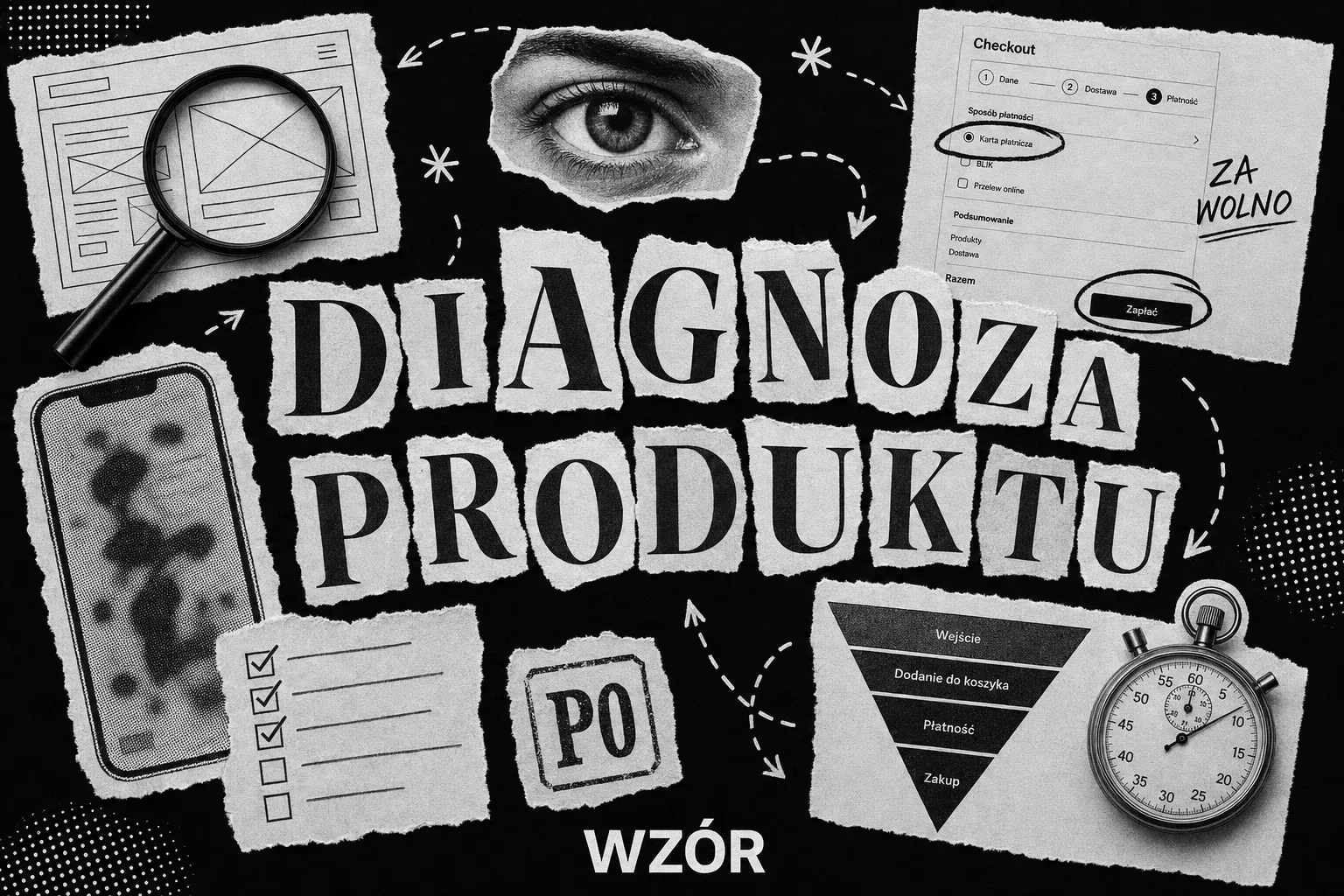
Buying-process consultation (E-commerce Health Check). A diagnosis of the bottlenecks in the sales funnel - from the product page, through the cart, to payment. The consultant analyses Google Analytics data, Hotjar heatmaps and user paths - and points out the specific places where you’re losing customers.
Information architecture (IA) consultation. Restructuring the menu, categories and navigation in large services (stores with 5,000+ products, intranets, B2B portals). It uses methods such as card sorting and tree testing to lay out a structure aligned with users’ mental models - not with the company’s internal organisation.
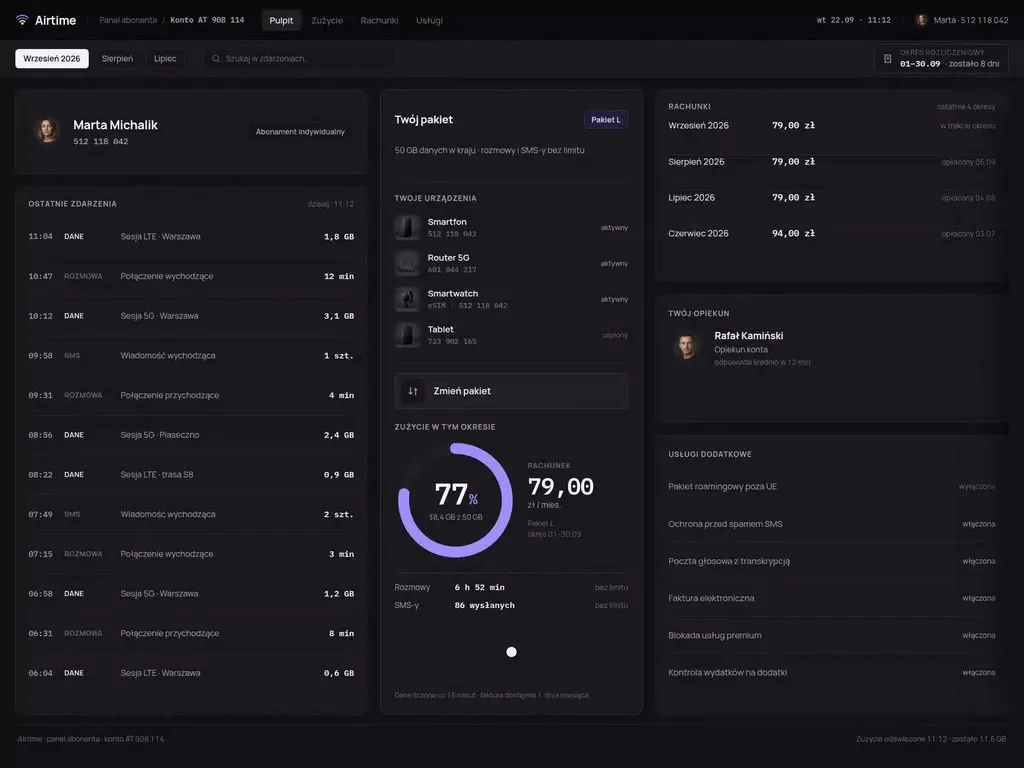
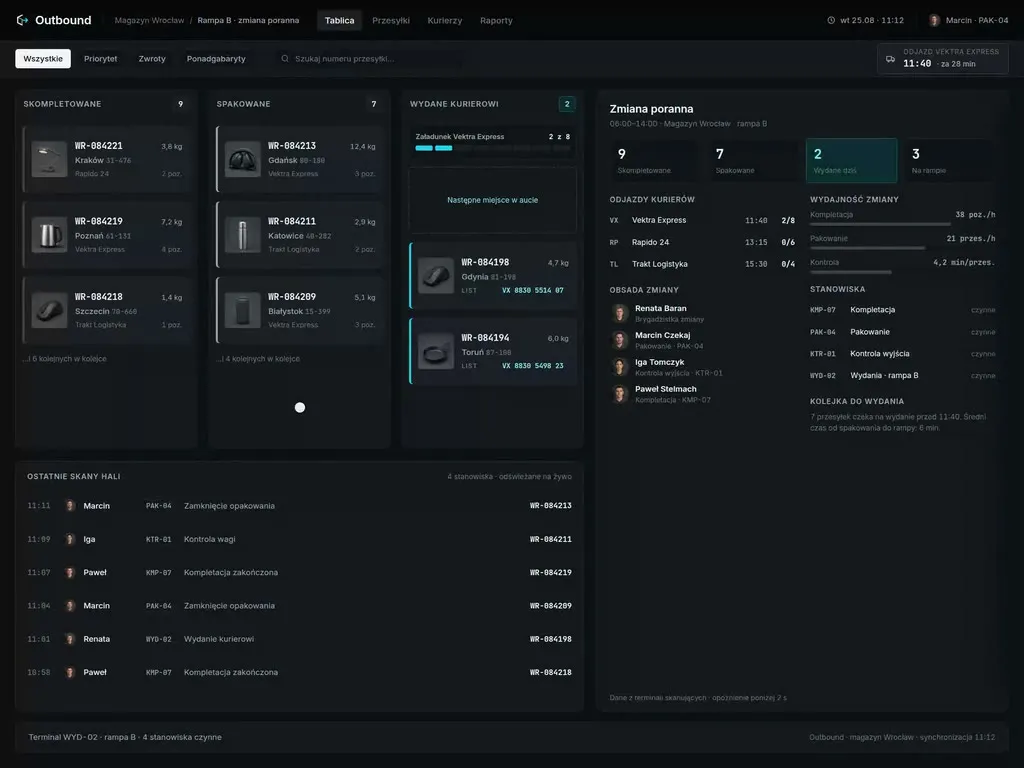
Internal systems consultation (Digital Employee Experience). Optimising the tools your employees work with: CRM, ERP, the order panel, the HR system. The business value here is often the largest, only nobody counts it as often. In one documented case, improving the intranet saved 12 working hours per employee per year. Multiply that by several hundred people and a small improvement turns into a line you can see in the annual budget.
What do you physically receive at the end? Depending on the scope, deliverables may include:
- An executive summary with recommendations and an initial assessment of feasibility and budget
- A Customer Journey Map mapping every touchpoint between the user and the brand
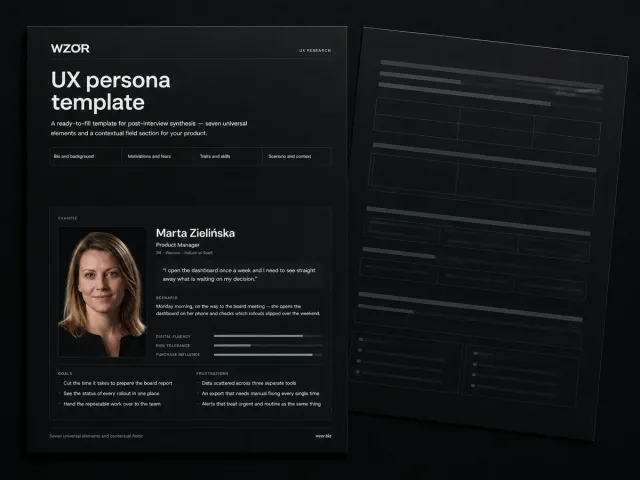
- Personas based on real data, not on intuition
- Low-fi wireframes and interactive high-fi prototypes ready for testing before development
- A competitor analysis report showing how others solve the given problem
- Technology recommendations - choosing the platform/CMS to suit the budget and requirements
- A short design system / UI kit, if the scope requires it
The client doesn’t get a 200-page document no one will read - only practical tools that translate into decisions.
What the UX consultation process looks like step by step
A good consultation process is agile and workshop-driven. In practice it consists of five stages:
Stage 1: Brief and in-depth interview (1–3 days). The consultant asks questions that rarely come up in standard sales: what the real business goals are, which metrics you measure, what you fear as an organisation. Filling in the brief isn’t a formality - it’s the foundation.
Stage 2: Desk research and data analysis (3–5 days). Before anyone starts recommending anything, the consultant reviews what you already have: GA4 data, heatmaps, user paths, support stats, competitor analysis. It often turns out the answer was already in the data - only no one had time to read it.
Stage 3: Workshop with stakeholders (1 day, 4–6 hours). This is the heart of the process. Together you map the ecosystem, the goals, the risks, the hypotheses. At this stage the “aha” moment regularly happens - discovering that the problem lies in a completely different place than you assumed. Sometimes the team thinks the interface is failing, and after the workshop it turns out the problem is database performance.
Stage 4: Rapid prototyping and validation (5–10 days). The hypotheses from the workshop are translated into low-fi wireframes and short tests. The aim: to minimise risk before anyone writes the first line of code. A change in a wireframe costs a few hundred zlotys. The same change in finished code - two orders of magnitude more.
Stage 5: Recommendations and executive summary (2–3 days). The consultant delivers a document: what they recommend, why, in what order to implement it, what budget to expect and which KPIs to use to measure the effects. Short and decision-oriented - not a report for the sake of a report.
The whole cycle usually takes 2–4 weeks. Some clients choose a longer, subscription model - more on that in a moment.
How much UX consultations cost and what billing models are available
A UX agency’s price list starts with a range and ends with a quote for a specific project. The cost depends on the scale, the number of stakeholders, the amount of data to analyse and the depth of research needed. The market has settled on three billing models, and they are worth knowing before the conversation.
Project model (fixed price). A consultation sold as a package with a defined scope and deliverables. The most common form for a Discovery Sprint or a one-off E-commerce Health Check. Pros: you know the cost up front, it’s easy to approve in the budget. Con: every scope change is an addendum. What a full mid-market Discovery Sprint costs in Poland is settled in the quote. It comes down to the number of workshops, the depth of research and how much work stays on the client’s side.
Hourly / day-rate model. The client buys a pool of consultant hours or days and uses it flexibly - for ad-hoc conversations, short analyses, wireframe reviews. It works when you have an internal design team and need an external sparring partner. Pros: full flexibility. Con: it requires discipline in managing the hours calendar.
Subscription model. A fixed monthly rate for a defined consultant availability - e.g. 2 days a month plus quick email contact. Increasingly popular in mid-market, because it gives predictable costs and continuity of collaboration. The client doesn’t have to request a quote every time.
What’s worth knowing about pricing. Consultations usually get compared with a senior UX designer on staff, and the comparison works in their favour, because an in-house role is not just salary. Add social contributions, equipment, holidays, training, recruitment, and the months when the designer waits for work. With consultations you pay for expert time when you actually need it. For mid-market businesses that can’t keep a designer on a full-time contract, a subscription closes most ongoing needs and gives one predictable invoice a month.
Many agencies - including Wzór - offer a free introductory consultation (30 minutes), where you can reliably assess the scope and choose a billing model.
UX consultations in numbers - ROI and case studies
The argument “UX pays off” is true, but only concrete numbers convince a CFO. Here are the hard data worth knowing:
- According to Forrester research, good UX can raise conversion by up to 400%, and a well-designed interface (UI) alone - by 200%.
- Implementing Design Thinking at IBM let teams reduce the time spent on analysis and initial design by 75%, cut the number of software defects by over 50%, and the total ROI of this practice - according to a three-year Forrester study - came to 301% ( full TEI report).
- At the extreme: according to Zippia’s analysis 70% of online businesses fail due to poor usability - not a lack of traffic or a weak product.
And here are the case studies that show how much can be gained, specifically:
- “The $300 Million Button” - the legendary story described by Jared Spool and Luke Wroblewski. A large retailer (undisclosed - guesses circulated that it was Best Buy or Amazon) replaced the forced registration before payment with a “Continue as Guest” button. Sales rose by 45%, which gave $15 million in additional revenue in the first month and $300 million in the first year ( Spool’s original write-up).
- Brand24 - a Polish startup described in a Hotjar case study. Shortening the registration form (including removing the “promo code” field, which confused users) increased conversion from 2.56% to 7.42% - almost a threefold rise, which translated into a tripling of sales.
- KRUK - after a UX redesign, the e-kruk.pl platform recorded a 20% increase in new clients per year, and 90% of clients repaying settlements online do so on the optimised platform - which drastically lowered the costs of phone and postal service.
- Hopper - a flight-booking app. According to their own case study, redesigning how filters were presented (from a hidden screen to visible cards with a concrete benefit such as “a flight with a layover will save you $100”) increased filter usage from 2.6% to 23% and brought a nearly tenfold increase in conversion.
- Zalando - introducing a tool that recommends a size based on body photos reduced returns caused by a wrong size by 10%. At Zalando’s scale (50+ million active customers) that’s tens of millions of euros saved a year on returns logistics alone.
In every one of these cases, the decision was the result of a consultation - someone external, with perspective and data, showed that the problem wasn’t where everyone was looking for it.
How to choose a UX consultant - 5 questions worth asking
The UX advisory market in Poland is uneven - alongside mature agencies there are freelancers with no methodology and “jack-of-all-trades” firms. Here are five questions to help you verify a consultant’s level before signing a contract:
- “What metrics did you measure with previous clients after implementing your recommendations?” Concrete numbers = concrete competence. Vague answers = avoid.
- “Can I see a sample report / executive summary from a previous project?” (anonymised, of course). The quality of this document reveals how the consultant thinks.
- “How do you define the scope of a Discovery workshop and what exactly happens in it?” If the answer is vague (“you know, we talk”), that’s a bad sign.
- “Which research methods do you use and when is each one appropriate?” Card sorting, tree testing, moderated and unmoderated tests, eye-tracking - a senior consultant should fluently answer when each makes sense.
- “How do you bill for scope changes, and what happens if it turns out the problem is somewhere else?” This asks about contractual honesty. A good consultant isn’t afraid to say “this project doesn’t make sense” - even if they lose revenue on it.
Summary: UX consultations are insurance against a costly mistake
UX consultations aren’t cosmetics or an add-on to a project. They’re the cheapest insurance you can buy before a major digital investment - from a site redesign, through an app rollout, to an e-commerce platform migration. A change at the workshop level costs a few hundred zlotys. The same change introduced in finished code - two orders of magnitude more. A consultant who looks at your idea from the outside regularly saves clients tens, and sometimes hundreds, of thousands of zlotys.
If you recognise in your company any of the signs described above - you’re facing a redesign, planning a new product, struggling with conversion or your support is drowning in questions - it’s a good moment to talk.
At Wzór we run UX consultations in three models (project, hourly and subscription), work with mid-market companies in Poland, and offer the first conversation - 30 minutes, no obligation - free of charge. Book a consultation, describe the problem, and within a single meeting we’ll show whether and how we can help.

Co-founder and CEO of the UX agency Wzór. For 9 years he has been running UX/UI projects for startups, software houses and large companies - from audits, research and business analysis, through product strategy, to delivery. He specialises in projects at the intersection of e-commerce, SaaS and fintech. An Interactive design practitioner - designing UX/UI directly in code.